

Maddy summaryThis bill changes federal tax rules to allow employees to receive tax-free benefits for bike commuting expenses. It repeals a suspension of tax exclusions and expands coverage to include reimbursement for qualified bike/scooter purchases, repairs, or rentals (like bikeshare), as long as the vehicle meets safety specs (e.g., e-bikes under 20mph or 750W, scooters under 100lbs). The benefit is capped at 30% of the monthly amount allowed for commuting expenses. It directly affects employees who regularly bike to work and employers offering these tax-free commuting benefits, effective for 2023 tax years.
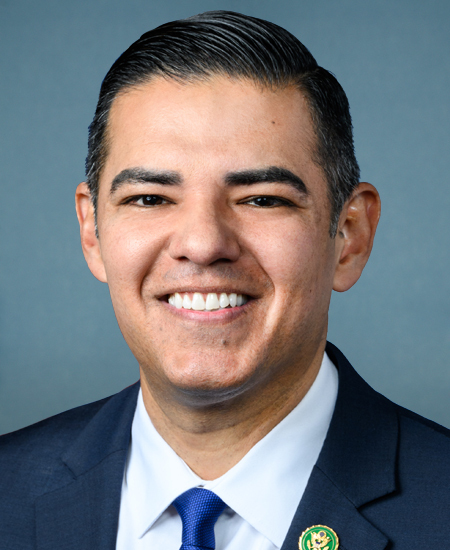
Rep. Robert Garcia
Sponsored bills
Maddy summaryThe Fund the TSA Act sets a new aviation security fee of $7.60 per one-way air trip (capping round trips at $15.20) and requires annual inflation adjustments starting in 2026. It creates three dedicated funds from these fees: $250 million yearly (2024-2028) for airport security technology development (including $12.5 million for small businesses), $1.14 billion in 2024 for TSA worker salaries and benefits, and $130 million in 2024 for airport security programs like law enforcement reimbursements and exit lane security grants. These funds replace diverted revenues and directly support TSA operations, technology upgrades, and workforce needs. The bill affects air travelers (via the fee), TSA employees (through funding), and small businesses (through technology development opportunities).
Maddy summaryHR 3409, the Healthy Families Act, requires most employers to provide employees with paid sick leave. Employees earn 1 hour of paid sick time for every 30 hours worked, up to a maximum of 56 hours per year, which can be used for their own illness, caring for family members, or addressing domestic violence, sexual assault, or stalking situations. Smaller employers with fewer than 15 employees can provide unpaid sick leave instead of paid leave. The bill includes protections against retaliation for using sick leave and requires employers to inform employees about their rights under this law.
Maddy summaryHR 3422, the Judiciary Act of 2023, would amend the structure of the U.S. Supreme Court by increasing the number of associate justices from eight to twelve. It would also raise the required quorum for court proceedings from six to eight justices. This bill directly affects the Supreme Court's operational structure and composition. The change is purely procedural, altering the Court's size and voting requirements without impacting other legal processes or specific groups of people.
Maddy summaryHRES 319 is a symbolic resolution passed by the U.S. House of Representatives on April 24, 2023, recognizing the federal government's duty to develop a Green New Deal. It states the House believes the government should create a comprehensive plan to address climate change and economic inequality through a 10-year national mobilization. The resolution outlines goals like achieving net-zero emissions by 2050, creating high-wage union jobs, upgrading infrastructure, and prioritizing frontline communities, but it does not establish binding policy or funding mechanisms. As a non-binding resolution, it serves as a statement of legislative intent rather than a law.
Maddy summaryThe FIGHT Act (HR 2742) amends the Animal Welfare Act to specifically target animal fighting events, such as cockfighting, by defining "rooster" as any male chicken over six months old and banning the live broadcasting (simulcasting) of such events. It prohibits using the postal service or interstate transport to move roosters for animal fighting purposes and adds civil enforcement tools allowing citizens to sue violators after a 60-day notice period. Fines up to $5,000 per violation may be imposed, and property used in animal fighting ventures can be seized. These changes strengthen enforcement against animal fighting by expanding legal remedies for the public and authorities.
Maddy summaryThe PAST Act of 2023 amends the Horse Protection Act to ban specific devices used to cause pain (soring) in horses at shows, particularly affecting Tennessee Walking Horses, Racking Horses, and Spotted Saddle Horses. It defines prohibited "action devices" (like boots or chains causing friction) and requires licensed, conflict-free inspectors at events to enforce rules. The bill increases penalties for violations to up to $5,000 fines or 3 years in jail, and mandates longer disqualifications for repeat offenses (180 days → 1 year → 3 years). Horse show organizers, exhibitors, and participants must comply with these new inspection and penalty requirements.
Maddy summaryHRES 393 is a symbolic resolution (not a law) passed by the House of Representatives on May 11, 2023, to honor diverse family structures. It recognizes adopted children (1.8 million in the U.S.), foster families (320,000 in 2021), stepparents (13% of adults), guardians, and LGBTQ+ parents (2-3.7 million children under 18 with LGBTQ+ parents). The resolution states the House’s "sense" that a parent’s contribution to a child’s success isn’t defined by how they became a parent, and all families deserve recognition. It has no legal effect or policy changes - only serves as a formal statement of support.
Maddy summaryHR 3238, the Affordable Housing Credit Improvement Act of 2023, updates the Low-Income Housing Tax Credit (LIHTC) program to increase the availability of affordable housing across the United States. The bill makes several key changes including increasing state funding formulas, modifying tenant eligibility rules to better serve vulnerable populations (such as domestic violence victims and students), and expanding credit eligibility for projects in rural and Native American communities. Specific provisions raise the credit for properties serving extremely low-income households, clarify rules around tenant income increases, and require housing providers to protect victims of domestic violence. The bill also updates terminology from "low-income" to "affordable" throughout the tax code and enhances program transparency through data sharing requirements. These changes aim to make the LIHTC program more effective at creating and preserving affordable housing units for low-income households nationwide.
Maddy summaryHR 3145, the People Over Parking Act of 2023, eliminates local and state requirements for minimum parking spots at new or substantially rebuilt residential, retail, commercial, or industrial developments located within 0.5 miles of a "covered public transit point." This directly affects developers and local governments in areas meeting the transit access criteria defined by the bill (such as fixed-guideway transit or high-frequency bus routes intersecting at least two lines). The key mechanism is preempting conflicting state or local laws, giving property owners sole discretion over parking provision within the specified transit-accessible zones. The bill aims to reduce mandatory parking infrastructure, potentially encouraging transit use and denser development near transit hubs.