

Maddy summaryHRES 746 is a non-binding resolution passed by the U.S. House of Representatives condemning all political violence - including attacks on elected officials, candidates, and public figures - and rejecting rhetoric that dehumanizes opponents. It specifically urges law enforcement to investigate and prosecute such violence, calls on public officials and media to avoid inflammatory language, and references recent incidents like the 2025 assassination of activist Charlie Kirk and targeted shootings of Minnesota legislators. The resolution does not create new laws but formally expresses the House’s commitment to protecting public servants and promoting peaceful political discourse. It directly affects the House’s public stance and serves as a call to action for officials, media, and communities to foster civil engagement.
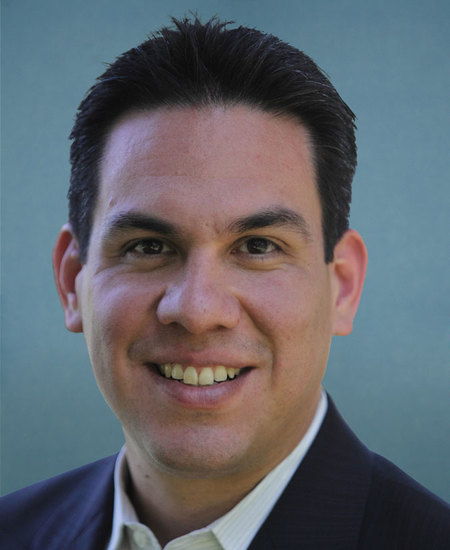
Rep. Pete Aguilar
Sponsored bills
Maddy summaryThe Tyler Clementi Higher Education Anti-Harassment Act of 2025 requires U.S. colleges and universities participating in federal financial aid programs to create and distribute clear anti-harassment policies covering harassment based on race, color, national origin, sex (including sexual orientation and gender identity), disability, or religion. These policies must explicitly prohibit harassment in all settings - including online, on campus, off-campus housing, and during school-sponsored activities - and outline reporting procedures and support services for victims. The bill also establishes a $50 million annual grant program to fund schools developing prevention programs, victim support services, or staff/student training on recognizing and addressing harassment. Grants are competitive, require annual reporting on effectiveness, and must be used to improve existing efforts without replacing existing civil rights laws like Title IX.
Maddy summaryThe Redistricting Reform Act of 2025 requires states to use independent redistricting commissions for congressional redistricting, banning partisan gerrymandering and requiring plans to comply with constitutional and Voting Rights Act standards. The bill establishes ranked criteria for redistricting, prioritizing population equality, voting rights protections, and community preservation over partisan advantage. It mandates multi-partisan commission composition with public input and transparency requirements, with states facing court-developed plans if they miss deadlines. The law would apply to redistricting after the 2030 census, affecting all 50 states' congressional district maps.
Maddy summaryHRES 721 is a procedural resolution assigning specific members to House standing committees. It assigns Mr. Walkinshaw to the Committee on Oversight and Government Reform (ranking immediately after Mr. Min) and Mr. Frost to the Committee on Transportation and Infrastructure. This resolution directly affects these members by determining their committee placements for the 119th Congress. It does not create new policy or alter laws, only formalizing existing committee assignments through House procedure.
Maddy summaryThe FAMILY Act would establish a national paid family and medical leave insurance program that provides wage replacement benefits for workers needing time off for caregiving or medical reasons. It defines "qualified caregiving" to include caring for a family member with a serious health condition, personal medical needs, or recovery from violence (including domestic violence, sexual assault, or stalking). Benefits would be calculated based on earnings, with a minimum monthly benefit of $580 and maximum of $4,000, administered by a new Office of Paid Family and Medical Leave within the Social Security Administration. Eligible individuals would need to have worked for at least 8 quarters in the previous year and file an application with required documentation, while existing state paid leave programs would continue to operate alongside this federal program.
Maddy summaryHR 5309, the Congressional Tribute to Constance Baker Motley Act of 2025, authorizes a posthumous Congressional gold medal for Constance Baker Motley, a pioneering civil rights attorney and judge. The bill directs the Treasury Secretary to strike the medal with her image and name, to be presented to her son, Joel W. Motley III, and her niece, Constance Royster. It also permits the sale of bronze duplicates at cost to cover expenses, with proceeds going to the U.S. Mint fund. This is a commemorative measure with no substantive policy changes, honoring Motley’s legacy as the first African-American woman appointed to a federal judgeship.
Sickle Cell Disease Comprehensive Care Act This bill allows state Medicaid programs to establish health homes to provide coordinated care for individuals with sickle-cell disease. (Under current law, state Medicaid programs may establish health homes to provide coordinated care for individuals with specified chronic conditions.) States must ensure that such care includes dental and vision services. The Centers for Medicare & Medicaid Services must issue best practices for states on how to design and implement such health homes.
Maddy summaryThis bill extends the expiration date for a provision allowing certain vehicles to use High Occupancy Vehicle (HOV) lanes without meeting standard occupancy requirements. Specifically, it amends federal law to change the deadline from September 30, 2025, to September 30, 2031. The change directly affects drivers and vehicle operators who currently qualify for this exemption under existing rules. It is a procedural reauthorization, not a policy change, maintaining the current HOV lane exemption rules for an additional six years.
Maddy summaryHR 4874 creates a federal grant program to fund supportive services for residents in affordable housing properties assisted by federal programs like low-income housing tax credits, Section 8 housing, and supportive housing for seniors or people with disabilities. Eligible non-profits managing such properties can receive 5-year grants to provide voluntary services including health access, educational programs, financial literacy, housing stability support, and assistance with public benefits. Grantees must use at least 25% of funds for staff salaries and training, while no more than 75% can cover direct resident services like mentoring or home modifications. The program aims to improve resident outcomes by connecting them to community resources without requiring participation in any service.
Resident Physician Shortage Reduction Act of 2025 This bill increases the number of residency positions eligible for graduate medical education payments under Medicare for qualifying hospitals, including hospitals in rural areas and health professional shortage areas. The bill provides for an additional increase of 2,000 positions per fiscal year from FY2026-FY2032; during this period, each hospital may receive up to 75 additional positions in total under the bill and current law. Additionally, one-third of the positions that are made available under the bill must be allocated to hospitals that are already operating above applicable resident limits. The bill also requires the Government Accountability Office to report on strategies to increase the diversity of the health professional workforce, including with respect to representation from rural, low-income, and minority communities.