

Maddy summaryHRES 824 is a ceremonial House resolution recognizing the religious and historical significance of Diwali, the festival of lights. It acknowledges Diwali’s meaning across Hindu, Sikh, and Jain traditions - symbolizing light over darkness, good over evil, and marking spiritual milestones like Guru Hargobind’s release and Lord Mahavira’s Nirvana. The resolution expresses respect for Indian-Americans and the global Indian diaspora, highlighting Diwali’s role in U.S. religious diversity. As a non-binding recognition, it does not create new laws, policies, or funding, but formally honors the cultural observance.
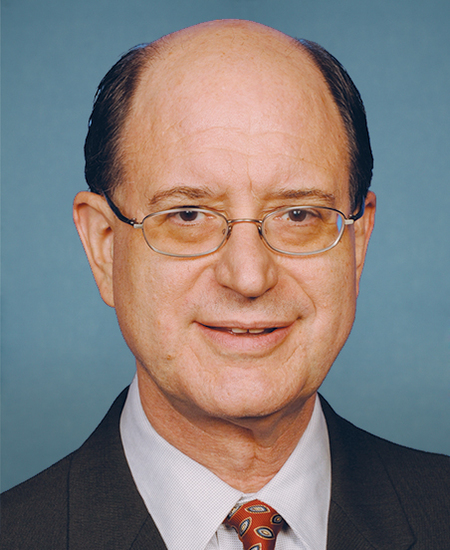
Rep. Brad Sherman
Sponsored bills
Maddy summaryThis bill modifies the USDA's 502 housing loan program to make it easier for rural homeowners to transfer properties with existing loans. It allows qualified buyers to assume a guaranteed loan when purchasing a property, releasing the original borrower from liability and transferring the loan's obligations to the new owner. The changes apply to loans guaranteed under the program after the bill's enactment, directly affecting rural homeowners and buyers in USDA loan programs. The bill also permits servicers to charge fees for transaction costs related to these loan assumptions.
Maddy summaryHRES 795 is a non-binding resolution condemning Hamas for the October 7, 2023, attacks that killed over 1,200 people, took 251 hostages (including Americans), and involved sexual violence. It demands Hamas immediately surrender and release all remaining hostages - specifically noting 48 people still held, including two U.S. citizens. The resolution also affirms Israel’s right to self-defense, calls for humanitarian aid to reach Palestinians, and condemns global antisemitism following the attacks. As a symbolic congressional statement, it does not create new laws or alter policies.
Maddy summaryHR 5715, the October 7 Gold Medal Act, authorizes Congress to award a gold medal to American hostages and victims of the October 7, 2023 Hamas attack in Israel. The medal, designed by the Treasury Secretary, will be presented to recognize their suffering and sacrifice, with the medal displayed at the Weitzman National Museum of American Jewish History in Philadelphia. The bill also permits the sale of bronze duplicates to cover costs, but does not create new legal obligations or policy changes. This is a ceremonial recognition, not a substantive legislative measure.
Maddy summaryHR 5714, the October 7 Remembrance Education Act, directs the U.S. Holocaust Memorial Museum to create a curriculum for secondary schools within 180 days of enactment. The curriculum will cover Hamas’ October 7, 2023 attacks on Israel, the history of antisemitism, the spread of anti-Israel rhetoric on campuses and social media following the attacks, and how denial or distortion of antisemitism occurs. It specifically requires schools to address the attacks' brutality, historical context of antisemitism, and contemporary manifestations of hate speech. The Museum must submit a report on the curriculum to Congress within 180 days of completion or by 3 years after the bill’s enactment. This bill affects secondary schools using the curriculum and focuses on educational content about the attacks and related antisemitism.
Maddy summaryHR 5673, titled "Stop the Trump Electricity Price Hikes Act," would reinstate financial assistance awards terminated by the Department of Energy under a May 15, 2025, secretarial memorandum. It directly affects recipients of these awards - likely energy or infrastructure projects - that had their funding cut, by restoring their financial support as if the terminations never occurred. The key mechanism requires the Department to treat all such terminated awards as valid and continuing, overriding prior termination actions. This bill does not address electricity pricing, consumer rates, or introduce new energy regulations.
Maddy summaryThis bill prohibits the removal of most federal civil service employees during government shutdowns caused by funding gaps. It prevents the President or agency heads from terminating these employees (including through layoffs) while discretionary funding is not in place. The protection specifically excludes political appointees, defined as those in leadership roles like cabinet positions, senior executive service roles, or "schedule C" policy positions. The law aims to stabilize the permanent workforce during funding disruptions.
Maddy summaryThis bill adds Medicare coverage for multi-cancer early detection screening tests (blood or biological tests analyzing cell-free DNA) starting January 1, 2028. It directly affects Medicare beneficiaries aged 68 and older (starting in 2028, with the age limit increasing by 1 year annually), requiring tests to be FDA-cleared and deemed reasonable/necessary by the Secretary for early cancer detection across multiple organ sites. Payment will initially match current stool DNA test rates before 2031, then shift to a lower rate or new payment system after 2031, with limits preventing more than one test per year. The bill explicitly states it does not alter coverage for existing cancer screenings like breast, colorectal, or prostate cancer tests.
Maddy summaryThis bill requires five federal agencies (Housing and Urban Development, Agriculture, Veterans Affairs, Treasury, and the Federal Housing Finance Agency) to coordinate housing data sharing and jointly propose policy solutions. Within one year of enactment, the agencies must establish a shared agreement and submit a report to Congress addressing mortgage costs, housing construction barriers, local regulations, insurance availability, down payment assistance, and disaster resilience. The report will outline specific proposals to improve housing affordability and market efficiency. This is a procedural bill focused on interagency coordination, not direct policy changes or benefits for homeowners.
Maddy summaryHRES 776 is a non-binding resolution expressing the U.S. House of Representatives' concern about escalating threats against Coptic Christians in Egypt, including forced conversions, violence, and systemic legal discrimination. It urges the Egyptian government to ensure Coptic Christians are treated equally under the law, end impunity for attacks by prosecuting perpetrators, and hold officials accountable for inaction. The resolution also acknowledges the U.S.-Egypt partnership and Egypt's role in regional security. As a statement of concern - not a law - it does not impose new legal requirements but aims to highlight these issues for diplomatic engagement.