Maddy summaryThis bill requires the military to approve leave for abortion and fertility care without commanders needing to know the specific procedure. It mandates reimbursement for travel, lodging, meals, and transportation costs when care isn't available nearby, and prohibits punishment for using this leave. It directly affects active-duty service members and their dependents who face barriers to reproductive care due to military restrictions or location. The policy change removes command discretion in approving leave for time-sensitive reproductive health services.
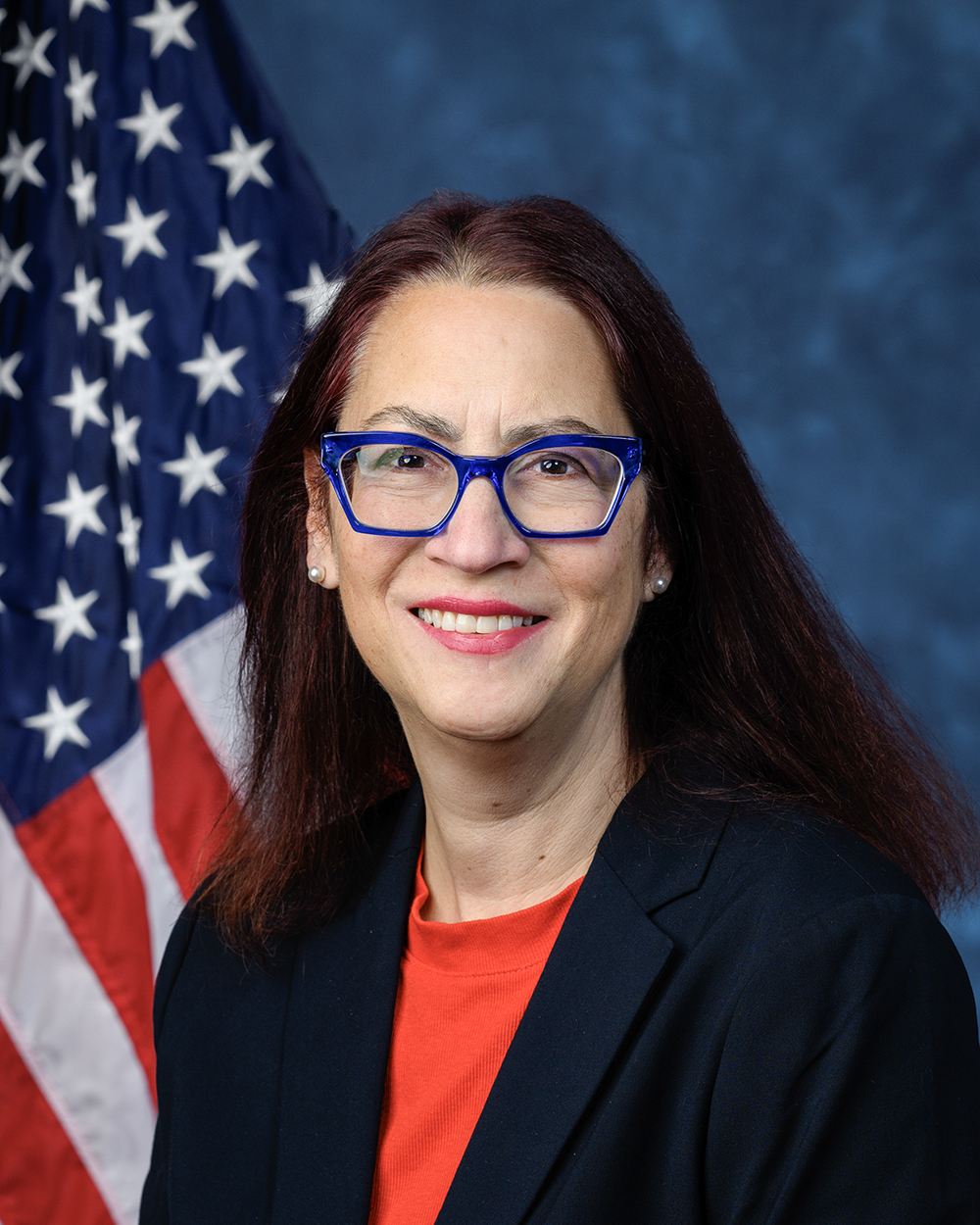
Rep. Laura Friedman
Sponsored bills
Maddy summaryHR 7480, the FAIR Act, sets pay adjustments for federal employees in 2027. It increases base pay by 3.1% for most federal workers under standard pay systems and for employees paid according to local civilian wages in high-cost areas. Additionally, it raises locality pay adjustments by 1% for 2027. The bill directly affects all federal employees covered by these pay systems through concrete, formula-based adjustments.
Safe Vehicle Access for Survivors Act This bill requires providers of connected vehicle services, upon the request of a domestic violence survivor, to terminate or disable an identified domestic abuser’s access to a vehicle’s connected capabilities and data. Specifically, within two business days of receiving a request from a survivor, a covered provider must, if technically feasible (1) terminate or disable the connected vehicle account associated with the identified abuser or the relevant vehicle, or the vehicle’s connected capabilities; or (2) instruct the survivor on how to terminate or disable connected services directly. Covered providers may not make the termination of connected vehicle services or accounts contingent on any requirement other than the provision of specified information by the survivor. For example, a provider may not require a survivor to pay a fee or extend their contract with the provider. Under the bill, an abuser is an individual identified by a survivor who committed or allegedly committed certain acts against the survivor, including domestic violence, sexual assault, stalking, and sex trafficking. A survivor is an adult against whom such an act was committed. Further, a covered provider is a vehicle manufacturer, affiliate, or entity acting on behalf of a manufacturer that provides a connected vehicle service. Connected vehicle service is any capability that enables a person to remotely access data from or send commands to a vehicle. Finally, the Federal Communications Commission must prescribe regulations governing how covered providers address survivors’ requests related to connected vehicles.

Maddy summaryHRES 1039 is a symbolic resolution supporting National Black HIV/AIDS Awareness Day observed annually on February 7. It highlights that Black Americans account for disproportionate HIV impacts (e.g., 39% of new diagnoses despite representing 12% of the U.S. population) and urges state/local health agencies to promote HIV testing, reduce stigma, and prioritize minority-led HIV services. The resolution encourages alignment with the National HIV/AIDS Strategy and emphasizes culturally competent care, but does not create new funding or enforceable requirements. It serves as a non-binding endorsement of existing efforts to address racial disparities in HIV prevention and treatment.
Maddy summaryHR 7346, the Drain ICE Act of 2026, repeals specific funding provisions (sections 90003 and 100052) from the "One Big Beautiful Bill Act" and cancels all unspent funds allocated under those sections. This bill directly affects ICE’s detention budget by removing existing financial authority for detention operations. It does not change immigration enforcement practices or directly impact individuals; it solely modifies budgetary allocations. The bill focuses on eliminating funding mechanisms, not on policy changes for migrants or enforcement. (Procedural bill; summary limited to 2 sentences as specified.)
Maddy summaryHR 5658, the Child Care for Every Community Act, establishes a federal framework to create universal, high-quality child care and early learning programs available to all young children not yet required to attend school. The bill requires that covered children (children below compulsory school age) be entitled to participate in these programs, with no fees for low-income families and sliding-scale fees for others based on family income. Key provisions include requiring full-working-day, full-calendar-year care; setting national quality standards for staff qualifications and facilities; mandating comprehensive services including health, nutrition, and family support; and requiring coordination with schools to support children's transitions to kindergarten. The bill directly affects families seeking child care, child care providers, and local communities that would administer these programs through designated "prime sponsors."
Maddy summaryHR 7284, the ICE OUT Act, modifies legal protections for U.S. Immigration and Customs Enforcement (ICE) and U.S. Customs and Border Protection (CBP) agents during law enforcement actions. It eliminates qualified immunity for agents accused of using excessive force violating the Fourth Amendment, meaning such claims can no longer be dismissed based on immunity. For other cases, agents can only claim immunity if their actions matched clearly established constitutional rights at the time of the incident. The bill requires courts to first determine if constitutional rights were violated before assessing whether those rights were "clearly established," shifting the legal standard in civil lawsuits against these agents. This directly affects ICE and CBP officers facing civil rights lawsuits related to enforcement activities.
Maddy summaryHJRES 144 is a congressional disapproval resolution targeting a specific rule issued by the Department of Veterans Affairs (VA) on December 31, 2025, which addressed "Reproductive Health Services" (90 Fed. Reg. 61310). This resolution directs Congress to disapprove the VA rule under Chapter 8 of Title 5, U.S. Code, meaning the rule would have no legal effect if passed. The bill directly affects the VA's implementation of reproductive health services for veterans, as it seeks to nullify the agency's existing policy. This is a procedural measure, not a substantive policy change, aimed solely at blocking the VA's rule through congressional action.
Maddy summaryHCONRES 68 would require the President to remove U.S. military forces from Venezuela unless Congress has explicitly authorized their use through a declaration of war or a specific law. This applies to any U.S. Armed Forces currently stationed in Venezuela without such authorization. The resolution is based on the War Powers Resolution, which mandates congressional oversight of military deployments. It directs the immediate withdrawal of unapproved forces without adding new time limits or conditions.
Maddy summaryThe PrEP Access Act expands Medicare Part B coverage to include pharmacist-provided HIV prevention services, such as pre-exposure prophylaxis (PrEP) counseling, medication administration, and related testing. It directly affects Medicare beneficiaries (primarily seniors) and pharmacists, allowing pharmacists to bill Medicare for these services under state law. Key provisions set payment at 80% of the lesser of actual charges or 85% of physician rates, and prohibit balance billing for these services. The policy change takes effect January 1, 2027, making PrEP more accessible through pharmacy settings.