

Maddy summaryHR 2949, the Working Families Task Force Act of 2025, establishes a federal task force to examine challenges facing working families and develop policy recommendations. The task force, led by the Secretary of Labor and including representatives from 9 agencies (like Health, Education, Housing, and Small Business), will meet quarterly to study issues such as affordable childcare, livable wages, housing access, healthcare costs, and workforce training. It must submit a report to Congress within 180 days, detailing findings, stakeholder consultations, and recommendations for improving working families' quality of life. This bill creates a research and coordination mechanism but does not enact new laws or funding.
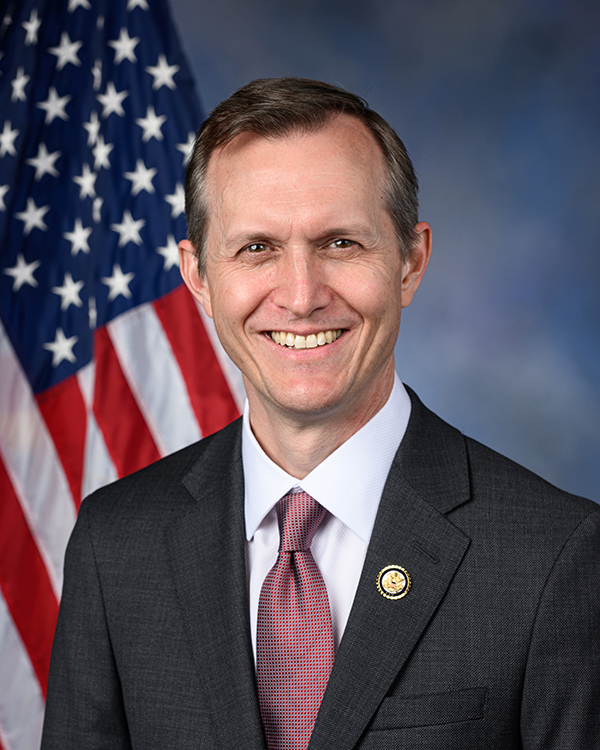
Rep. George Whitesides
Sponsored bills
Maddy summaryHR 2910, the Youth Workforce Readiness Act of 2025, establishes a federal grant program to fund community-based organizations in creating after-school and out-of-school-time workforce readiness programs for youth aged 6-18. The bill authorizes $100 million annually (2026-2030) to support activities like career pathway planning, paid work experiences (including apprenticeships), occupational skill training aligned with local job needs, and employer partnerships. It directly affects eligible youth - particularly those in underserved communities - and requires grantees to coordinate with schools, employers, and local workforce boards, while mandating youth councils to advise on program design. The program emphasizes measurable outcomes, including improved school attendance, skill development, and transitions to postsecondary education or employment.
Maddy summaryThis bill amends the Elementary and Secondary Education Act to explicitly include accounting education as part of a well-rounded K-12 curriculum. It requires schools to develop and strengthen programs teaching accounting, including increasing access to high-quality accounting courses for students from groups historically underrepresented in accounting careers. The key provision inserts specific language into existing law, directing schools to promote accounting career awareness and expand course availability through grade 12. This directly affects K-12 students, particularly those from underrepresented backgrounds, by making accounting education a recognized component of career-focused learning.
Maddy summaryHR 2818, the Early Childhood Nutrition Improvement Act, updates federal child care nutrition program rules to improve administration and reduce burdens. It requires annual eligibility reviews for for-profit child care centers (Section 2), overhauls how "serious deficiency" findings are handled (Section 3), and allows up to 3 meals per day for children in extended care (Section 4), including a study on third-meal reimbursement. The bill also creates an advisory committee (Section 6) to reduce paperwork for providers, parents, and states, focusing on streamlining applications, digital documentation, and eliminating duplicative State requirements. These changes directly affect child care centers, family day care homes, and state agencies administering the program.
Maddy summaryThe GOSAFE Act prohibits the sale, manufacture, transfer, and possession of gas-operated semi-automatic firearms and large capacity ammunition feeding devices (those holding more than 10 rounds). It defines gas-operated firearms as those that use gas from fired cartridges to cycle the action, requiring the Attorney General to publish a list of prohibited firearms within 180 days. The bill establishes a process for manufacturers to seek approval for new firearm designs before selling to civilians and creates a "Firearm Safety Trust Fund" to cover related costs. Certain firearms are exempt, including single-shot, muzzle-loading, and firearms with permanently fixed magazines holding 10 or fewer rounds. Violations could result in fines up to $5,000 or up to 12 months in prison.
Maddy summaryThe National Biotechnology Initiative Act of 2025 establishes a coordinated federal strategy for biotechnology across 14 participating departments and agencies, including Agriculture, Defense, and Health and Human Services. It creates a National Biotechnology Coordination Office and an Interagency Committee to oversee activities related to research, regulatory streamlining, workforce development, and international partnerships. The bill authorizes $22 million in fiscal year 2026, increasing to $35 million by 2027, and requires annual reports and a national strategy every five years. Key provisions include developing a centralized website for biotechnology information, standardizing regulatory pathways for biotechnology products, and improving workforce development programs. This legislation aims to reduce duplication, improve coordination across government departments, and enhance U.S. competitiveness in biotechnology.
Maddy summaryThe American Family Act (HR 2763) establishes a new refundable child tax credit that provides monthly payments to eligible families with children. It would pay $300 per month for each child under age 6 and $360 per month (120% of $300) for each child age 6 or older, with income limits of $150,000 for joint filers and $112,500 for other filers. The bill creates a "period of presumptive eligibility" to determine eligibility for monthly payments, allowing families to receive advance payments based on information from previous tax returns. This would directly affect millions of families with children who meet the income requirements, providing more consistent financial support throughout the year rather than an annual tax credit.
Maddy summaryHR 2771, the Forest Legacy Management Flexibility Act, allows states to authorize qualified organizations (like accredited land trusts) to acquire, hold, and manage conservation easements under the Forest Legacy Program instead of requiring states to handle all such easements directly. To qualify, organizations must meet IRS standards for conservation purposes, maintain Land Trust Accreditation Commission accreditation, and demonstrate ability to monitor and enforce easements. The bill includes safeguards requiring easements to revert to the state or another approved organization if the qualified organization fails to meet program requirements or modifies easements inconsistently. This directly affects states administering the Forest Legacy Program and eligible land conservation groups working on forestland protection.
Maddy summaryHR 1960, the Simplifying Veterans Assistance Act of 2025, modifies how the Department of Veterans Affairs (VA) assists organizations applying for grants to support homeless veterans. It requires the VA to make online guidance and best practices publicly available and hold at least two mandatory pre-application information sessions for entities seeking these grants. Each session must last at least one hour, include Q&A, explain application language, and detail other assistance resources. This directly affects veterans' service organizations applying for homeless assistance grants under existing VA programs.
Maddy summaryHR 2687, the End Kidney Deaths Act, creates a federal tax credit for living kidney donors who give non-directed donations (meaning they don't know the recipient's identity). It provides a $10,000 annual credit for five years ($50,000 total) to donors whose kidney is removed after December 31, 2026, with special rules if the donor dies during this period. The credit applies only to living, non-directed kidney donations and explicitly states it does not count as "valuable consideration" under laws prohibiting organ sales. This bill directly affects living kidney donors who choose to donate anonymously, aiming to incentivize such donations by offsetting related costs through tax relief. The credit expires after December 31, 2036.