

Homeownership for DREAMers Act This bill prohibits federal mortgage providers from limiting insurance eligibility on the basis of the mortgagor's participation in the Deferred Action for Childhood Arrivals Program.
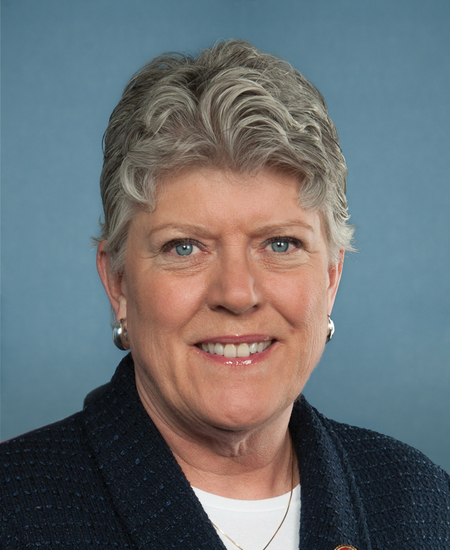
Rep. Julia Brownley
Sponsored bills
USPS Fairness Act This bill repeals the requirement that the U.S. Postal Service annually prepay future retirement health benefits.
Emergency Water is a Human Right Act This bill creates a grant program, administered by the Department of Health and Human Services, to provide funds to states and Indian tribes to assist low-income households that pay a high proportion of household income for drinking water and wastewater services. Further, any entity receiving financial assistance under this grant program must ensure that no home energy service or public water system service is or remains disconnected or interrupted during the COVID-19 (i.e., coronavirus disease 2019) public health emergency.
Medicare Economic Security Solutions Act This bill modifies provisions relating to enrollment periods for Medicare medical services. Among other things, the bill establishes a late enrollment penalty of 15% of monthly premiums and applies the penalty for a period equal to twice the number of months in each 12-month period during which the individual was not enrolled. Currently, the late enrollment penalty is 10% of monthly premiums for each 12-month period during which the individual was not enrolled, and the penalty continues to apply for as long as the individual is enrolled in Medicare medical services. The bill also expands the special enrollment periods to individuals who have health insurance coverage other than through their employer.
Mental Health Access Improvement Act of 2021 This bill provides for coverage of marriage and family therapist services and mental health counselor services under Medicare. It also excludes such services from the skilled nursing facility prospective payment system, and authorizes marriage and family therapists and mental health counselors to develop discharge plans for post-hospital services.
This bill reauthorizes through FY2026 and revises the Energy Efficiency and Conservation Block Grant Program. Under the program, the Department of Energy provides grants to local governments, states, and Indian tribes for energy efficiency and conservation projects and programs. This bill expands the allowable uses of grant funds to include the deployment of energy distribution technologies that significantly expand access to alternative fuels.
Federal Accountability in Chemical Testing Act or the FACT Act This bill requires the Interagency Coordinating Committee on the Validation of Alternative Methods to report on progress in developing, validating, and promoting regulatory acceptance and use of toxicological testing methods that replace or reduce the use of animals. Federal agencies that require or recommend toxicological testing must provide the committee with information necessary for this reporting.
COVID-19 Mine Worker Protection Act This bill requires the Department of Labor to issue health and safety standards to protect coal miners from occupational exposure to COVID-19 (i.e., coronavirus disease 2019). Labor shall provide for emergency standards within seven days of this bill's enactment, and such emergency standards shall be in force until permanent standards are promulgated. Labor shall also collect data to track and investigate cases of exposure to COVID-19 among coal miners.
Rebuilding Our Communities by Keeping aggregates Sustainable Act of 2021 or the ROCKS Act This bill directs the Department of Transportation to establish a working group of stakeholders (e.g., state, tribal, and local transportation and planning agencies) with knowledge and expertise in the production and transportation of materials used in the construction and maintenance of transportation infrastructure projects to conduct a study on access to such materials, including access to stone, sand, and gravel.
This resolution calls for the federal government to establish a national biodiversity strategy, which must include a goal of conserving at least 30% of U.S. lands and waters to protect biodiversity and address climate change by 2030 and other goals necessary to reduce the threats to biodiversity.