

Restoring Integrity to America's Elections Act This bill revises provisions regarding the Federal Election Commission (FEC), including to change FEC membership. Specifically, the bill reduces the number of appointed members of the FEC from six to five and permits no more than two members to be affiliated with the same political party. Further, it removes the Secretary of the Senate and Clerk of the House as ex officio members. Next, the bill establishes the Blue Ribbon Advisory Panel to recommend to the President individuals for nomination to the FEC. The President shall appoint the FEC chair, subject to Senate confirmation. The bill distributes the FEC's powers between the chair and the other FEC members. Further, it requires the FEC to ensure that its forms allow for the use of an accent mark as part of an individual's identification. The bill modifies the process for (1) the FEC to initiate an investigation, and (2) a party aggrieved by the FEC's dismissal of the party's complaint or the FEC's failure to take action on the party's complaint to seek judicial review in federal court. Additionally, individuals who submit written comments regarding requests for advisory opinions must be given an opportunity to appear at FEC hearings on those requests. The bill also permanently extends the FEC's administrative penalty authority. Finally, the bill provides statutory authority for limitations on ex parte communications as applied to FEC members and employees. It also specifies that FEC attorneys may represent the FEC before the Supreme Court.
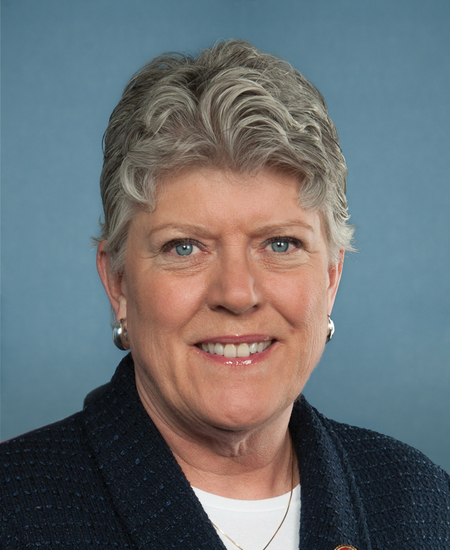
Rep. Julia Brownley
Sponsored bills
Energy Efficient Appliances Act This bill revises and expands the Appliance and Equipment Standards Program of the Department of Energy (DOE). Under the existing program, DOE sets minimum energy efficiency standards for product categories of certain consumer products (e.g., appliances) or industrial equipment. This bill expands the categories of appliances and equipment for which DOE may issue energy conservation standards. It also expands the meaning of energy conservation standard to include a performance standard that prescribes a minimum level of water efficiency or a maximum quantity of water use. In addition, the bill reduces the lead time for when the standards must come into effect after the standards are issued or updated. If DOE misses deadlines for issuing certain energy efficiency, energy use, or water use standards, then states may set higher standards than the national standard. Finally, the bill repeals the following rules issued by DOE: Energy Conservation Program for Appliance Standards: Procedures for Use in New or Revised Energy Conservation Standards and Test Procedures for Consumer Products and Commercial/Industrial Equipment , and Energy Conservation Program for Appliance Standards: Procedures for Evaluating Statutory Factors for Use in New or Revised Energy Conservation Standards .
Surface Transportation Investment Act of 2021 This bill limits or repeals certain tax benefits for major integrated oil companies, including (1) the foreign tax credit for companies that are dual capacity taxpayers, (2) the tax deduction for intangible drilling and development costs, (3) the percentage depletion allowance for oil and gas wells, and (4) the tax deduction for qualified tertiary injectant expenses. The bill modifies the definition of major integrated oil company to include certain successors in interest that control more than 50% of the crude oil production or natural gas production of the company. The bill establishes a Transportation Block Grant Fund and appropriates to the fund amounts equal to the increase in revenues as a result of this bill. The funds must be used for making grants under the Surface Transportation Block Grant Program.
Clean School Bus Act of 2021 This bill directs the Department of Energy (DOE) to establish the Clean School Bus Grant Program in the Office of Energy Efficiency and Renewable Energy. Under the program, DOE must award grants for the replacement of existing diesel school buses with electric buses.
Green Energy for Federal Buildings Act This bill requires the federal government to increase the amount of renewable energy it consumes to 35% of its total electricity share by 2030, 75% by 2040, and 100% by 2050. In carrying out the requirement, the Department of Energy must seek to ensure that the federal government consumes renewable energy produced on-site at federal facilities, on federal lands, or on Native American lands.
Green Federal Fleet Act This bill requires passenger vehicles that are purchased or leased from a nonfederal entity by a federal agency to be zero-emission vehicles. This requirement does not apply to tactical vehicles or in circumstances where a zero-emission vehicle is not technically feasible.
This bill provides for the presentation of a Congressional Gold Medal to the Freedom Riders, in recognition of their contribution to civil rights by fighting for equality in interstate travel.
Juneteenth National Independence Day Act This bill establishes Juneteenth Independence Day as a federal holiday.
Protecting LGBTQ Youth Act This bill expands programs that prevent and treat child abuse and neglect to address issues facing lesbian, gay, bisexual, and transgender youth. Specifically, these programs include (1) research and reporting requirements, (2) providing technical assistance, (3) grants to states and local agencies to train child-welfare personnel, and (4) community-based prevention-service grants, among others.
National Apprenticeship Act of 2021 This bill provides statutory authority for the registered apprenticeship program within the Department of Labor and for related grant programs. The bill provides statutory authority for the Office of Apprenticeship (OA) within Labor. The OA's responsibilities include (1) supporting the development of apprenticeship models; (2) recognizing qualified state apprenticeship agencies, and operating apprenticeship offices in states without a recognized agency; (3) providing technical assistance to state agencies; (4) periodically updating requirements for each occupation in the apprenticeship program and determining whether to approve new occupations for the program; (5) promoting greater diversity in the national apprenticeship system; and (6) awarding grants provided by this bill. The bill also establishes in statute the responsibilities of state apprenticeship agencies and offices, including (1) providing technical assistance to stakeholders, (2) resolving complaints, (3) establishing state performance goals, and (4) including in its written plan a description of how its apprenticeship programs align with the skills needs of the state's employers. The OA shall enter into an agreement with the Department of Education to promote the integration and alignment of apprenticeship programs with secondary, postsecondary, and adult education. The OA shall award grants, contracts, or cooperative agreements to eligible entities to (1) expand national apprenticeship system programs, including by expanding pre-apprenticeship and youth apprenticeship programs; (2) encourage employer participation; and (3) strengthen alignment between the apprenticeship system and education providers. The bill provides statutory authority for criteria for various programs, including (1) quality standards for apprenticeships, (2) requirements for apprenticeship agreements between a program sponsor and an apprentice, and (3) acceptable uses for grant funds awarded by this bill. The bill also provides statutory authority for the National Advisory Committee on Apprenticeships. The committee's duties shall include advising the OA on matters relating to this bill and providing recommendations on topics such as increasing the participation of populations not traditionally involved in the national apprenticeship system. Labor shall engage an independent entity to conduct research on ways to improve the management and effectiveness of national apprenticeship system programs.