

Maddy summaryHR 6849 designates the U.S. Postal Service facility at 2121 Meridian Park Boulevard in Concord, California, as the "Carl Jefferson Post Office Building." This bill updates all official U.S. government references (laws, maps, documents) to the facility to reflect its new name. It directly affects the postal facility itself and any federal records mentioning it. The bill contains no substantive policy changes or funding provisions, solely serving a ceremonial naming purpose.
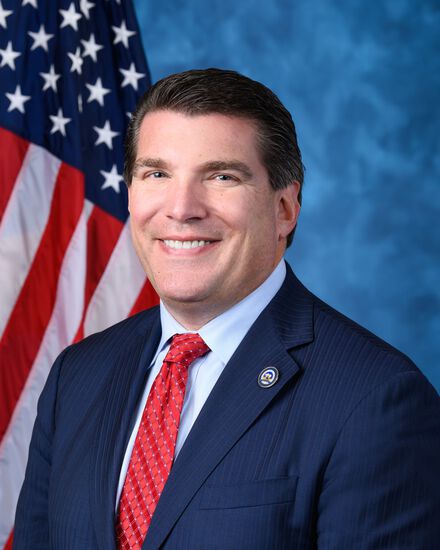
Rep. Jay Obernolte
Sponsored bills
Maddy summaryHR 3632, the Power Plant Reliability Act of 2025, requires electric utilities to provide at least 5 years' advance notice to federal and state regulators before permanently retiring any generating unit with a capacity of 5 megawatts or more. The bill mandates that the Federal Energy Regulatory Commission (FERC) can order utilities to continue operating specific plants or develop long-term transmission plans if it finds interstate service inadequate, while prohibiting FERC from forcing new plant construction or energy sales that would harm service. Utilities must also cover costs for these changes through adjusted rates, and the bill includes a provision exempting compliance actions from environmental law penalties. This directly affects large power generators, state energy commissions, and transmission operators by creating new notice requirements and FERC oversight for plant retirements.
Essential Caregivers Act of 2025 This bill prohibits certain health care facilities from limiting the access of essential caregivers to residents of those facilities, including during designated emergency periods. Specifically, the bill generally prohibits Medicare skilled nursing facilities, Medicaid nursing facilities, Medicaid intermediate care facilities, and associated inpatient rehabilitation facilities from restricting the access of essential caregivers to residents of the facilities, including during emergency periods in which visitation rights are otherwise restricted. During emergency periods, facilities may restrict access for an initial period of up to seven days and for one additional maximum seven-day period (if the additional period is approved by the state health department). Facilities may restrict access for a total of 7 days (or 14 days with the approval of the state health department) during an emergency period. Essential caregivers must agree to comply with any safety protocols set by the facility, which may be no more stringent for caregivers compared to those for staff. Caregivers who fail to comply with these requirements may be denied access, subject to an appeals process.
Maddy summaryHR 6742, titled the Q-LEAP Act, extends the expiration date of the National Science Foundation's Next Generation Quantum Leaders Pilot Program from 2026 to 2028. This bill directly affects students and educators participating in NSF-funded quantum mechanics education and training initiatives. The key provision is a technical amendment to the program's authorization period, allowing continued funding for these educational efforts. It does not create new programs or alter eligibility criteria, solely adjusting the program's timeline. The change ensures the NSF can maintain its quantum workforce development activities through 2028.
Maddy summaryHR 6709 establishes a dedicated Office of Fusion within the Department of Energy to accelerate the development and commercial deployment of fusion energy technology. The bill consolidates existing fusion programs under this new office, requires a detailed commercial deployment roadmap for Congress within one year, and mandates coordination with private industry, national labs, and other agencies to overcome barriers. It directly affects the Department of Energy, the U.S. fusion industry, and regulators by streamlining efforts to meet a goal of starting construction on multiple private fusion power plants by 2028. Key mechanisms include centralizing fusion research, managing public-private partnerships, and ensuring supply chain development to advance fusion energy as a clean power source.
Miracle on Ice Congressional Gold Medal Act This act provides for the award of Congressional Gold Medals to the members of the 1980 U.S. Olympic men's ice hockey team in recognition of the team's achievement at the 1980 Winter Olympic Games.
Maddy summaryHR 6643, the American Border Story Memorial Act, authorizes a nonprofit organization ("The American Border Story") to establish a commemorative memorial on federal land in Washington, D.C., to honor U.S. citizens and legal residents who died due to crimes committed by individuals unlawfully present in the U.S. The bill prohibits the use of federal funds for the memorial's creation or maintenance, requiring all costs to be covered by private donations. Any remaining funds after project costs must be deposited into specific federal or National Park Foundation accounts, as outlined in the Commemorative Works Act. This is a procedural memorial bill with no direct policy or regulatory changes.
Maddy summaryHR 6572 establishes the X-Labs Initiative at the National Institutes of Health (NIH), providing long-term funding to eligible research institutions for breakthrough biomedical research. It creates four funding categories: XL01 for foundational science ($5M-$50M/year for 7 years), XL02 for developing research tools ($5M-$50M/year), XL03 for regranting to high-potential projects ($5M-$50M/year), and XL04 for new institution planning ($1M-$5M for 1-3 years). The bill directly affects nonprofits, universities, and for-profit entities with research subsidiaries, requiring them to use funds exclusively for NIH-supported research without competing for other federal research grants during the award period. Key provisions include strict requirements for XL03 regrants to support projects unlikely to secure traditional NIH funding, and annual reporting to Congress on program progress and impact.
Maddy summaryThe AI Talent Act (HR 6573) creates specialized hiring teams within federal agencies to streamline recruitment for technology and artificial intelligence positions. It establishes agency-level "AI talent teams" to improve job announcements, assessments, and hiring for tech roles, while the Office of Personnel Management (OPM) will lead a central team to coordinate cross-agency hiring efforts, share technical assessments, and develop an online platform for standardized skills evaluations. The bill directly affects federal agencies hiring for AI and tech roles and applicants seeking those positions by changing how technical skills are assessed - requiring job-specific evaluations (like coding tests or structured interviews) instead of relying solely on self-assessments after 5 years. Key provisions include sharing assessment tools between agencies, allowing customization of evaluations, and mandating that assessments be based on job analysis to measure relevant skills. The law aims to modernize federal hiring for high-demand tech talent without altering pay or creating new government programs.
Maddy summaryHRES 925 is a non-binding resolution condemning the Iranian government's ongoing persecution of the Baha'i religious minority. It directly affects Baha'is in Iran, who face systemic discrimination, imprisonment, denial of education and employment, and violence due to their faith. The resolution calls on Iran to immediately release Baha'i prisoners, end hate propaganda targeting them, and reverse policies banning their access to education and jobs. It also urges the U.S. President and Secretary of State to demand Iran's compliance and use existing sanctions authorities against officials responsible for human rights abuses against Baha'is.