

Maddy summaryThis bill, known as the DROUGHT Act of 2026, increases the maximum federal funding level for certain water infrastructure projects from the standard cap to 90 percent of project costs. It directly affects states and counties experiencing severe drought conditions, as well as projects serving low-income communities or those designated as regionally or nationally significant. The legislation defines covered projects as those located in areas with severe drought designations or declared drought emergencies, those serving low-income populations, or those that improve water supply, reuse, or reduce water usage. The bill requires federal officials to prioritize financing for these specific projects under the Water Infrastructure Finance and Innovation Act of 2014.
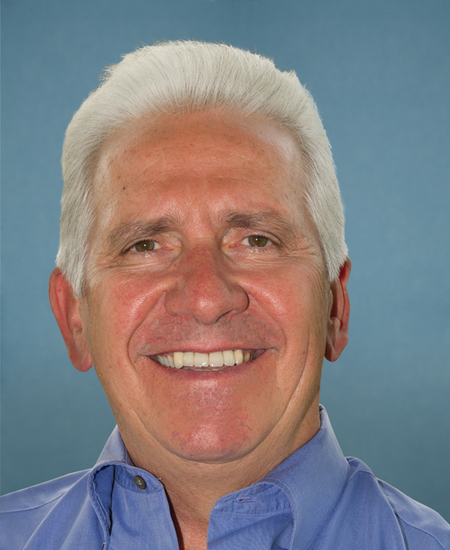
Rep. Jim Costa
Sponsored bills
Maddy summaryThis bill, titled the Disaster Aid Without Delay Act of 2026, would prevent the Secretary of Homeland Security from using policies that set fixed dollar limits on how quickly disaster relief money can be spent. It directly affects the Federal Emergency Management Agency by stopping it from requiring additional approvals or delaying payments when spending reaches certain arbitrary amounts. The law defines monetary thresholds as any fixed dollar requirement that conditions or delays fund disbursement, ensuring disaster assistance can be released without artificial spending caps.
Maddy summaryHR 7856, the Fair Housing for Survivors Act of 2026, amends the Fair Housing Act to explicitly prohibit housing discrimination based on being a survivor of domestic violence, sexual assault, or severe trafficking in persons. It adds "survivor of domestic violence, sexual assault, or severe trafficking" as a protected class in the law, alongside existing categories like race or national origin. This means landlords, housing providers, and programs cannot deny housing, evict, or otherwise discriminate against individuals due to their status as a survivor. The bill directly affects survivors who face housing barriers, including those with protective orders, shelter histories, or past evictions linked to abuse.
Maddy summaryThe INCREASE Housing Affordability Act creates a new tax credit for converting commercial buildings (like offices) into residential housing. Property owners who convert eligible buildings can claim a tax credit equal to 15% of qualified conversion costs, with limits of $200,000 per residential unit or $10 million per building. The bill also provides bonus credits for projects with rent-restricted units for lower-income residents (10-20% more credit) and for paying prevailing wages (15% more credit). To qualify, buildings must have been nonresidential for at least 15 years and undergo substantial conversion (with expenditures exceeding adjusted basis or $15,000).
Maddy summaryThis bill, known as the Direct File Act of 2026, would establish a government-run online system allowing taxpayers to prepare and file their individual income tax returns for free. The legislation prohibits the Treasury Department from entering into agreements that restrict its ability to provide tax preparation or filing services, and it voids any existing contracts with such restrictions. The program would use IRS data to simplify filing, include customer support, be available in multiple languages, and allow users to file even if they are not required to. It also enables taxpayers in participating states to file state and local returns alongside their federal returns, with funding provided to states that meet certain standards.
Maddy summaryThe DISCLOSE Act of 2026 aims to increase transparency in election spending and prevent foreign influence. It expands the ban on foreign money to cover federal, state, and local elections, including ballot initiatives and judicial nominations, and criminalizes using corporations to conceal these funds. The bill mandates that organizations spending over $10,000 on campaign-related activities, such as independent expenditures or judicial nomination advocacy, disclose their beneficial owners and top donors. Additionally, it establishes new "Stand By Every Ad" disclaimers for political communications, requiring the highest-ranking official to approve the message and, for certain ads, list their top funders. These provisions directly affect non-candidate organizations, individuals involved in political and judicial nomination spending, and foreign nationals.
Maddy summaryHRES 1073 is a non-binding resolution designating February 21-28, 2026, as "National FFA Week" to recognize the National Future Farmers of America (FFA) Organization’s role in developing agricultural education leaders and to celebrate the 50th anniversary of Alaska’s State FFA Association. It does not create new laws or affect any specific groups or policies; instead, it formally expresses the House’s support for this commemorative week. The resolution highlights FFA’s mission to prepare students for leadership and careers in agriculture, food, and natural resources. As a symbolic gesture, it has no direct legislative or financial impact on constituents.
Maddy summaryThe Rural Development Modernization Act (HR 7609) increases the population threshold for determining "rural" status in Department of Agriculture programs from 20,000 or lower to 25,000 inhabitants. This change affects eligibility for broadband, telemedicine, housing, water, and sanitation programs serving rural communities across the country. The bill also removes military base population exclusions, clarifies definitions for U.S. territories and freely associated states, and requires the Secretary of Agriculture to annually reassess the population threshold based on census data and regional trends. These provisions aim to modernize how rural areas are defined for federal program eligibility.
Maddy summaryThis bill authorizes the U.S. Mint to produce two types of commemorative $2.50 coins for the 250th anniversary of the Declaration of Independence: a circulating coin for everyday use and a numismatic (collector) coin. Both would feature designs based on the 1926 Sesquicentennial coin - showing allegorical liberty holding the Declaration on one side and Independence Hall on the other - with "1776-2026" inscriptions. The bill requires the Mint to issue these coins by July 4, 2026, if technically and economically feasible, but does not mandate their production or affect any specific groups beyond the public who may purchase them.
Department of Homeland Security Appropriations Act, 2026 This bill provides FY2026 appropriations for various agencies and offices within the Department of Homeland Security (DHS), except for U.S. Immigration and Customs Enforcement (ICE), U.S. Customs and Border Protection (CBP), and management and oversight activities of the Office of the Secretary. Specifically, the bill provides appropriations to DHS for the Federal Protective Service, the Office of Inspector General, the Transportation Security Administration, the U.S. Coast Guard, the U.S. Secret Service, the Cybersecurity and Infrastructure Security Agency, the Federal Emergency Management Agency (FEMA), U.S. Citizenship and Immigration Services, the Federal Law Enforcement Training Centers, and the Science and Technology Directorate. The bill does not provide appropriations for some agencies and activities that have been funded in prior DHS appropriations acts, including ICE, CBP, and management and oversight activities of the Office of the Secretary.