

Maddy summaryThis resolution expresses support for designating the first week of August as National Community Health Center Week to honor the contributions of these facilities. It encourages all Americans to visit their local health centers during this time to celebrate the partnership between these organizations and the communities they serve. The bill highlights how community health centers provide affordable, comprehensive care to millions of people, particularly in rural and underserved areas, while integrating services like dental care, behavioral health, and pharmacy support. By recognizing these centers, the resolution aims to raise awareness of their role in improving public health outcomes and supporting local economies.
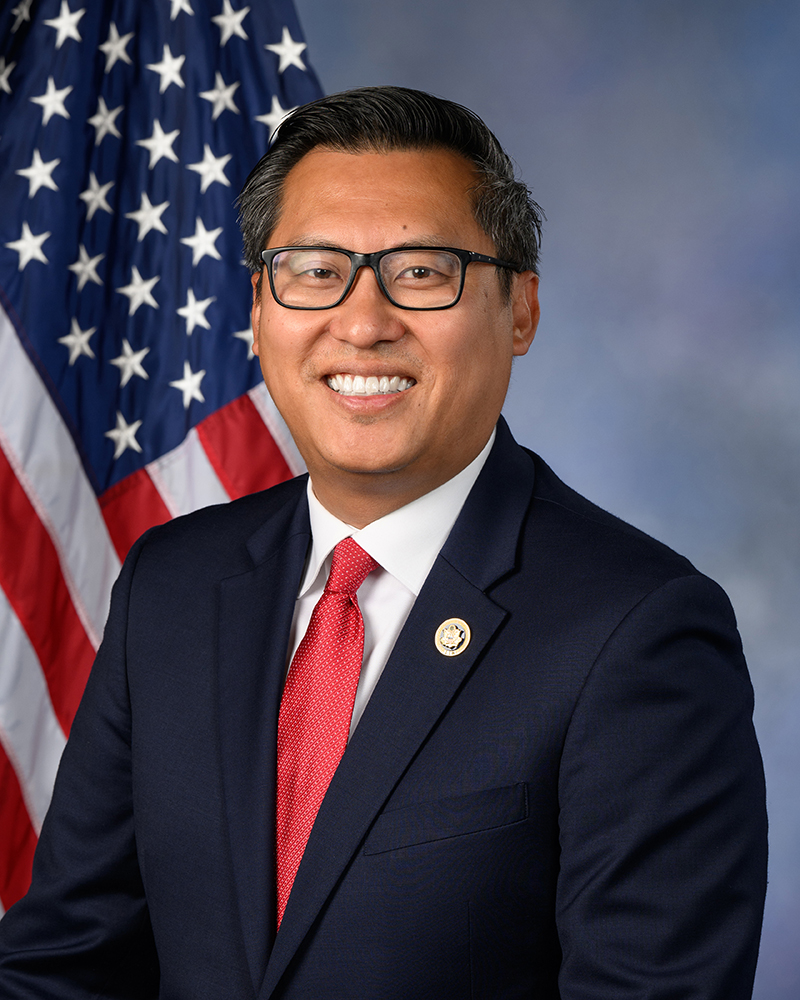
Rep. Vince Fong
Sponsored bills
Billion Dollar Boondoggle Act This bill requires the Office of Management and Budget (OMB) to collect information from federal agencies and report to Congress regarding projects that are behind schedule or have expenditures that have exceeded the original cost estimate. Specifically, the bill requires OMB to issue guidance directing federal agencies to annually submit specified information to OMB regarding certain federally funded projects that (1) are more than five years behind schedule, or (2) have expenditures that are at least $1 billion more than the original cost estimate for the project. Among other information, the agencies must submit to OMB a description of each project; an explanation of any change to the original scope of the project; the original and current expected dates for the completion of the project; the original and current cost estimates adjusted for inflation; an explanation for any delays in completing the project or increases in the cost; and the amount of and rationale for any award, incentive fee, or other type of bonus awarded for the project. The bill also requires OMB to submit an annual report to Congress containing the information submitted by the agencies and post the report on the OMB website. The report must be submitted in unclassified form, but may include a classified annex.
Maddy summaryThe GPS Modernization Acceleration Act directs the President to speed up the transition to a more secure and resilient Global Positioning System by updating aging satellites and ground control systems. This legislation requires the creation of a clear timeline to deploy 24 new GPS IIIF satellites and prioritizes the L5 signal to improve accuracy and reduce vulnerability to interference, jamming, or spoofing. It mandates coordination between the Department of Defense, the Department of Transportation, and other federal agencies to upgrade military equipment and protect critical civilian infrastructure. Additionally, the bill requires the Secretary of Defense to submit annual reports to Congress detailing progress, funding needs, and strategies for countering GPS threats over a three-year period.
Maddy summaryThis bill, titled the National Security Interstate Pipeline Act, allows the President to designate specific oil and natural gas pipelines as critical to national security, thereby placing them under exclusive federal control for siting and permitting. Once designated, the Federal Energy Regulatory Commission becomes the sole lead agency responsible for approving these projects, bypassing state and local regulations that could delay construction. The legislation also grants pipeline companies the right to use eminent domain to acquire necessary land after a good-faith negotiation attempt and permits the President to waive certain environmental laws if delays threaten national defense. Additionally, the bill sets strict timelines for federal and state agencies to complete reviews, deeming requirements satisfied if actions are not taken within specified periods, while requiring the President to report these designations and waivers to Congress.
Maddy summaryThe Geo POWER Act creates a new milestone-based financing program to support geothermal energy projects in areas with limited or no existing geothermal power generation, including regions near Indian lands. This program awards funding based on the achievement of specific technical and financial milestones rather than upfront capital, aiming to reduce risks for future projects. The initiative prioritizes projects that generate public data to characterize new geothermal resources and require a minimum electricity generation capacity of 30 megawatts. The Department of Energy must award financing to at least three different proposals across three different states, ensuring geographic diversity in project selection.
Maddy summaryHR 1266, the Combating Illicit Xylazine Act, adds xylazine - a veterinary sedative increasingly found in illicit drug mixtures - to Schedule III of the Controlled Substances Act, regulating its use and trafficking. It directly affects veterinarians, animal owners, and manufacturers by allowing xylazine to be legally dispensed for animal use under specific veterinary prescriptions, while prohibiting non-veterinary human use. The bill includes transition periods (60 days for practitioners, 1 year for labeling) to ease compliance for manufacturers and practitioners, and requires the DEA and FDA to expedite necessary applications. It also mandates two congressional reports on xylazine's illicit use and trafficking patterns, and directs the Sentencing Commission to review penalties for offenses involving xylazine.
Maddy summaryHR 4288 would rename the Department of Veterans Affairs community-based outpatient clinic in San Jose, California, as the "Corporal Patrick D. Tillman VA Clinic." The bill directly affects this specific VA facility, updating all official references to it. The key provision requires the clinic to be designated by this new name in all federal records, documents, and maps following the bill's enactment. This is a procedural naming bill honoring Corporal Tillman, a former NFL player and Army Ranger killed in action in Afghanistan in 2004.
Maddy summaryHR 3194, the LOCOMOTIVES Act, prevents states from setting their own emissions standards for locomotives used in interstate commerce. It amends the Clean Air Act to clarify that federal emissions rules exclusively apply to locomotives providing common carrier railroad transportation for hire (like commercial freight or passenger services across state lines), excluding these from state regulation. This directly affects railroads operating interstate services and state environmental agencies that previously could establish stricter local rules for such locomotives. The bill does not change the actual emissions requirements but shifts regulatory authority solely to the federal government for this specific category of locomotives.
Maddy summaryThis bill authorizes the U.S. government to transfer clear ownership of two specific land parcels in Tulare, California, to the City of Tulare. These parcels currently hold a youth recreation facility and a historic women's club but lack full title because the federal government retains a reversionary interest from a 19th-century railroad grant. The legislation extinguishes this federal interest once the Union Pacific Railroad sells the land to the city, allowing the municipality to improve and restore the sites without legal obstacles. The city will cover the costs for documenting this transfer, and the bill ensures that existing public access rights and surface entry conditions remain unchanged.
Maddy summaryThe FEES Act of 2026 modifies federal laws to limit the amount of legal fees and expenses that individuals can recover when winning lawsuits against the government. It caps these awards at $200,000 per case and restricts recipients to a maximum of three such awards in a single year, with exceptions for class-action lawsuits or cases involving the Social Security Administration and the Department of Veterans Affairs. The bill also requires that settlement agreements involving federal regulations or guidance documents cannot include payments for attorneys' fees or litigation costs. Additionally, the Act mandates an independent scientific review within five years to assess the ecological, social, and economic impacts of the legislation on federally managed lands.