

Maddy summaryThe Drug Deal Disclosure Act requires the Department of Health and Human Services to publicly release records of specific agreements between the federal government and major drug manufacturers starting in 2025. These agreements must include provisions such as offering lower drug prices based on international rates, providing discounts through government platforms like TrumpRx, or receiving special exemptions from import duties and regulatory reviews. While the bill mandates that most documents be made available in a searchable format, it allows the government to withhold only specific confidential pricing details if legally required by foreign laws or court orders, provided a justification is published. Additionally, the law directs the Congressional Budget Office and the Government Accountability Office to analyze the economic and budgetary impacts of these deals, including effects on Medicare, Medicaid, and drug competition.
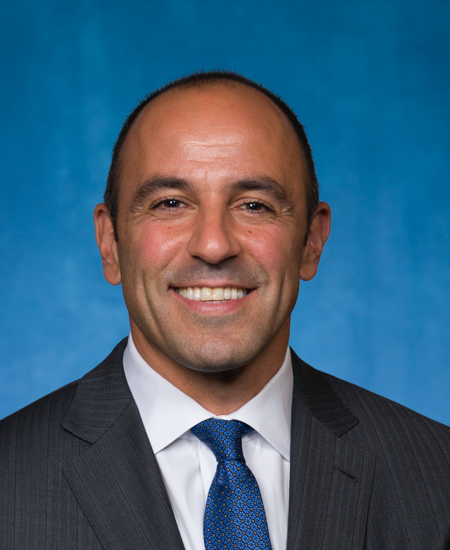
Rep. Jimmy Panetta
Sponsored bills
Maddy summaryThe Patients First Act of 2026 modifies how Medicare reimburses physicians and primary care providers to improve access and stabilize payments. It establishes a new hybrid payment model for primary care services from 2027 to 2031, which pays a monthly fee per patient to eligible independent practices while covering specific services like care management and telehealth without cost-sharing for patients. The bill also updates the formula for calculating reimbursement rates to account for high inflation years and requires more frequent updates to the costs used in calculating payments. Additionally, the legislation reforms the performance-based payment system by adding care efficiency measures, creating a task force to recommend new quality metrics, and adjusting penalties for providers who fail to report on certain data.
Maddy summaryThis bill requires Medicare Advantage plans to implement electronic pre-approval systems for medical services by 2028 and meet transparency reporting standards starting in 2027. Plans must publicly report data on approval/denial rates, appeal outcomes, response times, and technology use for pre-approval requests, including details on how denials relate to clinical criteria. It establishes a 24-hour response timeframe for certain requests and mandates annual reviews of pre-approval requirements based on data and input from seniors and providers. The law directly affects Medicare Advantage plans, seniors enrolled in these plans, and healthcare providers who submit pre-approval requests. These changes aim to make the pre-approval process faster, more transparent, and more accountable for seniors seeking covered medical services.
Maddy summaryThe MARA Act of 2026 establishes a new Office of Aquaculture within NOAA to oversee and promote commercial-scale offshore aquaculture projects in U.S. waters. This bill authorizes the issuance of permits for demonstration projects that must use native species, adhere to strict environmental safety standards, and minimize impacts on existing fishing and navigation. To support industry growth, the legislation creates funding for workforce training programs, establishes Aquaculture Centers of Excellence at specific universities, and mandates a unified permitting process to streamline federal approvals. Additionally, the act requires comprehensive studies and reports to assess the long-term environmental viability, economic benefits, and regulatory effectiveness of offshore aquaculture operations.
Maddy summaryThis resolution expresses support for designating July 10th as Journeyman Lineworkers Recognition Day to honor the workers who maintain the nation's electrical grid. The bill specifically recognizes the dangerous conditions these employees face, such as working at heights near live power lines and responding to disasters like hurricanes and wildfires. It also commemorates Henry Miller, the first president of the International Brotherhood of Electrical Workers, who died on July 10, 1896, while performing his duties. Ultimately, the measure encourages the public to observe this day with reflection on the contributions of lineworkers.
Maddy summaryThis bill requires the Medicare program to ensure specific electronic reporting methods (like digital clinical quality measures) are available for Accountable Care Organizations (ACOs) participating in the Medicare Shared Savings Program from 2025 through 2029. It clarifies that ACOs won’t be penalized for missing data from certain participants if they meet other reporting rules and demonstrate the participant couldn’t collect data via the required digital method. Additionally, it creates a voluntary pilot program (2028-2032) where selected ACOs report only two quality measures digitally instead of all required measures, with special rules about how this data affects performance scoring. The bill directly affects MSSP ACOs and changes their quality reporting requirements and flexibility.
Maddy summaryThe Jewish American Security Act aims to combat antisemitism by strengthening protections for Jewish students, securing Jewish communities, and increasing transparency regarding online hate speech. For educational institutions receiving federal funds, the bill mandates the creation of specific coordinators to handle discrimination complaints, requires annual training on handling antisemitism, and establishes a new federal clearinghouse to share best practices for campus safety. To support physical security, the legislation expands grant funding for nonprofit organizations and directs the Attorney General to provide resources for law enforcement agencies protecting houses of worship. Additionally, the act requires major online platforms with over 50 million monthly users to submit detailed reports to the Federal Trade Commission on how they detect, remove, and moderate antisemitic content.
Maddy summaryHR 7254 requests a study to evaluate designating the Bay Area Ridge Trail as a National Scenic Trail. The bill directs the Secretary of the Interior to complete a feasibility study within one year, consulting with the Bay Area Ridge Trail Council and relevant agencies. The study would assess the 550-mile trail - currently 415 miles completed - connecting over 75 parks and open spaces across the San Francisco Bay Area. This bill does not designate the trail as a National Scenic Trail but initiates a review process to determine its potential for that status. The study would examine the trail’s scenic, historic, and recreational value, including its connections to urban areas and natural features like the Golden Gate Bridge and San Andreas Fault.
Maddy summaryThis resolution recognizes the vital role that pollinators, such as bees, butterflies, and birds, play in supporting U.S. agriculture and ecosystem health. It highlights that these creatures contribute over $18 billion annually to crop production while helping to maintain biodiversity and environmental stability. The bill formally expresses support for National Pollinator Week and encourages the public to participate in related conservation and educational activities. Additionally, it acknowledges the significant decline in certain pollinator populations due to habitat loss and disease, urging continued efforts to protect these species.
Maddy summaryThe LIFT the BAR Act aims to restore access to federal benefits for lawfully present noncitizens by repealing several restrictions imposed by the 1996 welfare reform law and a 2024 reconciliation bill. Specifically, it would allow eligible noncitizens to receive SNAP food assistance, Medicaid, CHIP, and child nutrition programs, while also updating legal terminology to refer to "noncitizens" rather than "aliens" in relevant statutes. The legislation includes provisions to ensure these individuals can qualify for premium tax credits and would require federal agencies to issue implementation guidance within 180 days of enactment.