

Small Business Tax Fairness and Compliance Simplification Act This bill expands the tax credit for a portion of the employer-paid Social Security taxes for employee cash tips to include beauty service establishments. (Under current law, the credit is limited to tips received for providing, serving, or delivering food or beverages.) The credit applies to tips received in connection with providing beauty services to a customer or client if tipping employees who provide the service is customary. Beauty services include barbering and hair care, nail care, esthetics, and body and spa treatments. The bill also (1) establishes an employer tip reporting safe harbor for beauty service establishments, and (2) specifies reporting requirements for income received from renting space to individuals who provide beauty services. The employer tip reporting safe harbor for beauty service establishments provides an exemption from certain Internal Revenue Service tip examinations for employers who meet certain requirements for educational programs, reporting procedures, compliance with tax law, and recordkeeping.
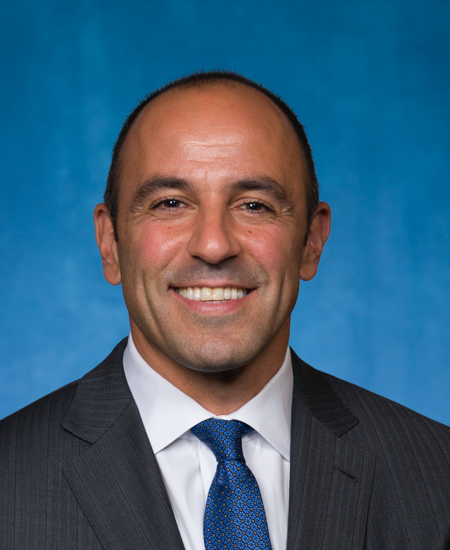
Rep. Jimmy Panetta
Sponsored bills
Aid and Attendance Support Act This bill increases the amount of specified Department of Veterans Affairs benefit payments for veterans (or their survivors) who require aid at home or are in nursing homes. Specifically, the bill increases such benefits by 25% until 60 days after the end of the declared emergency period resulting from COVID-19 (i.e., coronavirus disease 2019).
Family and Medical Insurance Leave Act or the FAMILY Act This bill entitles every employee to a family and medical leave insurance (FMLI) monthly benefit payment of two-thirds of the employee's regular pay, limited to a maximum of $4,000, for not more than 60 days of qualified caregiving. The bill establishes the Office of Paid Family and Medical Leave within the Social Security Administration to administer the FMLI program. An FMLI benefit payment must be coordinated with any periodic benefits received under a state or local temporary disability insurance or family leave program. The bill imposes a tax on employers, employees, and self-employed individuals to fund FMLI benefits. It also establishes the Federal Family and Medical Leave Insurance Trust Fund to hold tax revenues.
Retail Revitalization Act of 2021 This bill modifies rules related to rents received by real estate investment trusts (REITs) from related parties. It increases the permissible stock ownership and constructive stock ownership percentage in a REIT to 50% and modifies rules for taxable REIT subsidiaries.
Growing Renewable Energy and Efficiency Now Act of 2021 or the GREEN Act of 202 1 This bill provides tax incentives for investment in renewable energy resources and energy efficiency programs. Among other provisions, the bill extends for five years the tax credit for production of electricity from certain renewable resources (e.g., wind facilities, biomass, landfill trash facilities), allows an election to treat certain tangible property as energy property for purposes of the energy tax credit, and modifies certain provisions of the energy tax credit and expands the credit for four years; expands the 30% energy tax credit to include energy storage technology or qualified biogas property; extends for one year the tax credit for carbon oxide sequestration; allows elective payments in lieu of certain energy-related tax credits; modifies the phaseout provisions of the income and excise tax credits for biodiesel and renewable diesel and alternative fuels and extends the termination date for such credits; extends and increases the tax credits for nonbusiness energy property and the new energy efficient home tax credit; extends for five years the residential energy efficient property tax credit; increases the tax deduction for energy efficient commercial buildings; modifies the limitations on new qualified plug-in electric drive motor vehicles tax credit and allows a new credit for such vehicles that are previously-owned; allows a new tax credit for zero emission heavy vehicles (vehicles with a gross weight rating of not less than 14,000 pounds and not powered by an internal combustion engine); extends for five years the tax credits for qualified fuel cell motor vehicles and alternative fuel cell refueling property; provides for additional allocations of the advanced energy project tax credit; allows a new tax credit for the labor costs of installing mechanical insulation property; allows a new tax credit to promote environmental justice programs (programs to improve health and economic outcomes of individuals residing in low-income areas or areas populated disproportionately by racial or ethnic minorities); and requires the Department of the Treasury to report on the utility of data from the Greenhouse Gas Reporting Program for determining the amount of greenhouse gases emitted by taxpayers for purposes of imposing a fee on them for such emissions.
Scientific Integrity Act This bill revises provisions regarding the release of scientific research results by federal agencies. Each agency that funds, conducts, or oversees scientific research must (1) adopt and enforce a scientific integrity policy that includes requirements such as that scientific conclusions are not based on political considerations, and (2) submit such policy to the Office of Science and Technology Policy (OSTP) for approval. Each agency must make such policy available to the public and submit such policy to Congress. Agencies and the OSTP must periodically review the policies. The Government Accountability Office shall review implementation of the policies. Each agency shall (1) appoint a Scientific Integrity Officer, (2) establish a process for dispute resolution consistent with the scientific integrity policy, and (3) establish a specified training program for current and new employees.
Sending Outside Support Act of 2021 or the SOS Act of 2021 This bill requires the Centers for Medicare & Medicaid Services to distribute funds to allow states to establish strike teams that may be deployed to skilled nursing facilities and nursing facilities with cases of COVID-19 (i.e., coronavirus disease 2019) to help with clinical care, infection control, or staffing.
Air Traffic Noise and Pollution Expert Consensus Act of 20 21 This bill requires the Federal Aviation Administration to enter into an arrangement with the National Academies of Sciences, Engineering, and Medicine to examine and report on the various health impacts of air traffic noise and pollution.
Green Bus Act of 2021 This bill requires all buses purchased or leased with Federal Transit Administration funds to be zero-emission beginning on October 1, 2029. The Department of Transportation (DOT) must issue an annual best practices report on zero-emission bus programs to help states and transit agencies implement zero-emission bus fleets. DOT must give preference in awarding grants under the low or no emission program to transit agencies who have completed a full fleet transition plan. The federal share of the cost of any zero-emission bus purchased or leased in accordance with this bill shall be 90%.
Health Force, Resilience Force, and Jobs to Fight COVID-19 Act of 2021 This bill establishes and expands programs to bring on individuals to perform public health functions, such as contact tracing and vaccine administration, to respond to the COVID-19 (i.e., coronavirus disease 2019) emergency and meet future public health needs. The bill provides funding for the Centers for Disease Control and Prevention (CDC) to establish a Health Force. The funds are designated as an emergency requirement, which exempts the funds from discretionary spending limits and other budget enforcement rules. To establish the force, the CDC must award grants within 30 days to state, tribal, territorial, and local governments and community health centers to recruit and train individuals for roles in public health and health care. The Federal Emergency Management Agency (FEMA) must hire and train additional individuals for its Cadre of On-Call Response/Recovery Employees. These employees may be detailed to certain federal agencies or to state, local, or tribal governments to support response efforts related to COVID-19 or other disasters or emergencies.