

Public Health Emergency Privacy Act This bill imposes privacy, confidentiality, and security requirements on the use and disclosure of COVID-19 (i.e., coronavirus disease 2019) emergency health data. This is data that is linked to an individual or device, such as test results. The requirements apply to organizations that collect, use, or disclose emergency health data electronically or that manage websites or applications for contact tracing and other COVID-19 response activities. These organizations must provide notice of privacy and other policies. They must also ensure the accuracy of, prevent discrimination based on, and limit disclosure of the data. If an organization collects data from at least 100,000 individuals, it must publicly report additional information about how it uses and discloses the data. Furthermore, the bill prohibits the use of emergency health data for commercial advertising or in ways that restrict access to opportunities, services, and other accommodations. It also prohibits government entities and organizations from using this data to infringe on the right to vote. The Department of Health and Human Services must report on the civil rights impact of the collection, use, and disclosure of health data. The bill provides for enforcement by the Federal Trade Commission, states, and a private right of action. It further specifies that certain dispute resolution mechanisms, such as arbitration, are unenforceable with respect to disputes arising under the bill.
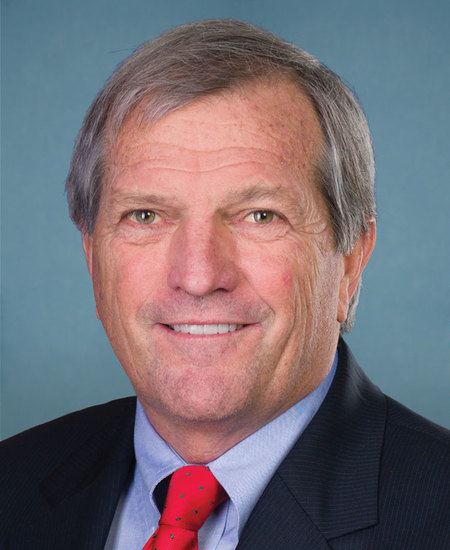
Rep. Mark DeSaulnier
Sponsored bills
Stopping the Mental Health Pandemic Act This bill requires the Substance Abuse and Mental Health Services Administration to award grants to states, tribal nations, local governments, behavioral health and primary care providers, and community organizations to support behavioral health treatment and services during the COVID-19 (i.e., coronavirus disease 2019) pandemic.
Community Health Center Mental Health Screening Act This bill authorizes the Department of Health and Human Services to award grants for mental and behavioral health screenings and mental health services to federally qualified health centers.
Advancing Connectivity during the Coronavirus to Ensure Support for Seniors Act or the ACCESS Act This bill provides funding to increase access to telehealth services and virtual visits in skilled and other nursing facilities during the COVID-19 (i.e., coronavirus disease 2019) emergency. The bill designates the funding as emergency spending, which is exempt from discretionary spending limits. Specifically, the bill provides additional funding for FY2021, to remain available through FY2022, to the Telehealth Resource Center Program to address barriers to telehealth faced by skilled and other nursing facilities. The Office for the Advancement of Telehealth within the Federal Office of Rural Health Policy in the Health Resources and Services Administration manages this program. In addition, the bill provides funding for FY2021, to remain available through one month after the emergency period ends, to the Department of Health and Human Services (HHS) for grants to nursing facilities to support virtual visits for residents during the COVID-19 emergency. HHS must develop relevant guidance for these grants within 15 days. HHS must also coordinate with the Federal Communications Commission to ensure grantees have access to telecommunications and broadband services.
Quality Care for Nursing Home Residents and Workers During COVID-19 and Beyond Act This bill modifies several requirements for Medicare skilled nursing facilities (SNFs) and Medicaid nursing facilities (NFs) to address the public health emergency relating to COVID-19 (i.e., coronavirus disease 2019) and the overall standard and administration of care in such facilities. Specifically, during the public health emergency, SNFs and NFs must comply with specified quality of care, worker safety, and transparency requirements, subject to civil penalties. Requirements include (1) testing residents and employees for COVID-19 weekly or before shifts, respectively, and reporting any lack of available testing kits on a daily basis; (2) providing at least two weeks of paid sick leave to each employee; and (3) reporting the number of COVID-19 cases and deaths, including demographic information, on a daily basis. The bill also establishes general requirements for SNFs and NFs with respect to minimum staffing levels and protections for whistleblowers and residents, subject to civil penalties, as well as training requirements for nurses. It also requires specific consent procedures in relation to the administration of certain psychotropic drugs and prohibits the use of pre-dispute arbitration agreements in such facilities.
Emergency Water is a Human Right Act This bill creates a grant program, administered by the Department of Health and Human Services, to provide funds to states and Indian tribes to assist low-income households that pay a high proportion of household income for drinking water and wastewater services. Further, any entity receiving financial assistance under this grant program must ensure that no home energy service or public water system service is or remains disconnected or interrupted during the COVID-19 (i.e., coronavirus disease 2019) public health emergency.
Environmental Justice Mapping and Data Collection Act of 2021 This bill establishes an interagency Environmental Justice Mapping Committee that must create a tool to identify environmental justice communities. Environmental justice communities are communities with significant representation of communities of color, low-income communities, or tribal and indigenous communities that experience, or are at risk of experiencing, higher or more adverse human health or environmental effects, as compared to other communities. The Environmental Protection Agency (EPA) must establish an environmental justice data repository to maintain the data collected by the committee. The EPA must make the repository available to regional, state, local, and tribal governments.
Katherine's Lung Cancer Early Detection and Survival Act of 2021 This bill requires private health insurance plans to cover, without cost sharing, screenings for the detection of lung cancer for individuals 40 years of age and older without regard to such individual's smoking history.
Women and Climate Change Act of 2021 This bill addresses climate change and its effects on women and girls. Specifically, the bill establishes the Federal Interagency Working Group on Women and Climate Change within the Department of State. The bill outlines the functions of the working group, including the coordination of agencies' policies and activities relating to combating the effects of climate change on women and improving the government's response to and strategy for climate change. In addition, the Office of Global Women's Issues of the State Department must submit a strategy to prevent and respond to the effects of climate change on women.
End Diaper Need Act of 2021 This bill establishes and expands programs to increase access to diapers and related supplies primarily for low-income families. The Department of Health and Human Services must award demonstration grants to entities with experience in community distribution of basic necessities or other community services to meet diapering needs of eligible families with infants and toddlers. Additionally, the bill permits states to use Medicaid funds to provide medically necessary diapers and supplies to certain low-income families. These families must have a child who is over age three and diagnosed with a serious condition such as bowel or bladder incontinence. It also allows individuals to buy medically necessary diapers and supplies with funds from health savings accounts and other tax-advantaged accounts for health care expenses.