This bill prohibits any executive agency from contravening Executive Order 13950 (Combating Race and Sex Stereotyping), except as such order relates to contractors and grant recipients.
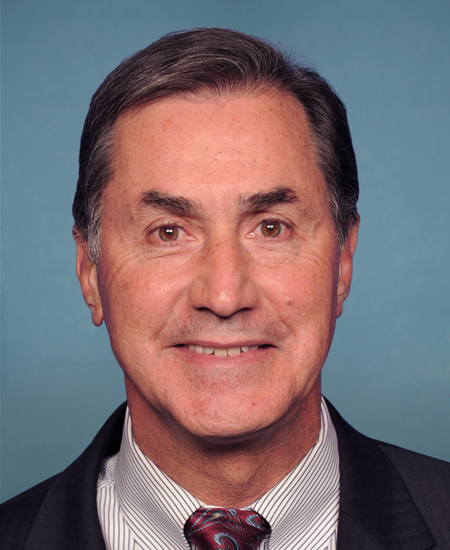
Rep. Gary J. Palmer
Sponsored bills
Save Local Business Act This bill provides that a person may be considered a joint employer in relation to an employee under federal labor law only if such person directly, actually, and immediately (and not in a limited and routine manner) exercises significant control over the essential terms and conditions of employment. Such control may by demonstrated by hiring and discharging employees, determining individual employee rates of pay and benefits, day-to-day supervision of employees, assigning individual work schedules, positions, and tasks, and administering employee discipline.
Stop CRT Act This bill grants Executive Order 13950 the force and effect of law. That order prohibits federal agencies and contractors from advancing specified policies or training related to race or sex.
No Taxpayer Funding for the U.N. Population Fund This bill prohibits the use of funds to provide contributions directly or indirectly to the United Nations Population Fund (UNFPA). The UNFPA is a United Nations agency that supports access to sexual and reproductive health services, including voluntary family planning, maternal health care, and sexuality education.
Return Excessive Migrants and Asylees to International Neighbors in Mexico Act of 2021 or the REMAIN in Mexico Act of 2021 This bill requires the Department of Homeland Security (DHS) to implement the Migrant Protection Protocols as outlined in the January 25, 2019, memo titled Policy Guidance for Implementation of the Migrant Protection Protocols . (The protocols generally required aliens who are not clearly admissible, including those seeking asylum, arriving by land along the U.S.-Mexico border to be returned to Mexico while their immigration proceedings are pending, rather than remain in the United States. On January 21, 2021, DHS stopped applying the protocols to newly-arrived individuals.)
Pain-Capable Unborn Child Protection Act This bill establishes a new criminal offense for performing or attempting to perform an abortion if the probable post-fertilization age of the fetus is 20 weeks or more. A violator is subject to criminal penalties—a fine, a prison term of up to five years, or both. The bill provides exceptions for an abortion (1) that is necessary to save the life of the pregnant woman, or (2) when the pregnancy is the result of rape or incest. A physician who performs or attempts to perform an abortion under an exception must comply with specified requirements. A woman who undergoes a prohibited abortion may not be prosecuted for violating or conspiring to violate the provisions of this bill.
Life at Conception Act This bill declares that the right to life guaranteed by the Constitution is vested in each human being at all stages of life, including the moment of fertilization, cloning, or other moment at which an individual comes into being. Nothing in this bill shall be construed to authorize the prosecution of any woman for the death of her unborn child.
No Taxpayer Funding for Abortion and Abortion Insurance Full Disclosure Act of 2021 This bill modifies provisions relating to federal funding for, and health insurance coverage of, abortions. Specifically, the bill prohibits the use of federal funds for abortions or for health coverage that includes abortions. Such restrictions extend to the use of funds in the budget of the District of Columbia. Additionally, abortions may not be provided in a federal health care facility or by a federal employee. Historically, language has been included in annual appropriations bills for the Department of Health and Human Services (HHS) that prohibits the use of federal funds for abortions—such language is commonly referred to as the Hyde Amendment. Similar language is also frequently included in appropriations bills for other federal agencies and the District of Columbia. The bill makes these restrictions permanent and extends the restrictions to all federal funds (rather than specific agencies). The bill's restrictions regarding the use of federal funds do not apply in cases of rape, incest, or where a physical disorder, injury, or illness endangers a woman's life unless an abortion is performed. The Hyde Amendment provides the same exceptions. The bill also prohibits qualified health plans from including coverage for abortions. Currently, qualified health plans may cover abortion, but the portion of the premium attributable to abortion coverage is not eligible for subsidies.

Finish the Wall Act This bill requires the Department of Homeland Security (DHS) to resume activities related to the construction of a barrier system along the U.S.-Mexico border and addresses other border-related issues. DHS must resume all such construction activities that were planned or underway prior to January 20, 2021. DHS must also expend all funds appropriated or explicitly obligated since October 1, 2016, for construction of this barrier system. DHS may not cancel contracts for activities related to such construction entered into on or before January 20, 2021. Furthermore, within 14 days of this bill's enactment, DHS must certify to Congress that U.S. Customs and Border Protection facilities that process adults taken into custody at the border are fully compliant with certain laws related to the collection of DNA. (Among other things, these laws allow for the collection of DNA samples from non-U.S. persons detained under U.S. authority.)
Future in Logging Careers Act This bill allows individuals who are 16 or 17 years old to work at certain timber harvesting operations that are owned or operated by at least one parent or a person standing in place of a parent. The bill, therefore, exempts such employees from child labor laws.