This Act allows both of the following: (1) The employment of a person 18 years or older to work in any capacity in a tavern or taproom, except that a person less than 21 years old may not prepare alcoholic liquor for patrons of a tavern or taproom. A person 18 years or older may sell or serve alcoholic liquor for patrons of a tavern or taproom. (2) A person 18 years or older may enter a tavern or taproom to pick up a food order for delivery through a third-party delivery service.
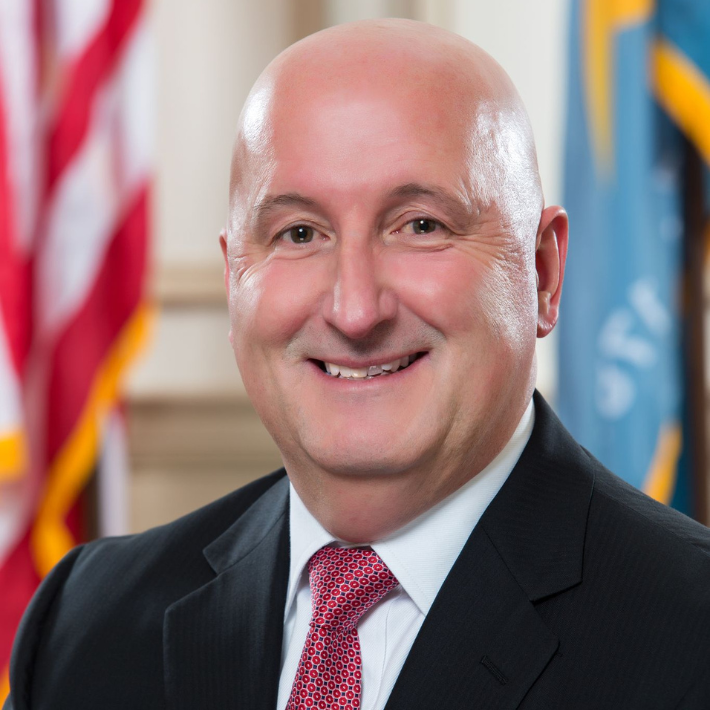
Sen. Jack Walsh
Sponsored bills
This Act establishes an evaluation and assessment system created by the Department of Education to determine whether a school facility is in good repair to assure that school facilities are clean, safe, and functional for staff and students. This Act also requires the Division of Public Health to create a routine indoor air quality monitoring program that includes temperature and humidity standards that is published on the Department of Health and Social Services website. It further requires the Division of Public Health to create a contractor certification program for indoor air quality services that will allow schools to contract with properly trained and certified contractors when indoor air quality remediation is necessary. The Act also provides procedures for districts to make procedures clear for receiving and reporting indoor air quality complaints in schools. This Substitute bill differs from the original in that it does not provide for implementation of the routine indoor air quality monitoring program nor its enforcement. Once the program is created and there is a better understanding of what it will require, the General Assembly may then establish how, and to what extent, to implement the program with the knowledge of what is necessary to do so.
The purpose of this chapter is to provide incentives for resident Delaware taxpayers to donate organs and bone marrow for transplantation and for Delaware employers to grant paid time off to employees who donate organs and bone marrow for transplantation. To that end, the Act allows Delaware taxpayers to claim a tax credit of up to $10,000 of unreimbursed medical expenses, travel expenses, lodging expenses, and lost wages that are related to a donation of an organ or bone marrow by the taxpayer or a dependent of the taxpayer. The Act also gives a tax credit to Delaware employers who provide employees who donate an organ or bone marrow with paid time off for the purpose of the transplantation, in the amount of 25% of the employee’s gross wages paid to the employee during the time missed from work, not including any amount paid to the person by the employer as traditional paid time off, for a period of up to 30 days of missed work for each donation. For qualified expenses used for a tax credit under the Act, to the extent otherwise allowable under Title 30, no tax deduction is allowed for either the donor or the employer. This Act is a substitute for and differs from Senate Bill 301 by providing that expenses related to a donation of organ or bone marrow incurred in the taxable year before the transplantation took place must be claimed in the year transplantation took place. It also provides that lost wages, for purposes of the individual tax credit, do not include any amounts paid to the person as traditional paid time off, as other than traditional paid time off, as worker's compensation benefits, or pursuant to Chapter 37 of Title 19. Similarly, gross wages, for purposes of the employer tax credit, do not include any amount paid to the person by the employer as traditional paid time off. The Act also provides implementation dates for the individual tax credit and the employer tax credit. Finally, the Act includes minor changes made for purposes of clarification.
This bill allows licensed veterinary technicians, as well as licensed veterinarians, to administer rabies vaccinations to dogs, cats, and ferrets.
This Act renames the Blackbird State Forest’s Meadows Tract the “Ennis Tract” in honor of Senator Bruce C. Ennis. The Blackbird State Forest’s Meadows Tract covers 456 acres with open meadows, forested trails, and three ponds, and includes one of Delaware’s two forest education centers. The Meadows Tract is part of an ecologically critical zone connecting the Chesapeake and Delaware Bays. The Blackbird State Forest is managed by the Department of Agriculture and is a popular destination for hiking, horseback riding, nature watching, camping, and hunting.
This Act adds victims of human trafficking to the Address Confidentiality Act. Under this program, certain crime victims are provided a substitute address by the Department of Justice so as to protect the participant’s actual address from public disclosure. This Act also makes technical corrections to conform existing law to the standards of the Delaware Legislative Drafting Manual.
This Act creates a statewide Grow Your Own Educator Program to improve recruitment, retention, and diversity of educators in Delaware public schools. The Program establishes a competitive grant process to be administered by the Department of Education. Any Delaware reorganized school district or charter school can apply for a grant to establish its own unique Grow your Own Educator Program. Subject to funding grants will be awarded on a 2-year basis. Applicants must provide a detailed explanation how their proposed Program will be run, including any partnerships with institutions of higher education and whether the Program anticipates providing last dollar tuition and related educational financial assistance to candidates accepted into their Program who commit to teaching a minimum of 3 years, upon licensure, in the Applicant’s school district or charter school. Any awarded grant money must be used to initiate and run the Program. In evaluating applications that meet the Department’s criteria, if funding is limited, the Department will give additional weight to Applicants that prioritize recruiting candidates from high-need schools, placing teacher candidates in high-need schools, develop programs that support teacher professionals, including bilingual candidates and those without bachelor’s degrees, and leverage apprenticeship and year-long teacher residency models. The Department will annually provide Program data to the Senate and House Education Committees including the number of grant applications, the number of grants awarded, names of districts and charter schools receiving grants, and retention rate for educator candidates hired by the district or charter school. For fiscal year 2022-2023 $4,000,000 is anticipated being appropriated to the Department from the General Fund consistent with the agreed settlement terms in In Re Delaware Public Schools Litigation, C.A. No. 2018-0029-VCL which states, in part, that the Governor’s proposed budget for fiscal year 2023-2024 will include at least $4,000,000 to support enhanced teacher recruitment and retention in high-need schools. A portion of those funds will be allocated to implement the Grow Your Own Educator Program established in this Act.

The Board of Medical Licensure and Discipline and the Board of Nursing are responsible for establishing continuing education requirements for medical professionals licensed by these Boards. This Act adds a requirement that practitioners licensed by these Boards who treat adults must complete one hour of continuing education in each reporting period on the topic of diagnosis, treatment, and care of patients with Alzheimer’s disease or other dementias. This bill also makes technical corrections to conform existing law to the standards of the Delaware Legislative Drafting Manual.
This substitute bill makes a technical correction to the bill.
This Act increases opportunities for federally qualified health centers (“FQHC”) and government-operated dental clinics to serve the indigent and other underserved communities with dental care and improves flexibility with updated provisional licensing processes for FQHC and government-operated dental clinic applicants. This Act assists FQHCs and government-operated dental clinics in recruiting dentists to serve those most in need. This Act adds FQHCs to the Delaware Institute for Dental Education and Research Board. This Act creates the Dental Care Access Task Force (“Task Force”) to examine and recommend a course of action to address all of the following: (1) Dental care access, including for underserved populations and communities. (2) Dental licensure practices and requirements. (3) Dental provider type and scope of practice. (4) Dental provider recruitment and retention strategies. (5) Dental insurance networks and coverage, including for the uninsured and underinsured. The Task Force must submit its report no later than February 1, 2023. This Act also makes technical corrections to conform existing law to the standards of the Delaware Legislative Drafting Manual.