

On March 1, 1875, the federal Civil Rights Act was enacted. Following the end of the Civil War and the adoption of the Thirteenth and Fourteenth Amendments, the goal of the Civil Rights Act of 1875 was to guarantee Blacks equal treatment in places of public accommodation and on public transportation. On March 25, 1875, the General Assembly enacted Chapter 194 of Volume 15 of the Laws of Delaware to permit places of public accommodation and public transportation to exclude individuals “whose presence there would be offensive to the major part of the proprietor’s customers and thereby injure the proprietor’s business”. Newspaper reports from the time indicate that this law was specifically designed to “neutralize the effects of” the Civil Rights Act of 1875. Almost 100 years later, in December 1963, the 122nd General Assembly enacted the Delaware Equal Accommodations Law, Chapter 45 of Title 6 of the Delaware Code, to prevent in places of public accommodations practices of discrimination against any person because of race, creed, color, or national origin. As part of this legislation, the 122nd General Assembly provided that “§ 1501 of Title 24, § 902 of Title 28, and § 703 of Title 26 of the Delaware Code of 1953, and all laws or parts of laws inconsistent with the provisions of this Act are hereby repealed insofar as such inconsistency does occur.” Despite the General Assembly’s intent, these provisions were not repealed at the time and, with the exception of § 703 of Title 26, which was repealed in 1974 with the rest of Chapter 7 of Title 26 as part of reorganization of Title 26, have continued to persist to this day. This Act explicitly repeals § 1501 of Title 24 and § 902 of Title 28, fulfilling the intent of the 122nd General Assembly that § 1501 of Title 24 and § 902 of Title 28 be repealed as inconsistent with the purposes of the Delaware Equal Accommodations Law that General Assembly adopted. This Act also serves to repudiate the State’s past involvement in racial discrimination that occurred in reliance on and under color of laws adopted by this State.
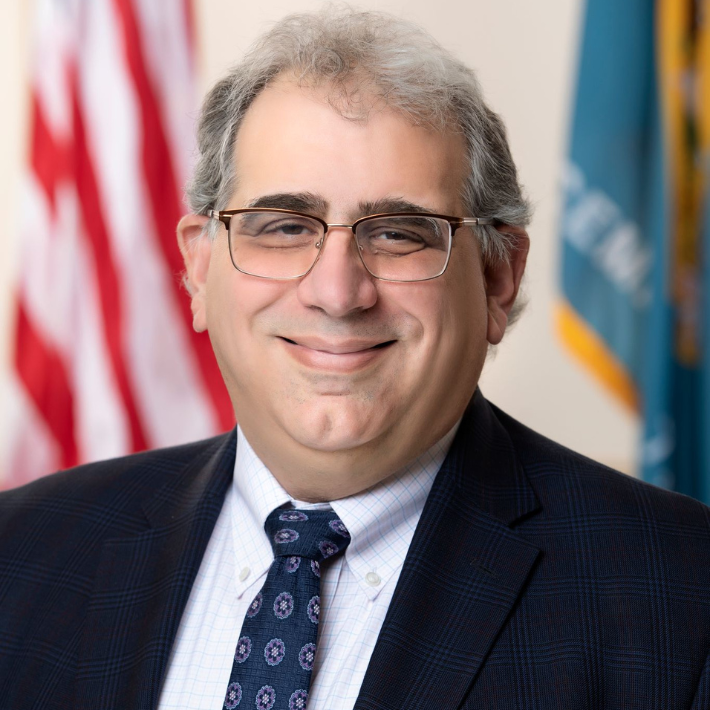
Sen. Spiros Mantzavinos
Sponsored bills
This Senate Resolution respectfully requests the President of the United States award the Presidential Citizens Medal to Jan C. Scruggs.
This Senate Concurrent Resolution recognizes the month of May 2023 as "Healthy Vision Month" in the State of Delaware.
This Senate Concurrent Resolution designates the week of May 8-12, 2023, as "Charter Schools Week" in the State of Delaware and commends Delaware's public charter schools for their efforts in educating Delaware students.
This Senate Concurrent Resolution proclaims May 2023 as "Community Action Month" in the State of Delaware.
This Senate Concurrent Resolution supports a forthcoming federal resolution recognizing Thomas Garrett as a heroic abolitionist.
This Act corrects a technical error in SB 227 (149th General Assembly) by establishing requirements for group and blanket health insurance plans that align with existing requirements for individual and State employee health insurance plans. As introduced, SB 227 specified that coverage for chronic care management under all 3 of these health insurance plan types cannot be subject to patient deductibles, copayments, or fees. Senate Amendment 1 to SB 227 made various intentional changes to SB 227 but also accidentally deleted the line that applied this chronic care management requirement to group and blanket plans. SB 227, as amended, passed both chambers unanimously. As a result, since January 1, 2019, there has been an unintentional difference in the requirements between the plan types. This Act corrects that divergence. This Act applies to policies, contracts, or certificates issued, renewed, modified, altered, amended, or reissued after December 31, 2023.
Under Senate Substitute No. 2 for Senate Bill No. 78 (151st), the Commissioner of Elections (Commissioner) must determine that an individual does not have any disqualifying convictions before the individual can be a candidate for election to a school board. This Act clarifies that an individual who meets the filing deadline for candidates for a school board election are provisional candidates until the Commissioner determines if the individual is eligible to be a candidate and requires the Commissioner to disclose the names of provisional candidates.
This Act adds different levels of criminal liability based on the specifics of a case for directors or managers of facilities who fail to take corrective action to protect patients or residents from criminal activity.
First responders, including law enforcement officers, firefighters, emergency medical services (EMS) clinicians, and public safety telecommunicators, are crucial to ensuring public safety and health. First responders are at elevated risk for suicide because of the environments in which they work, their culture, and stress, both occupational and personal. This stress can be associated with a specific incident or an accumulation of day-to-day stress. Occupational stress in first responders is associated with increased risk of mental health issues, including hopelessness, anxiety, depression, post-traumatic stress, as well as suicidal behaviors such as suicidal ideation (thinking about or planning suicide) and attempts. Even during routine shifts, first responders can experience stress due to the uncertainty in each situation. During emergencies, disasters, pandemics, and other crises, stress among first responders can be magnified. Relationship problems have also been linked to a large proportion of suicides among the general population (42%). Because first responders can have challenging work schedules and extreme family-work demands, stress caused by relationship problems may also be magnified in this worker group. Suicide is ranked second for causes of death for law enforcement officers. As of December, 2022, there were 133 law enforcement suicides, and in 2021, there were 160. In November, 2022 alone, there were 9 police officer suicides in this country, including one from Delaware. Law enforcement officers face a 54 percent higher risk of suicide than the general population. An officer involved in a high stress event has a 70% chance of suicide following the next incident if intervention is not sought, but with intervention, the number drops to 3%. Police officers are also at an elevated risk for depression, substance abuse, and post-traumatic stress disorder. Law enforcement officers and firefighters are more likely to die by suicide than in the line of duty. A study of more than 1,000 firefighters found that nearly 50% had suicidal thoughts at some point during their career, and about 16% reported one or more suicide attempts. A survey of EMTs and paramedics in the United States round that 37% had contemplated suicide, and 6.6% had attempted it. EMS providers are 1.39 times more likely to die by suicide than the public. Studies have found that between 17% and 24% of public safety telecommunicators have symptoms of PTSD and 24% have symptoms of depression. A study in Massachusetts found that the suicide rate for corrections officers was at least 7 times higher than the national suicide rate. Another study showed that 10% of corrections officers considered taking their own life, and about 1 in 3 are dealing with PTDS and depression. For the National Guard, there were 117 suicides in 2021 compared to 121 in 2020. This bill makes clear that suicide is a death in the line of duty for Delaware’s first responders, police officers, firefighters, correctional officers and probation officers, and the National Guard.