

This resolution designates April 6, 2017 as “National Tartan Day” and commemorates the outstanding achievements and contributions made by Scottish-Americans to the United States. When the United States was first formed and the thirteen states selected their first governors, nine were of Scottish ancestry. All the members of the first American cabinet had Scottish ancestry. Delaware’s first governor, John McKinly, was born in Northern Ireland of Scottish descent. Americans of Scottish descent have played a vibrant and influential role in the development of this country. However, not until 1997 was this influence recognized by a single-year U.S. Senate Resolution that appeared in the Congressional Record of April 7, 1997. In 1998 National Tartan Day was officially recognized on a permanent basis when the U.S. Senate passed Senate Resolution 155 recognizing April 6th as National Tartan Day. This was followed by companion bill House Resolution 41 which was passed by the U.S. House of Representatives on March 9, 2005. President George W. Bush signed a Presidential Proclamation on April 4, 2008 making April 6 National Tartan Day. In April of 2008, then Governor Minner issued a statement celebrating the accomplishments of Scots-Irish Americans in the First State as part of a Scots/Scots-Irish Heritage Month. April 6 commemorates the signing of the Declaration of Arbroath in 1320, which asserted Scotland's sovereignty over English territorial claims, and which was a significant influence on the American Declaration of Independence. Canada has been celebrating "National Tartan Day" since 1993. The idea and motivation for creating a similar American holiday was provided by the Scottish Coalition, a group of national Scottish- American cultural organizations.
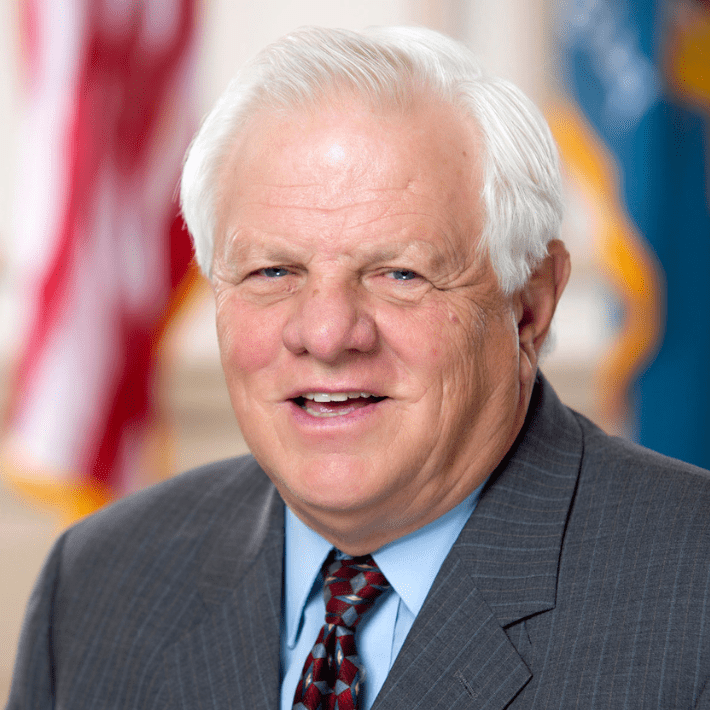
Sen. Gerald Hocker
Sponsored bills
Civil forfeiture laws represent one of the most serious assaults on private property rights in the nation today. Under civil forfeiture, police and prosecutors can seize your car or other property, sell it and use the proceeds to fund agency budgets—often without so much as charging you with a crime. This Act protects individual liberty and property rights by standardizing forfeitures across all crimes, simplifying procedures, and addressing counterproductive incentives in the law that distort policing priorities. Importantly, this Act does not change the authority of law enforcement to seize property suspected of being associated with crime or limit in any way prosecutors’ ability to charge and prosecute suspected criminals. Moreover, it ensures that those individuals proven guilty of a crime do not keep the fruits of their crime. In doing so, it strikes the right balance between the individual property rights and public safety.
This act creates a special license plate for veterans of Operation Desert Storm.
This concurrent resolution calls on the Department of Transportation (DelDOT) to study and revise as appropriate, the emergency evacuation routes for the beach areas in lower Sussex County.
This Resolution honors Dr. Vincent G. Lobo of Harrington and Bethany Beach for his long and distinguished career as a doctor of optometry, doctor of osteopathic medicine, and public-spirited citizen, and congratulates him upon his receipt of a prestigious award from his alma mater, the Philadelphia College of Osteopathic Medicine.
Currently the law requires that any person convicted of a crime identified under the section identifying sexual offenses, or offenses relating to children and incompetents must submit to DNA testing. The DNA testing is compiled and stored in the state DNA database. As many of these individuals are prone to repeat offenses, this database has proven to be a useful crime solving tool. This bill will provide that any person arrested [vs convicted] for any of these specific crimes will now be subject to DNA testing. This bill will also require testing of any individual who is currently incarcerated and convicted of a violent felony under Title 11. Additional safeguards and protections have been included in the law to balance the state’s interest in solving crimes against the rights of the arrested individuals, as discussed and approved by the U.S. Supreme Court in Maryland v. King, 133 S. Ct. 1958 (U.S. 2013). This act shall become effective upon the receipt of a federal grant to the State pursuant to the Katie Sepich Enhanced DNA Collection Act of 2012, or upon a specific annual appropriation in the Annual Appropriations Act.
This Act is the first leg of a constitutional amendment that would require the same super-majority vote to amend a provision that results in the act's expiration on a certain date, also known as a "sunset" provision, as was required to pass the act in the first instance.
This resolution encourages all Delaware departments and agencies to consider citizens with visual impairments when developing, maintaining, procuring, or using electronic information and technology.
Subchapter III, Chapter 68, Title 7 of the Delaware Code (“Subchapter III”) was originally enacted in 1982. In 1996, President Clinton signed the Bill Emerson Good Samaritan Food Donation Act, 42 U.S.C. § 1791 (“Bill Emerson Act”). The Bill Emerson Act preempts Subchapter III to the extent of any conflict, known as “partial preemption”. This Act makes Subchapter III consistent with the Bill Emerson Act by protecting a “gleaner” from civil or criminal liability as it relates to their donation of the gleaned food. Since the Bill Emerson Act only partially preempts state law on this subject, the State is free to provide greater protection than the Bill Emerson Act. Therefore, this Act does all of the following: 1. Extends to those who, in good faith, donate food to state agencies the same immunity from civil or criminal liability that is granted to those who, in good faith, donate food to nonprofit organizations. 2. Specifically includes within the definition of “food” both perishable food and wild game to makes it clear that food, in all of its forms, is covered by this Act. Thus, under this Act, those donating deer to the Division of Fish and Wildlife’s Sportsmen Against Hunger program would be immune from civil or criminal liability as it relates to the donation. 3. Protects a person who, in good faith, provides services to a nonprofit organization or state agency related to the processing of wild game that is donated to a nonprofit organization or a state agency. The bill also clarifies the authority of Division of Public Health and Department of Agriculture relating to donated food.
This Act amends the Fiscal Year 2017 Bond and Capital Improvements Act to 1) authorize the expenditure of prior year Community Redevelopment Funds for public safety purposes in the City of Wilmington; 2) clarify the applicability of prevailing wage provisions on Community Transportation Fund and Municipal Street Aid projects; 3) authorize the Department of Transportation to use Community Transportation Funds for one-time reimbursements for various projects 4) allow for the use of certain operating funds of local school districts as a match for school construction; 5) allow Cape Henlopen to transfer certain unobligated major capital improvement funds for the Sussex Consortium Building project; and 6) to authorize the Office of Management and Budget to execute loand collateral-related documents related to the New Castle County Courthouse parking facility