

This Act is the second leg of a constitutional amendment that will limit the ability of the State to appropriate Transportation Trust Fund moneys to a purpose other than (1) capital expenditures on the public transportation system, including the road system, grants and allocations for investments in transportation, the transit system, and the support systems for public transportation; (2) payment of the interest and principal on all bonds issued before or after the effective date of this Act and secured by moneys in the Transportation Trust Fund; and (3) other transportation-related purposes, including operating expenses funding the Delaware Department of Transportation, to which moneys in the Transportation Trust Fund are authorized on the effective date of this Act. The first leg, Senate Bill No. 166 of the 148th General Assembly, was adopted by two-thirds of the members elected to the General Assembly and publicized in accordance with Article XVI, § 1 of the Delaware Constitution. This Act essentially creates a lock box on the Transportation Trust Fund that can only be opened by the agreement of three-fourths of all the members of each House through a bill separate from an annual budget act, bond and capital improvement act, or grants-in-aid act. Additionally, if moneys in the Transportation Trust Fund cease to be appropriated for a transportation-related purpose, the moneys may not again be appropriated to such purpose except by the agreement of three-fourths of all the members of each House through a bill separate from an annual budget act, bond and capital improvement act, or grants-in-aid act.
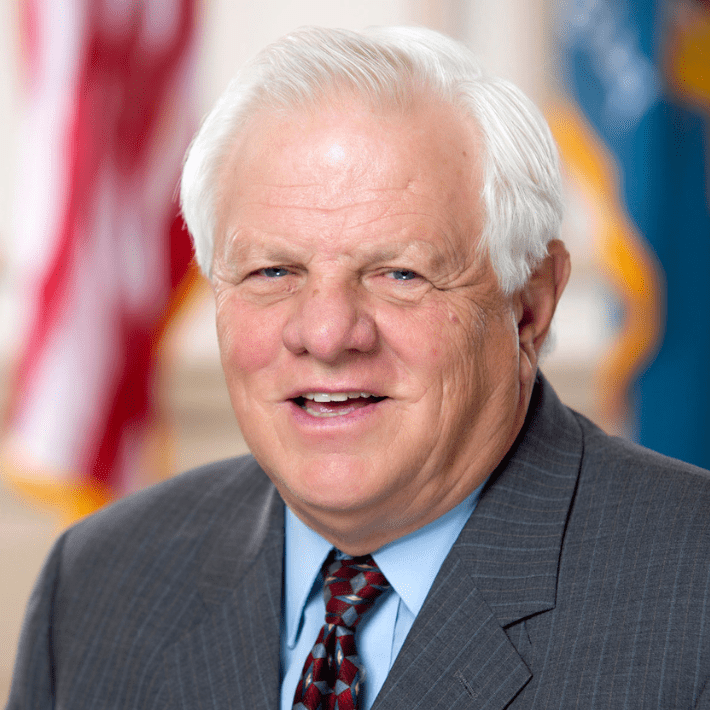
Sen. Gerald Hocker
Sponsored bills
This Act revises Delaware’s hate crime statute to make law enforcement, firefighters and emergency personnel protected classes. Nationwide we have seen unprecedented number of unprovoked attacks upon our first responders. This Act provides additional protection for those who serve to protect our communities.
The intent of this act is to promote agritourism activities within this State by broadly defining what constitutes agritourism.
This act will be known as the Extreme Crimes Protection Act. This Act revises Delaware's death penalty statute to ensure its compliance with the United States Constitution, as interpreted by the United State Supreme Court in Hurst v. Florida, and by the Delaware Supreme Court in Rauf v. State. In accord with those cases, this Act will require that before a death sentence can be imposed, a jury (unless the Defendant waives their right to one) must first determine unanimously and beyond a reasonable doubt: that at least 1 statutory aggravating circumstance exists; which (if any) statutory and non-statutory aggravating circumstances alleged by the State exist; and whether all of the aggravating circumstances found to exist outweigh all of the mitigating circumstances found to exist. This Act also revises Delaware's death penalty statute to comply with the United State Supreme Court's holding in Hall v. Florida, interpreting standards set forth in Atkins v. Virginia. This Act adopts the term "intellectual disability" used by the United State Supreme Court.
Seeking to address the pervasive problems of littering and illegal dumping in Delaware, this concurrent resolution would create the Delaware Anti-Dumping and Anti-Littering Solutions Task Force. The task force would be charged with developing actionable strategies for curtailing littering and illegal dumping in The First State and delivering a report to the General Assembly and the governor as to how these policies could be implemented and financed. The task force would be required to report no later than April 1, 2018.
This Bill confirms licensing requirements for school nurses are established by the Professional Standards Board, and evaluation criteria for school nurses are established by the District or Charter School.
Currently Industrial Accident Board hearings are held with 2 members as a panel to decide the matter. This bill requires 3 members as a panel in order to avoid a tie vote and no decision.
This bill authorizes the use of “prize-linked” savings accounts in the State of Delaware. These accounts have been used in a number of countries and several U.S. states to promote savings, especially among persons with low-income and first-time savers. A deposit into the program makes the entrant eligible for a prize. The principal in the account remains untouched. The first large-scale program of this nature in the U.S. was launched in Michigan about 6 years ago, and the program has subsequently expanded to Nebraska, North Carolina and Washington. At the end of 2014, federal legislation was passed allowing federally charted banks and credit unions to offer this type of savings account in any state that does not prohibit it. This bill explicitly authorizes such programs in Delaware and clarifies that such programs do not constitute prohibited gambling or lottery practices.
This Act explicitly allows ground effect lighting equipment on motorcycles. This extra lighting would increase motorcycle safety by enhancing their visibility.
This Resolution recognizes April, 2017 as Child Abuse Prevention Month in Delaware.