This Act changes the probate dollar limit for administering a small estate without requiring Letters of Administration or Letters of Testamentary from $30,000 to $50,000. This Act also makes changes to conform with the Delaware Legislative Drafting Manual.
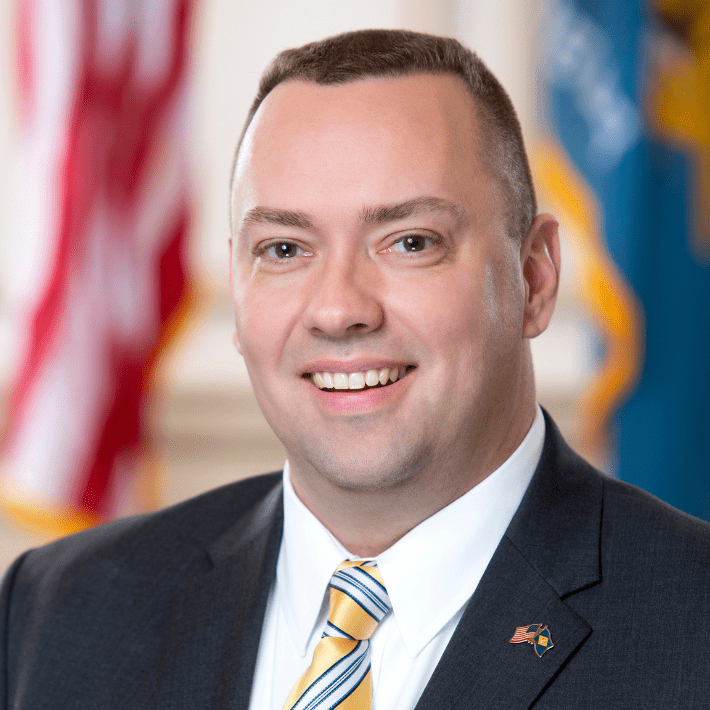
Sen. Brian Pettyjohn
Sponsored bills
This Senate Joint Resolution recognizes that missed court appearances create costs for the justice system and negative consequences for individuals, and that reminder notifications can reduce failure-to-appear rates. It directs the Delaware Judiciary to report on the cost, timeline, and requirements to build a court date reminder program for the Justice of the Peace Court and to expand it to the Court of Common Pleas, Family Court, and Superior Court and provides that DELJIS shall build the program if funding is appropriated.
This Act clarifies that paid leave for the adoption of a child may begin at one of the following times: (1) when the child is placed for adoption with the employee; (2) when the employee initiates a petition for adoption; or (3) when the adoption process is completed.
This Act makes multiple changes to Title 7 of the Delaware Code. First it increases recreational hunting opportunities and clarifies that Sunday hunting is permitted for all game animals and game birds that the Department has established hunting seasons for, while allowing private landowners and public agencies discretion when and where Sunday hunting is permitted without being overly burdensome. This Act amends and simplifies the caliber of handgun ammunition permitted for deer hunting as well as updates the use of other hunting implements consistent with new and improved technology. This Act removes European and snowshoe hares as game animals and includes skunks and weasels as such.
This Act adopts the Respiratory Care Interstate Compact (“Compact”). This Compact takes effect on the date on which this Compact is enacted into law in 7 states. As of January 2026, this Compact has been enacted in 5 states and has been filed in 6 other states. This Compact is an interstate occupational licensure compact for respiratory therapists. There are approximately 130,000 licensed respiratory therapists in the United States. Licensees currently face significant barriers providing services across state borders, even when they meet the qualifications to practice in another state. This Compact will facilitate multistate practice by reducing unnecessary licensure burdens and improve public safety by enhancing state information sharing.
This Act adopts the Cosmetology Licensure Compact (“Compact”). The Compact is active because enough states have enacted legislation to adopt the Compact. The purpose of the Compact is to reduce the burdens on state governments and to facilitate and regulate the interstate practice of cosmetology by creating a framework for a multistate licensing program. The multistate licensing program provides increased value and mobility to licensed cosmetologists, including military members and their spouses, and ensures safe, competent, and reliable cosmetology services are provided to the public. The Compact allows individuals residing in a state that joins the Compact (a “member state”) to apply, through the state, for a multistate license. A multistate license allows a qualifying licensee to practice cosmetology in all member states. Applicants for a multistate license must hold an unrestricted license to practice cosmetology in the applicant’s home state and must meet educational, national licensing examination, and background check requirements to qualify for a multistate license. Licensees must meet continuing competency requirements to qualify for renewal of a multistate license. Member states share information related to disciplinary actions against licensees, investigations of licensees, and anything that would disqualify a licensee from holding a multistate license so that each member state is aware if a licensee’s authority to practice is restricted or if the licensee is disqualified from practicing cosmetology.
This Act amends the Delaware Equal Accommodations Law to adopt the protections of the federal Rehabilitation Act of 1973’s Section 504 (“Section 504”), and its implementing regulations as those regulations existed on January 1, 2025. This bill will help ensure that Delawareans with disabilities get broad and full protection within Delaware. The bill also adds that references to Section 504 in other parts of Delaware law or regulation will be considered a reference to the Delaware Equal Accommodations Law.
This House Concurrent Resolution commends the 2026 Delaware Behavioral Health Professional of the Year, Taylor Richey and all of the District/Charter Network Behavioral Health Professionals of the Year.
This Act establishes that a fingerprint-based criminal background check and Child Protection Registry check completed for a volunteer for one public school is valid at any other public school in the State for the duration of the check’s validity period. This Act also includes public school volunteers in the State's continuous "Rap Back System" for ongoing monitoring and provides that the State must bear the costs associated with obtaining these checks for approved volunteers. This Act is effective immediately and is to be implemented on the earlier of 1 year from the date of enactment or publication of notice by the Department of Education that final regulations have been promulgated.
This Act is a substitute for House Bill No. 370. This Act differs from HB 370 in that it adds a provision for the selection of the DEFAC Co-Chair, authorizes designees for the ex officio members, clarifies a provision relating to DEFAC meetings proceedings, and makes several technical corrections. This Act also differs from HB 370 by making the effective date July 1, 2026, or upon enactment, whichever is later. Like HB 370, this Act codifies the Delaware Economic & Financial Advisory Council (“DEFAC”) which was initially created by Executive Order No. 5 in March 3, 1977, and has continued through several executive orders issued since 1977. This Act is known and may be cited as the “DuPont-Cook Financial Responsibility Act.” The purpose of this Act is to preserve DEFAC’s structure under executive order while strengthening continuity, transparency, and clarity. DEFAC consists of at least 25, but no more than 34, members. The Speaker of the House of Representatives and the Senate Pro Tempore each appoint 2 members, 1 from each caucus. The Governor appoints the remaining members, from the public and private sectors, and must appoint at least 12 members. The following serve by virtue of their positions: the Controller General, Director of the Office of Management and Budget, Secretary of Finance, Secretary of State, Secretary of Transportation, Secretary of the Department of Health and Social Services, Joint Finance Committee Co-Chairs, and State Treasurer. The duties of DEFAC are as follows: (1) Meet in March, May, June, October, and December of each year, and on other occasions that the Governor or DEFAC Chair deem necessary. (2) Serve in a general advisory capacity to the Governor and Department of Finance. (3) Advise the Governor, Secretary of Finance, and Legislative Council on: (a) The overall financial condition of the State of Delaware. (b) Current and projected economic conditions and trends, particularly as they affect the expenditures and revenues of the State, its citizens, and its major industries. (c) The tax policy of the State and the impact of federal tax policies. (4) Submit to the Governor, Secretary of Finance, Controller General, and General Assembly, by the dates required under § 6534(a) of Title 29, the General Fund and Transportation Trust Fund revenue and expenditures. (5) Submit to the Governor, Secretary of Finance, Controller General, and General Assembly, not later than December 31 of each year, estimates on the General Fund and Transportation Trust Fund revenue and expenditures. (6) Perform other duties and responsibilities imposed upon it in the Delaware Code. (7) Prepare an annual report summarizing DEFAC’s activities throughout the year, including forecast accuracy and key fiscal risks identified, no later than December 31, for distribution to the Governor and General Assembly. This Act also establishes the DEFAC Healthcare Spending Benchmark Subcommittee. Under this Act, state agencies must provide DEFAC financial and staffing support.