

According to the American Cancer Society, prostate cancer is the second-leading cause of death from cancer in men. It is estimated that about 1 in 41 men will die of prostate cancer. According to ZERO Prostate Cancer, Black men face serious health care disparities regarding prostate cancer. 1 in 6 Black men will develop prostate cancer in their lifetime compared to 1 in 8 men overall. Black men are also 1.7 times more likely to be diagnosed with, and 2.1 times more likely to die from, prostate cancer than white men. HB 302 requires all group, blanket, and individual health insurance policies to cover prostate screening for men at risk of prostate cancer. This Substitute bill broadens the definition of “prostate screening” to include any medically necessary and clinically appropriate method for the detection and diagnosis of prostate cancer, including a digital rectal exam and prostate specific antigen test, and associated laboratory work. This Substitute bill also clarifies the ages at which prostate screenings must be covered, consistent with the American Cancer Society guidelines, as follows: (1) Age 50 for men at average risk of developing prostate cancer; (2) Age 45 for men at high risk of developing prostate cancer, including African American men and men who have a first degree relative diagnosed with prostate cancer; and (3) Age 40 for men at even higher risk for prostate cancer, including men who have more than one first degree relative diagnosed with prostate cancer. This Substitute bill also extends the effective date to health insurance policies modified after December 31, 2025, and makes technical corrections.
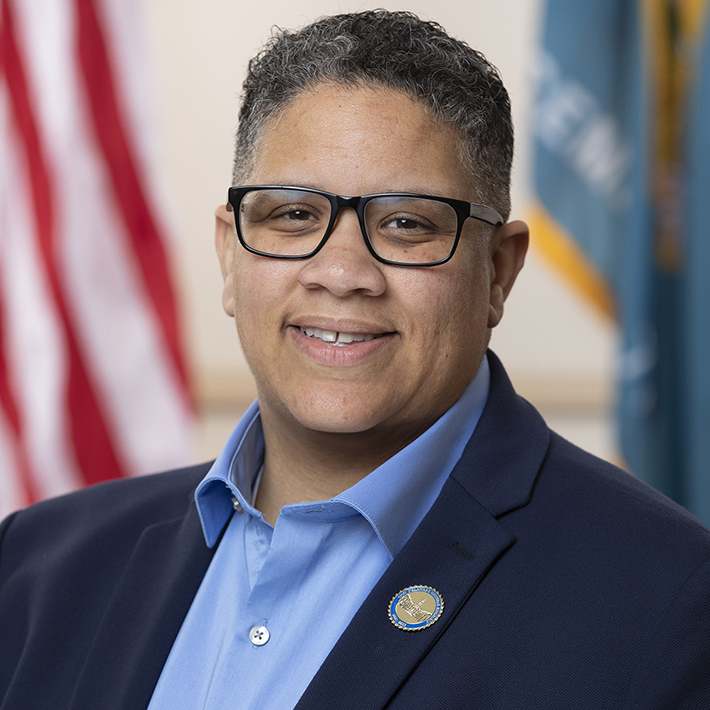
Rep. Kerri Harris
Sponsored bills
This Act authorizes the creation of Family Justice Centers within Delaware to provide victims of crime with a single source to obtain resources and support services.
House Bill No. 303, with House Amendment No. 2, from the 151st General Assembly created an annual behavioral health well check and required carriers to provide coverage for this service. In order to ensure providers of behavioral health well checks are fairly compensated, HB 303 required carriers to reimburse through common procedural technology (CPT) codes at the same billing rate. The cited CPT codes (99381-99387, 99391-99397) are used for services akin to a typical annual well visit for a new or established patient. Billing for the annual behavioral health well check under these CPT codes may impact the accuracy of state claims data from the Division of Medicaid and Medical Assistance (DMMA) to the Centers for Medicare and Medicaid Services. This Act amends Title 31 of the Delaware Code to allow DMMA to develop and implement new billing codes for a behavioral health well check. These developed codes must be comparable to the rates under the cited CPT codes.
Maddy summaryThis bill expands the authority to remove abandoned vehicles in Delaware by allowing county code enforcement constables and municipal police officers to tow cars from private property. It permits these officials to enter private land to check vehicle ownership if they have the owner's consent or if the owner lives on that property. After notifying the owner by mail to remove the vehicle within seven days, authorities can place a notice sticker on the car and tow it if it is not moved within 24 hours. The law specifically excludes automobile graveyards and vehicles hidden from public view that do not pose a safety or health risk.
Federal and Delaware law protect the right to vote and the rights of individuals with disabilities to have equal access to voting places and public facilities. Nonetheless, recent information suggests that a substantial number of polling places in Delaware are either inaccessible to persons with disabilities or lack accessible parking, infringing on the right of all eligible persons to vote in this State. This substitute, like House Bill No. 293, requires that the Department of Elections ensure that polling places selected for elections are accessible to voters with disabilities and elderly voters. This substitute adds a provision that in addition to being accessible, the accessibility features are available to voters in any election. Like House Bill No. 293, this substitute allows certain exceptions for states of emergency, or for circumstances in which no accessible polling place in a particular polling area is available and the Election Commissioner ensures that those voters impacted are provided with an alternative accessible polling place or alternative means for casting a ballot upon advance request. This substitute limits the states of emergency that would allow an exception to natural disasters or other emergencies that render a polling place unsafe or unusable. This substitute also adds a provision allowing any person with information that the Department has not complied with this section to file an administrative complaint with the Department.
This Act requires health spas selling subscription services online to provide a prospective buyer of such a subscription the right to cancel the automatic renewal online. The option to cancel is also to be presented on the website in a clear and conspicuous manner to simplify such cancellation for the buyer.
This Act requires the Department of Services for Children, Youth, and Their Families (DSCYF) to provide new luggage to children in foster care to use for the transportation of their personal belongings when entering custody, moving from one placement to another, or exiting custody, and makes clear that disposable bags and trash bags may not be used for these purposes. It requires the Department to establish and maintain an inventory of new luggage for this purpose. The Department must annually provide a report containing a current accounting of supply inventory and inventory management procedures. This Act also makes technical corrections to conform to the standards of the Delaware Legislative Drafting Manual.
This Act is a substitute for House Bill 253. Like HB 253, it requires health insurance companies, including State employee/retiree health plans and Medicaid, to cover annual mammograms for the purpose of early detection for a woman 40 years of age or older, with or without referral from the woman’s health care provider. It also prohibits mammography facilities from requiring that women, 40 years of age or older, provide the facility with the name of a healthcare provider in order to receive an annual screening mammogram. This substitute differs from HB 253 by updating Title 18, Section 3552 of the Delaware for consistency with the rest of the bill. Specifically, it requires insurance carriers to provide coverage for annual mammograms for cancer screening beginning at age 40 rather than age 50 and prohibits carriers from requiring a referral for these annual mammograms.
This Act requires that Medicaid and State employee health plans cover: (1) ovarian cancer monitoring tests for women treated for ovarian cancer; and (2) annual screening tests for women at risk for ovarian cancer.
This Act corrects, clarifies, and amends Title 29, Chapter 69 which articulates state procurement guidelines and procedures. The changes to the chapter realign some responsibilities from the Director of the Office of Management and Budget to the Director of the Section of Government Support Services (Section) within the Office of Management and Budget. Additional chapter amendments include the addition of processes to Subchapter VI, Professional Services, and authorizes the Section to lead some mandatory use Professional Services contracting efforts. The Professional Services changes made are similar to the processes and procedures as identified in other subchapters of Chapter 69. The changes will not impact the vendor community.