This Act prohibits the Department of Corrections from entering into contracts with any for-profit entity for the use of inmate labor. This Act does not apply to § 6533 of Title 11 relating to outside employment and work release.
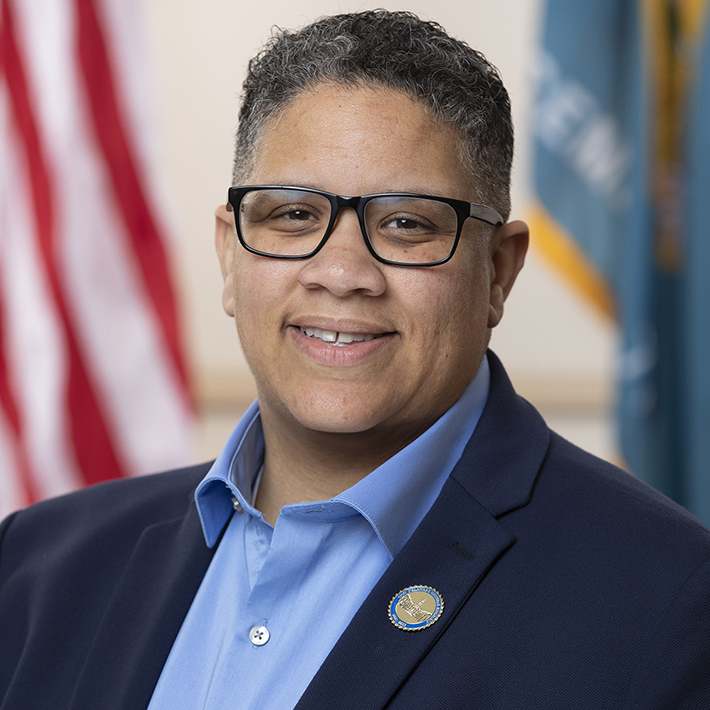
Rep. Kerri Harris
Sponsored bills
This Act amends Title 23 of the Delaware Code to increase the maximum draft limit applicable to sixth class pilots from 27 feet to 29 feet, enabling the safe pilotage of deeper-draft vessels and aligning pilotage standards with modern shipping practices. This Act also makes technical corrections to conform existing law to the standards of the Delaware Legislative Drafting Manual.
This Act provides limited immunity from prosecution for persons who seek to report a sexual offense. Under this Act a person who is a victim or witness or otherwise seeks law enforcement assistance in relation to a sexual offense may not be charged, arrested, or prosecuted, or issued a civil citation for low-level crimes relating to drug or alcohol use or possession. This Act also provides that a person’s probation or pretrial release status may not be revoked or changed based on an incident for which the person would receive the limited immunity from prosecution provided under this statute.
This Act provides that a felon may receive letters testamentary, or of administration, when the Register of Wills permits it, in the Register’s discretion, upon good cause shown.
Maddy summaryThis bill designates Thursday, April 23, 2026, as "Take Our Children to Work Day" in Delaware. It is a commemorative resolution that does not change laws or create new requirements for individuals or businesses. The measure simply recognizes this specific date to highlight the importance of families and workplaces.
Maddy summaryThis Senate Concurrent Resolution designates October 12, 2026, as "National Farmer's Day" within the State of Delaware. The bill directly affects the state's calendar by officially recognizing this specific date to honor farmers. It does not create new laws or change any existing regulations, but rather serves as a commemorative designation. The measure was passed by both the Senate and the House without further debate.
The Health Care Professional Access Act requires carriers to participate in uniform processes with specific timetables to create speed-to-market for health care professionals. Currently, health care professionals may be employed for 6 months or more with no ability to collect insurer reimbursement due to lengthy carrier credentialing process. Ensuring uniformity across carriers, as well as relevant procedural standards, will help attract and retain health care professionals in our state, enable movement between practices and the creation of new ones, and ensure nondiscrimination in credentialing decisions. Under this Act, credentialing processes are limited to 45 days. This Act additionally provides for provisional credentialing, whereby reimbursement ability is provided even more quickly for certain health care professionals, including FQHCs, and in designated shortage areas which currently include mental health professionals statewide and primary and dental care in Kent and Sussex Counties, or is offered if timelines are not met. Oversight of compliance with this Act falls to the applicable regulatory agency. The Act also ensures specific processes and health care professional rights during a carrier’s intent to terminate a credential. More than 30 states have credentialing standards in law, with additional jurisdictions considering relevant legislation. Components of this legislation are derived from the National Association of Insurance Commissioners’ Health Care Professional Credentialing Verification Model Act. This substitute differs from the original in that it does the following: - Clarifies that it applies to those carriers that require credentialing and does not require carriers to create a credentialing process if they do not already do so; - Clarifies the process for credentialing of health care professionals whose primary or home state is not Delaware and prefer to use the credentialing process in their primary or home state; - Allows a carrier to require earlier recredentialing to address activity that could disqualify a health care professional from credentialing; - Allows for certain electronic delivery of recredentialing notices; - Simplifies the language for the basis to deny, suspend, nonrenew, or terminate a health care professional’s to align with NCQA standards; - Clarifies that the penalties and remedies in this Act are in addition to those already otherwise available; and - Makes technical changes to information about CAQH.

This Act updates auto insurance protections by prohibiting carriers from limiting repair or replacement work to particular facilities, individuals, or business establishments as a condition of payment of a claim. This Act makes technical corrections to conform the statute with the Delaware Legislative Drafting Manual.
This House Concurrent Resolution requests the Department of Labor to evaluate the feasibility of apprenticeship programs for school-based mental health professionals and submit a report to certain members of the General Assembly, the Office of Management and Budget, and the Controller General by November 1, 2026.
This Act increases the penalty when an individual commits theft by impersonating a family member of the victim. A person convicted of a violation of this section shall be imprisoned for not less than 60 days. The minimum sentence under this section may not be suspended.