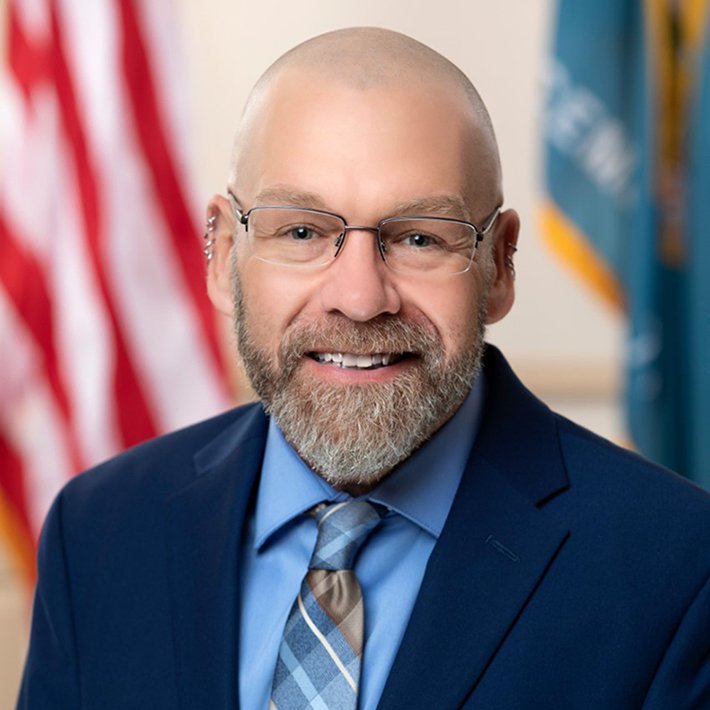
Photo of Eric Morrison
D Delaware House · District 27 On the 2026 ballot

Rep. Eric Morrison

Compare
Total votes
1,903
all sessions
Attendance
97%
58 missed
Near the chamber average
With party
98%
of cast votes
Near the chamber average
Bipartisan score
1%
crosses aisle rarely
Near the chamber average
Sponsored
1,094
bills & resolutions
Higher than 90% of chamber peers
Committees
8
assignments
1,094 bills and resolutions

Sponsored bills

Total
1,094
Primary
817
Co-sponsor
277
This page
1,094
matching current filters
Co-sponsor HB 299
Signed into law · Delaware House · Co-sponsor
AN ACT TO AMEND TITLE 6 OF THE DELAWARE CODE RELATING TO PROHIBITED TRADE PRACTICES FORBIDDING DISCRIMINATION AGAINST CASH PAYMENTS BY CONSUMERS.

This Act prohibits the seller of consumer goods or services from refusing to accept cash payment, except in limited circumstances. Sales covered by this Act are those made at a retail store through an in-person transaction. The Act does not apply to sales of goods or services by electric or gas utilities, telephone, mail or internet sales, or for services provided at parking lots or garages. It creates graduated civil penalties for violations and provides consumers a private right of action to recover double damages, including consequential damages, for a second violation of the law and triple damages for subsequent violations. The Division of Consumer Protection has authority to enforce the law.

Signed into law Oct 7, 2022 1 co-sponsor
Co-sponsor HB 399
Signed into law · Delaware House · Co-sponsor
AN ACT TO AMEND TITLE 24 OF THE DELAWARE CODE RELATING TO PRACTICE OF PHARMACY.

All human laboratory testing is regulated under the Clinical Laboratory Improvement Amendments of 1988 (“CLIA”). CLIA-waived tests are simple laboratory examinations and procedures that have an insignificant risk of an erroneous result. Common CLIA-waived tests include Influenza, HIV, COVID-19, and lipid-panel tests. Amid COVID-19 pandemic, the need for immediate diagnostic services that are close to home became vital. This bill authorizes pharmacists to order and perform tests authorized by the FDA and CLIA-waived and provide treatment for such health conditions.

Signed into law Oct 3, 2022 1 co-sponsor
Co-sponsor SB 270
Signed into law · Delaware Senate · Co-sponsor
AN ACT TO AMEND TITLE 14 OF THE DELAWARE CODE RELATING TO FREE PUBLIC SCHOOLS.

This Act establishes an evaluation and assessment system created by the Department of Education to determine whether a school facility is in good repair to assure that school facilities are clean, safe, and functional for staff and students. This Act also requires the Division of Public Health to create a routine indoor air quality monitoring program that includes temperature and humidity standards that is published on the Department of Health and Social Services website. It further requires the Division of Public Health to create a contractor certification program for indoor air quality services that will allow schools to contract with properly trained and certified contractors when indoor air quality remediation is necessary. The Act also provides procedures for districts to make procedures clear for receiving and reporting indoor air quality complaints in schools. This Substitute bill differs from the original in that it does not provide for implementation of the routine indoor air quality monitoring program nor its enforcement. Once the program is created and there is a better understanding of what it will require, the General Assembly may then establish how, and to what extent, to implement the program with the knowledge of what is necessary to do so.

Signed into law Oct 3, 2022 1 co-sponsor
Co-sponsor HB 244
Signed into law · Delaware House · Co-sponsor
AN ACT TO AMEND TITLE 10, TITLE 11, TITLE 21, AND TITLE 29 OF THE DELAWARE CODE RELATING TO FINES, FEES, COSTS, ASSESSMENTS, AND RESTITUTION.

Recognizing the negative impact of criminal justice imposed financial obligations on defendants has led to reforms across the country to reduce the financial burdens that disproportionally impact the poor. This type of debt and the collateral consequences of suspending a driver’s license negatively impacts the rehabilitation of those in the criminal justice system and pushes those without an ability to pay further into the system unnecessarily. This Act does all of the following: (1) Prohibits a court from imposing a fine, fee, cost, or assessment on children without the means to pay them. (2) Provides the courts with the discretion to waive, modify, or suspend any fine, fee, cost, or assessment. (3) Prohibits a court or the Department of Transportation from suspending a driver’s license for nonpayment of a fine, fee cost, assessment, or restitution and from charging a penalty, assessment, or fee to a defendant for the cancellation of a warrant issued due to the defendant’s nonpayment of a fine, fee, cost, assessment, or restitution. (4) Prohibits a court from imposing an additional fee on a defendant for payments that are made at designated periodic intervals or late, or when probation is ordered to supervise a defendant’s payment. Nothing in this Act precludes the court from filing contempt charges against defendants who willfully fail to pay their fines. (5) Requires the Judiciary and the Delaware Criminal Justice Information System to report on the sum collected from fines, fees, costs, assessments, and restitution and make a public report of these totals. (6) Eliminates the Public Defender fee and the Probation Supervision fee. The collections from these fees currently go to the General Fund. (7) Creates the Criminal Legal System Imposed Debt Study Group to review the impact that court imposed financial obligations have on defendants and victims and make recommendations to promote access, fairness, and transparency in the imposition and collection of court imposed financial obligations. (8) Makes technical corrections to conform existing law to the standards of the Delaware Legislative Drafting Manual.


Signed into law Oct 3, 2022 1 co-sponsor
Co-sponsor HB 404
Signed into law · Delaware House · Co-sponsor
AN ACT TO AMEND TITLES 24 AND 29 OF THE DELAWARE CODE RELATING TO PROFESSIONAL LICENSING.

The Delaware Fair Chance Licensing Act provides that it is the policy of this State to allow entry to professions and occupations with licensing requirements for individuals with a criminal history to the maximum extent consistent with public safety. To that end, the bill identifies certain kinds of criminal history elements that should not be considered by licensing boards: charges that are not pending and did not lead to a conviction; juvenile records; records that have been expunged, sealed, or pardoned; and convictions that are more than 10 years old. An exception is allowed to the 10 year rule to preserve existing prohibitions involving sex offense convictions. The Act also identifies factors a licensing authorityshould consider in determining whether a criminal history record would prohibit licensure, or whether a waiver should be granted. The bill provides a process whereby an individual may submit an inquiry to the Division of Professional Regulation regarding whether their criminal history would be disqualifying for a particular license. Finally, it provides that the Board or Division must provide a written statement to an individual if their criminal history record would be disqualifying and allow the individual to submit rebuttal materials if they wish to do so. Technical changes are also made to conform the provisions to the requirements of the Delaware Legislative Drafting Manual. Conforming changes are made to all the Chapters of Title 24 that are administered by the Division of Professional Regulation. Technical corrections are made to existing provisions to conform with the Delaware Legislative Drafting Manual.

Signed into law Sep 21, 2022 1 co-sponsor
Co-sponsor SB 255
Signed into law · Delaware Senate · Co-sponsor
AN ACT TO AMEND TITLES 13 AND 16 OF THE DELAWARE CODE RELATING TO THE VOLUNTARY ADMISSION PROCEDURE.

When a youth who is experiencing foster care and living in an out-of-home placement has a need for inpatient psychiatric treatment, there can be a delay in gaining voluntary admission to a facility due to the Division of Family Services needing to obtain the youth’s parent or legal guardian’s consent for treatment. This can lead to a youth waiting in an emergency department bed or other inappropriate setting while waiting for the proper consent to be signed. In some cases, when a youth’s parent or legal guardian cannot be located, the youth must be involuntarily committed in order to obtain inpatient treatment, even when the youth is going willingly. This bill allows the Department of Services for Children, Youth & Their Families, Division of Family Services Director or Deputy Director to sign the request for voluntary admission to a psychiatric treatment facility for a youth in foster care. In the case of a youth in foster care whose parent or guardian’s legal parental rights have not been terminated, the Division of Family Services works collaboratively with the youth’s parent to get consent on medical treatment and decisions. This bill would enable youth experiencing foster care to access psychiatric treatment voluntarily when their parent or legal guardian is not available to consent to the treatment on their behalf. This bill also allows the Director or Deputy Director of the Division of Family Services to make a written discharge request on behalf of the youth receiving voluntary treatment.

Signed into law Sep 21, 2022 1 co-sponsor
Co-sponsor HB 430
Signed into law · Delaware House · Co-sponsor
AN ACT TO AMEND TITLE 14 OF THE DELAWARE CODE RELATING TO GROW YOUR OWN EDUCATOR PROGRAM.

This Act creates a statewide Grow Your Own Educator Program to improve recruitment, retention, and diversity of educators in Delaware public schools. The Program establishes a competitive grant process to be administered by the Department of Education. Any Delaware reorganized school district or charter school can apply for a grant to establish its own unique Grow your Own Educator Program. Subject to funding grants will be awarded on a 2-year basis. Applicants must provide a detailed explanation how their proposed Program will be run, including any partnerships with institutions of higher education and whether the Program anticipates providing last dollar tuition and related educational financial assistance to candidates accepted into their Program who commit to teaching a minimum of 3 years, upon licensure, in the Applicant’s school district or charter school. Any awarded grant money must be used to initiate and run the Program. In evaluating applications that meet the Department’s criteria, if funding is limited, the Department will give additional weight to Applicants that prioritize recruiting candidates from high-need schools, placing teacher candidates in high-need schools, develop programs that support teacher professionals, including bilingual candidates and those without bachelor’s degrees, and leverage apprenticeship and year-long teacher residency models. The Department will annually provide Program data to the Senate and House Education Committees including the number of grant applications, the number of grants awarded, names of districts and charter schools receiving grants, and retention rate for educator candidates hired by the district or charter school. For fiscal year 2022-2023 $4,000,000 is anticipated being appropriated to the Department from the General Fund consistent with the agreed settlement terms in In Re Delaware Public Schools Litigation, C.A. No. 2018-0029-VCL which states, in part, that the Governor’s proposed budget for fiscal year 2023-2024 will include at least $4,000,000 to support enhanced teacher recruitment and retention in high-need schools. A portion of those funds will be allocated to implement the Grow Your Own Educator Program established in this Act.

Signed into law Sep 9, 2022 1 co-sponsor
Co-sponsor SB 277
Signed into law · Delaware Senate · Co-sponsor
AN ACT TO AMEND TITLE 16 AND TITLE 24 OF THE DELAWARE CODE RELATING TO DENTISTRY AND DENTAL HYGIENE.

This Act increases opportunities for federally qualified health centers (“FQHC”) and government-operated dental clinics to serve the indigent and other underserved communities with dental care and improves flexibility with updated provisional licensing processes for FQHC and government-operated dental clinic applicants. This Act assists FQHCs and government-operated dental clinics in recruiting dentists to serve those most in need. This Act adds FQHCs to the Delaware Institute for Dental Education and Research Board. This Act creates the Dental Care Access Task Force (“Task Force”) to examine and recommend a course of action to address all of the following: (1) Dental care access, including for underserved populations and communities. (2) Dental licensure practices and requirements. (3) Dental provider type and scope of practice. (4) Dental provider recruitment and retention strategies. (5) Dental insurance networks and coverage, including for the uninsured and underinsured. The Task Force must submit its report no later than February 1, 2023. This Act also makes technical corrections to conform existing law to the standards of the Delaware Legislative Drafting Manual.
Signed into law Aug 30, 2022 1 co-sponsor
Co-sponsor SB 195
Signed into law · Delaware Senate · Co-sponsor
AN ACT TO AMEND TITLE 14 OF THE DELAWARE CODE RELATING TO MEDIA LITERACY.

The societal implications of technological developments are pervasive, and the reach and influence of digital media platforms continue to expand. Media literacy skills are necessary for citizens to safely, responsibly, and critically consume and use social media and other forms of media. In addition, media literacy education prepares students to make informed civic decisions that affect them, their families, their communities, and the world. This Act requires the Department of Education to develop and maintain evidence-based media literacy standards for use by school districts and charter schools serving students in grades kindergarten through 12. The standards and materials must be age-appropriate and must address appropriate, responsible, and healthy online behavior. This Act is known as "The Digital Citizenship Education Act".

Signed into law Aug 29, 2022 1 co-sponsor
Showing 801 to 810 of 1,094 bills
Previous 1 80 81 82 110 Next