This Act provides school-base physical therapists who have graduated from an accredited college or university with the highest level masters or doctorate degree, and who have achieved a passing score on the national physical therapy examination issued by the Federation of State Boards of Physical Therapy, with base salaries of Master Plus 30 or Doctorate, and provides the ability to move forward on the salary schedule for additional credits earned. Since 2015, a doctorate degree is required in order to sit for the national physical therapy examination for licensure.
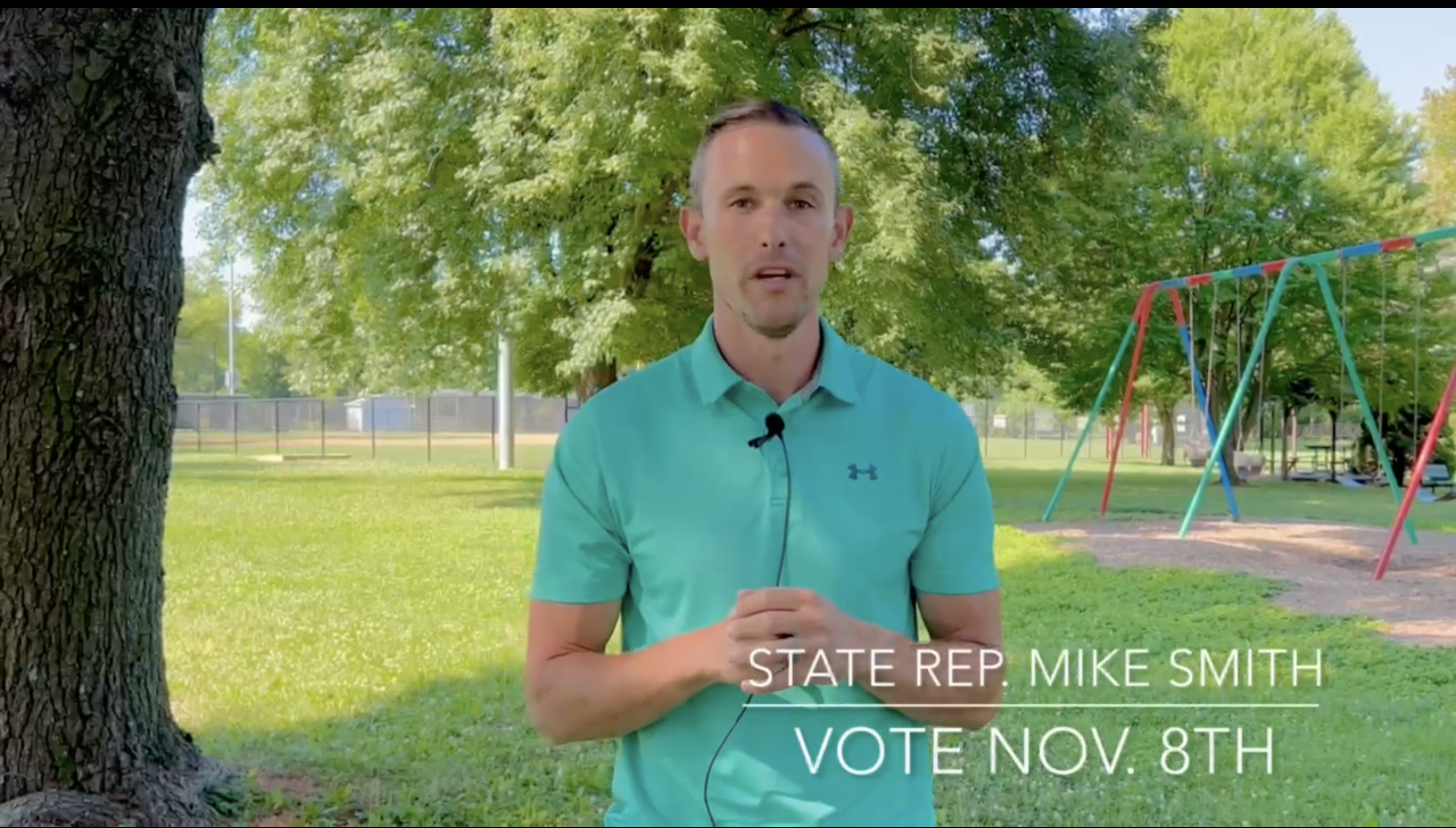
Rep. Mike Smith
Sponsored bills
This Act allows both of the following: (1) The employment of a person 18 years or older to work in any capacity in a tavern or taproom, except that a person less than 21 years old may not prepare alcoholic liquor for patrons of a tavern or taproom. A person 18 years or older may sell or serve alcoholic liquor for patrons of a tavern or taproom. (2) A person 18 years or older may enter a tavern or taproom to pick up a food order for delivery through a third-party delivery service.
This Act establishes an evaluation and assessment system created by the Department of Education to determine whether a school facility is in good repair to assure that school facilities are clean, safe, and functional for staff and students. This Act also requires the Division of Public Health to create a routine indoor air quality monitoring program that includes temperature and humidity standards that is published on the Department of Health and Social Services website. It further requires the Division of Public Health to create a contractor certification program for indoor air quality services that will allow schools to contract with properly trained and certified contractors when indoor air quality remediation is necessary. The Act also provides procedures for districts to make procedures clear for receiving and reporting indoor air quality complaints in schools. This Substitute bill differs from the original in that it does not provide for implementation of the routine indoor air quality monitoring program nor its enforcement. Once the program is created and there is a better understanding of what it will require, the General Assembly may then establish how, and to what extent, to implement the program with the knowledge of what is necessary to do so.
This Act adds victims of human trafficking to the Address Confidentiality Act. Under this program, certain crime victims are provided a substitute address by the Department of Justice so as to protect the participant’s actual address from public disclosure. This Act also makes technical corrections to conform existing law to the standards of the Delaware Legislative Drafting Manual.
This Act creates a statewide Grow Your Own Educator Program to improve recruitment, retention, and diversity of educators in Delaware public schools. The Program establishes a competitive grant process to be administered by the Department of Education. Any Delaware reorganized school district or charter school can apply for a grant to establish its own unique Grow your Own Educator Program. Subject to funding grants will be awarded on a 2-year basis. Applicants must provide a detailed explanation how their proposed Program will be run, including any partnerships with institutions of higher education and whether the Program anticipates providing last dollar tuition and related educational financial assistance to candidates accepted into their Program who commit to teaching a minimum of 3 years, upon licensure, in the Applicant’s school district or charter school. Any awarded grant money must be used to initiate and run the Program. In evaluating applications that meet the Department’s criteria, if funding is limited, the Department will give additional weight to Applicants that prioritize recruiting candidates from high-need schools, placing teacher candidates in high-need schools, develop programs that support teacher professionals, including bilingual candidates and those without bachelor’s degrees, and leverage apprenticeship and year-long teacher residency models. The Department will annually provide Program data to the Senate and House Education Committees including the number of grant applications, the number of grants awarded, names of districts and charter schools receiving grants, and retention rate for educator candidates hired by the district or charter school. For fiscal year 2022-2023 $4,000,000 is anticipated being appropriated to the Department from the General Fund consistent with the agreed settlement terms in In Re Delaware Public Schools Litigation, C.A. No. 2018-0029-VCL which states, in part, that the Governor’s proposed budget for fiscal year 2023-2024 will include at least $4,000,000 to support enhanced teacher recruitment and retention in high-need schools. A portion of those funds will be allocated to implement the Grow Your Own Educator Program established in this Act.

This act authorizes the application of funds from the Delaware School Safety and Security Fund, which is subject to available appropriations, for the retention of constables to be utilized by the LEAs.
This substitute bill makes a technical correction to the bill.
This Senate Joint Resolution designates August 31, 2022, as "International Overdose Awareness Day" in the State of Delaware and directs the State flag to be lowered to half-staff at State facilities and encourages local governments, businesses, and Delawareans to do the same.
This Act expands Erin's Law to require training and education on issues related to inappropriate relationships between adults and children, such as grooming. Erin's Law requires the Child Protection Accountability Commission and the Division of Family Services of the Department of Services for Children, Youth, and Their Families to develop and maintain a curriculum to be used by Delaware's public schools to educate public school employees about personal body safety and child sexual abuse. Erin's Law is named in honor of Erin Merryn, a victim of child sexual abuse, who is working to enact legislation on this subject throughout the country. This act expands Erin's Law in several respects. The Act expands the range of grades that Erin's Law applies to from pre-kindergarten to grade 6 to pre-kindergarten to grade 12. In addition, the Act expands Erin's Law to require training for school employees on the prevention of inappropriate sexual misconduct, the establishment of appropriate adult and student interactions, and the warning signs of suspected adult sexual misconduct, with an emphasis on sexual grooming. It also expands the information available to parents and students to include information on the warning signs of adult sexual misconduct, including the derivative grooming of parents, methods for discussing adult sexual misconduct with students, resources for reporting suspected abuse, and counseling available to students and parents. Finally, the Act requires training and education for school administrators, school nurses, and school counselors on issues relating to inappropriate sexual relationships and grooming, such as strategies for the prevention of such misconduct, skills for responding to student disclosures of such misconduct, and measures to promote school recovery after an incident of such misconduct.
This Act requires each school district and charter school to adopt a policy regarding appropriate relationships between school employees, contractors, coaches, and volunteers and students. The policy must include a provision establishing appropriate and inappropriate interactions; a prohibition against adult sexual misconduct; a prohibition against any sexual relationship between a school employee, contractor, coach, or volunteer and a student; an emphasis on the mandatory reporting obligations under § 903 of Title 16; a procedure for notifying the Department of Education and law enforcement of suspected adult sexual misconduct; guidelines for the preferred and prohibited methods of electronic communication; notice that substantiated incidents of adult sexual misconduct will be reported in future reference checks; and a provision requiring the development of hiring practices to screen for adult sexual misconduct. This Act will be implemented for the 2023-2024 school year.