This Concurrent Resolution proclaims May 16, 2024, as "Home Care Advocacy Day" in Delaware to recognize the dedication and hard work of caregivers, to emphasize the critical importance of access to quality home care services for Delaware’s aging residents to live independently and age with dignity, and to advocate for policies and resources that support the delivery of high-quality, person-centered care in the home setting.
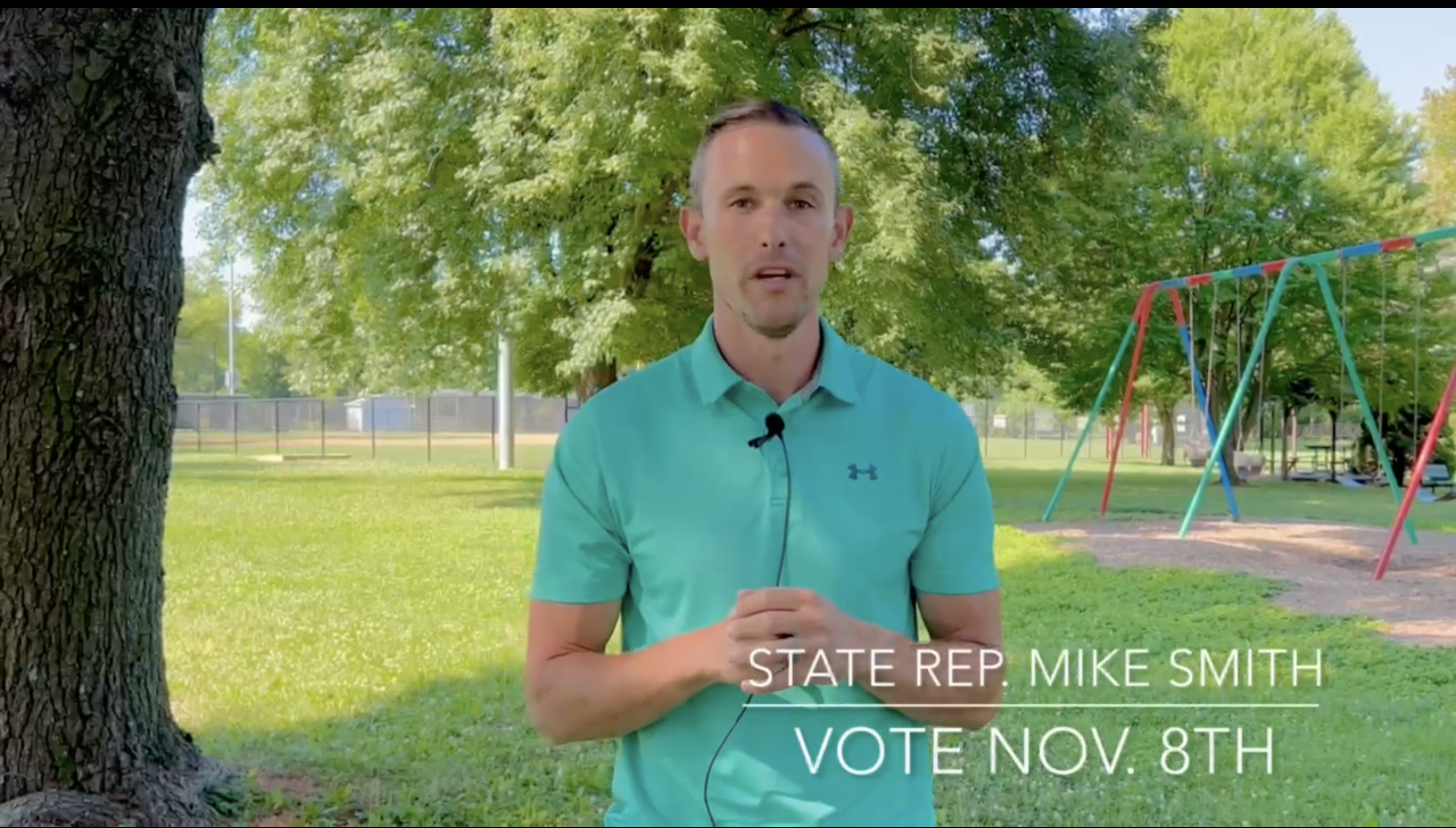
Rep. Mike Smith
Sponsored bills
This Senate Concurrent Resolution designates the week of May 13-17, 2024, as "Charter Schools Week" in the State of Delaware and commends Delaware's public charter schools for their efforts in educating Delaware students.
Maddy summaryThis bill designates May 2024 as Mental Health Awareness Month in Delaware to highlight the importance of mental well-being across all age groups. It calls on citizens and government agencies to increase awareness and support for mental health resources, citing statistics on the prevalence of mental illness and the impact of the pandemic. The resolution also references recent legislative efforts to fund mental health counselors in schools, emphasizing the need for early identification and treatment of mental health conditions.
This resolution designates May 6-12 as "National Nurses Week" in Delaware.
This resolution recognizes April 6 through 12, 2024, as “Week of the Young Child” in Delaware.
This Senate Concurrent Resolution recognizes April 2024 as “Limb Loss and Limb Difference Awareness Month” in the State of Delaware.
This Act clarifies portions of Chapter 49 of Title 6 and Chapter 63 of Title 21 of the Delaware Code pertaining to motor vehicle dealers. These additions and modifications are intended to further improve our State’s franchise laws and ensure that Delaware consumers have a stable, reliable, convenient, and competitive retail network for automobile sales and service. This Act is an effort to continue to ensure that the relationship between dealers and the manufacturers and distributors is as fair and equitable as possible and provides the highest level of consumer protection. The Act includes the following provisions: Definition Clarifications. The Act clarifies the definitions of “motor vehicle”, “new motor vehicle” and “dealer” to reflect technological advances and changes in industry business practices in the state. The Act also recognizes the limited circumstances issuance of a dealer license to a direct-selling electric motor vehicle manufacturer in 2023. Further, the Act defines motor vehicle selling activities that require licensing and regulation by the state. Fair Compensation for Required Repairs. Dealers are required by contract to perform warranty work for manufacturers. The Act ensures that dealers are fairly paid for performing manufacturer-directed repairs related to warranty repairs, maintenance programs and recall work. Intrusive Audits. Dealers are required by existing law to wait up to 30 days for payment for motor vehicle warranty repairs in order to allow the manufacturer to review and approve payment submissions. Manufacturers are also allowed to later audit such repairs and payments. The Act affords manufacturers a full 6 months to audit warranty claims but will reasonably prevent intrusive and time-consuming audits after 180 days, unless the audit involves cases of alleged fraud. Franchise Termination Compensation. Under existing law, manufacturers must repurchase certain motor vehicles, parts and special tools in the event of the termination of the dealer’s franchise agreement. The Act specifies a 90-day timeframe for payment and clarifies that it is the manufacturer’s responsibility to cover the cost of returns. Return of Unnecessary Tools & Equipment. The Act allows a dealer a limited opportunity to return and be reimbursed for the cost of certain tools and equipment that were required as a part of an electric vehicle program or agreement between that dealer and the manufacturer, if the dealer determines within two years after receipt that such tools and equipment are unnecessary or that sales volume and utilization are low enough to prevent the dealer from realizing a reasonable return on those forced investments. Sale & Subscription of Over-the-Air Features. The Act allows manufacturers to directly sell options, add-ons, features, improvements and upgrades by remote transmission to consumers, provided that the dealers are afforded an equal opportunity to sell the same products and services, and further provided that the manufacturer reasonably compensates the dealer for direct sales or subscriptions to the dealer’s customers for a specified period of time. Association Standing. Franchise laws have been enacted in all 50 states to recognize compelling state interests in protecting consumers and in regulating the disparity in bargaining power between motor vehicle manufacturers and their franchised dealers. Since dealers have a single source for their new motor vehicles, parts and accessories, many are reluctant to raise a single voice to object to unlawful activity by their manufacturer. The Act grants statutory standing to a large association of dealers to bring a legal action, in very limited circumstances, to ensure compliance with applicable law. Licensing. The Act provides that a manufacturer or distributor who was licensed as a motor vehicle dealer on or before May 15, 2023 is not eligible to receive any additional licenses. The Act also makes technical corrections to conform existing law to the standards of the Delaware Legislative Drafting Manual. The Act is supported by the Delaware Automobile and Truck Dealers’ Association, Inc.
This Resolution pays tribute to the men and women of the Delaware National Guard for their service and sacrifices in support of defending our state and nation, and recognizes the outstanding advocacy provided by the National Guard Association of Delaware.
Like Senate Bill No. 21, Senate Substitute No. 1 for Senate Bill No. 21 {this Act) establishes an independent and nonpartisan Office of the Inspector General (OIG) and the position of the Inspector General. Under this Act, the OIG would be unique in state government as a non-political agency with a sole mission to investigate and prevent fraud, waste, mismanagement, corruption, and other abuse of governmental resources. The OIG will protect the health and safety of Delaware residents, assist in the recovery of misspent or inappropriately paid funds, and strengthen government integrity and the public trust in government operations by doing all of the following: 1. Investigating the management and operation of state agencies, including the General Assembly, to determine if there has been waste, fraud, abuse, mismanagement, corruption, or other abuse of governmental resources that is harmful to the public interest. 2. Coordinating with other investigative and law-enforcement agencies, including the Attorney General and the Auditor of Accounts (Auditor). 3. Recommending corrective actions and statutory revisions, and, if necessary, make referrals to other law-enforcement agencies. 4. Providing reports to the Governor, Attorney General, and General Assembly, and these reports will be available to the public on the OIG website. The Inspector General will not duplicate the work of the Auditor, Attorney General, Public Integrity Commission, or other investigative or law-enforcement agencies and will work collaboratively, including through memoranda of understanding, with these agencies for the purposes of efficiency and coordination. Specifically, the Inspector General can be distinguished from these agencies as follows: • Under the generally accepted government auditing standards in the Yellow Book produced by the U.S. Government Accountability Office, both financial and performance audits are only designed to detect fraud, illegal activity, noncompliance, abuse, and waste. An auditor determines whether the subject matter meets criteria, reaches reasonable assurance, and follows directive standards. If an auditor detects fraud or other bad behavior, they must report it to an investigation agency. • The OIG will be an entirely independent investigation agency, charged with gathering evidence to identify the individual responsible for the bad behavior identified through an audit and prove that it occurred. For complaints the received from other sources, the OIG will investigate to determine if there is or has been bad behavior. In addition to proving instances of bad behavior, these investigations may also prove that an allegation is false or incorrect. • The OIG will not duplicate the work of existing ombudsperson offices because the OIG is primarily concerned with detecting and preventing fraud, waste, mismanagement, corruption, and abuse of governmental resources while ombuds programs are concerned with violations of the rights and treatment of specific populations. • If the OIG believes, based on an investigation, that there has been or continues to be significant problem regarding fraud, waste, mismanagement, corruption, or evidence of a crime, the Inspector General must report the finding to the Department of Justice (DOJ). If the DOJ does not take action on a referral, the OIG may pursue a civil action on behalf of the State. • The OIG will be unique in State government because the Inspector General is not elected and will be an entirely independent agency. The Inspector General will be selected through a process that requires a Selection Panel to provide 3 names to the Governor for consideration. The Governor will select a nominee from these 3 names for appointment as Inspector General and submit the nominee to the Senate for confirmation. Once confirmed, the Inspector General serves a term of 5 years. In addition, the DOJ is not responsible for providing legal advice, counsel, services, and representation to the OIG. In other states, the financial impact of investigations by the Office of Inspector General has exceeded the annual budget for that office by millions of dollars. Some examples of conduct that have been identified in states where an Inspector General has responsibilities similar to those under this Act include the following: • In Georgia, an agency administrator who faked multiple pregnancies, receiving 265 hours of leave for which she was not otherwise eligible to receive. • Massachusetts has recovered more than $245,000 from 13 former troopers within the State Police for overtime pay they received for hours they did not actually work. • In Indiana, a Department of Child Services worker was found to have falsified case notes regarding child welfare assessments. • In Louisiana, state agencies were found to have wasted more than $500,000 in non-refundable airline tickets that were allowed to expire and lose value. Under this Act, the selection process for the Inspector General begins upon enactment and the work of the Office of the Inspector General must begin upon the appointment and confirmation of an Inspector General or March 1, 2025, whichever occurs earlier. Senate Substitute No. 1 for Senate Bill No. 21 differs from SB 21 as follows: 1. Revises § 9001E(4) of Title 29 so that the General Assembly’s purpose in establishing the OIG aligns with the requirement under § 9005E(b) of Title 29 that the Inspector General work collaboratively with other investigative and law-enforcement agencies, not just the Auditor, for the purposes of efficiency, coordination, and avoiding duplication of work. 2. Clarifies that there is not a preference under § 9003E(d)(1) of Title 29 for OIG staff to have experience with a law-enforcement agency. 3. Adds paragraph (d)(5) to § 9008E of Title 29 to clarify that the Inspector General may reveal information to comply with a court order or subpoena.

This resolution calls on the General Assembly to encourage the Delaware medical community to educate the citizens of Delaware about the forced organ harvesting that occurs in China, in the event they decide to travel to China for an expedited transplant. This resolution also calls on the United States Government to pass laws and regulations prohibiting American medical and pharmaceutical companies from collaborating with Chinese groups that are found to have involvement with forced organ harvesting, as well as banning entry into the United States individuals who have participated in the forced organ harvesting, and allowing prosecution of those persons involved.