

AN ACT TO AMEND TITLE 29 OF THE DELAWARE CODE RELATING TO OFFICE OF INSPECTOR GENERAL.
Summary
Like Senate Bill No. 21, Senate Substitute No. 1 for Senate Bill No. 21 {this Act) establishes an independent and nonpartisan Office of the Inspector General (OIG) and the position of the Inspector General. Under this Act, the OIG would be unique in state government as a non-political agency with a sole mission to investigate and prevent fraud, waste, mismanagement, corruption, and other abuse of governmental resources. The OIG will protect the health and safety of Delaware residents, assist in the recovery of misspent or inappropriately paid funds, and strengthen government integrity and the public trust in government operations by doing all of the following: 1. Investigating the management and operation of state agencies, including the General Assembly, to determine if there has been waste, fraud, abuse, mismanagement, corruption, or other abuse of governmental resources that is harmful to the public interest. 2. Coordinating with other investigative and law-enforcement agencies, including the Attorney General and the Auditor of Accounts (Auditor). 3. Recommending corrective actions and statutory revisions, and, if necessary, make referrals to other law-enforcement agencies. 4. Providing reports to the Governor, Attorney General, and General Assembly, and these reports will be available to the public on the OIG website. The Inspector General will not duplicate the work of the Auditor, Attorney General, Public Integrity Commission, or other investigative or law-enforcement agencies and will work collaboratively, including through memoranda of understanding, with these agencies for the purposes of efficiency and coordination. Specifically, the Inspector General can be distinguished from these agencies as follows: • Under the generally accepted government auditing standards in the Yellow Book produced by the U.S. Government Accountability Office, both financial and performance audits are only designed to detect fraud, illegal activity, noncompliance, abuse, and waste. An auditor determines whether the subject matter meets criteria, reaches reasonable assurance, and follows directive standards. If an auditor detects fraud or other bad behavior, they must report it to an investigation agency. • The OIG will be an entirely independent investigation agency, charged with gathering evidence to identify the individual responsible for the bad behavior identified through an audit and prove that it occurred. For complaints the received from other sources, the OIG will investigate to determine if there is or has been bad behavior. In addition to proving instances of bad behavior, these investigations may also prove that an allegation is false or incorrect. • The OIG will not duplicate the work of existing ombudsperson offices because the OIG is primarily concerned with detecting and preventing fraud, waste, mismanagement, corruption, and abuse of governmental resources while ombuds programs are concerned with violations of the rights and treatment of specific populations. • If the OIG believes, based on an investigation, that there has been or continues to be significant problem regarding fraud, waste, mismanagement, corruption, or evidence of a crime, the Inspector General must report the finding to the Department of Justice (DOJ). If the DOJ does not take action on a referral, the OIG may pursue a civil action on behalf of the State. • The OIG will be unique in State government because the Inspector General is not elected and will be an entirely independent agency. The Inspector General will be selected through a process that requires a Selection Panel to provide 3 names to the Governor for consideration. The Governor will select a nominee from these 3 names for appointment as Inspector General and submit the nominee to the Senate for confirmation. Once confirmed, the Inspector General serves a term of 5 years. In addition, the DOJ is not responsible for providing legal advice, counsel, services, and representation to the OIG. In other states, the financial impact of investigations by the Office of Inspector General has exceeded the annual budget for that office by millions of dollars. Some examples of conduct that have been identified in states where an Inspector General has responsibilities similar to those under this Act include the following: • In Georgia, an agency administrator who faked multiple pregnancies, receiving 265 hours of leave for which she was not otherwise eligible to receive. • Massachusetts has recovered more than $245,000 from 13 former troopers within the State Police for overtime pay they received for hours they did not actually work. • In Indiana, a Department of Child Services worker was found to have falsified case notes regarding child welfare assessments. • In Louisiana, state agencies were found to have wasted more than $500,000 in non-refundable airline tickets that were allowed to expire and lose value. Under this Act, the selection process for the Inspector General begins upon enactment and the work of the Office of the Inspector General must begin upon the appointment and confirmation of an Inspector General or March 1, 2025, whichever occurs earlier. Senate Substitute No. 1 for Senate Bill No. 21 differs from SB 21 as follows: 1. Revises § 9001E(4) of Title 29 so that the General Assembly’s purpose in establishing the OIG aligns with the requirement under § 9005E(b) of Title 29 that the Inspector General work collaboratively with other investigative and law-enforcement agencies, not just the Auditor, for the purposes of efficiency, coordination, and avoiding duplication of work. 2. Clarifies that there is not a preference under § 9003E(d)(1) of Title 29 for OIG staff to have experience with a law-enforcement agency. 3. Adds paragraph (d)(5) to § 9008E of Title 29 to clarify that the Inspector General may reveal information to comply with a court order or subpoena.
Bill status
in committee
1 of 4 stages cleared
Introduction
Apr 2024
Committee Review
Floor Vote
Governor
Introduced Apr 16, 2024
Last action Apr 17, 2024
Floor votes
How they voted
No floor votes recorded yet.
Full legislative history
Actions timeline
Total actions
3
Key actions
1
Committee
1
Apr 17, 2024
Introduced
Assigned to Finance Committee in Senate
upper
Apr 17, 2024
Upper · Passed
Reported Out of Committee (Executive) in Senate with 4 Favorable, 3 On Its Merits
upper
Apr 16, 2024
Introduced
Adopted in lieu of the original bill SB 21, and Assigned to Executive Committee in Senate
upper
14 primary · 0 co-sponsors
Sponsors
Role
Legislator
Party
State
District
P
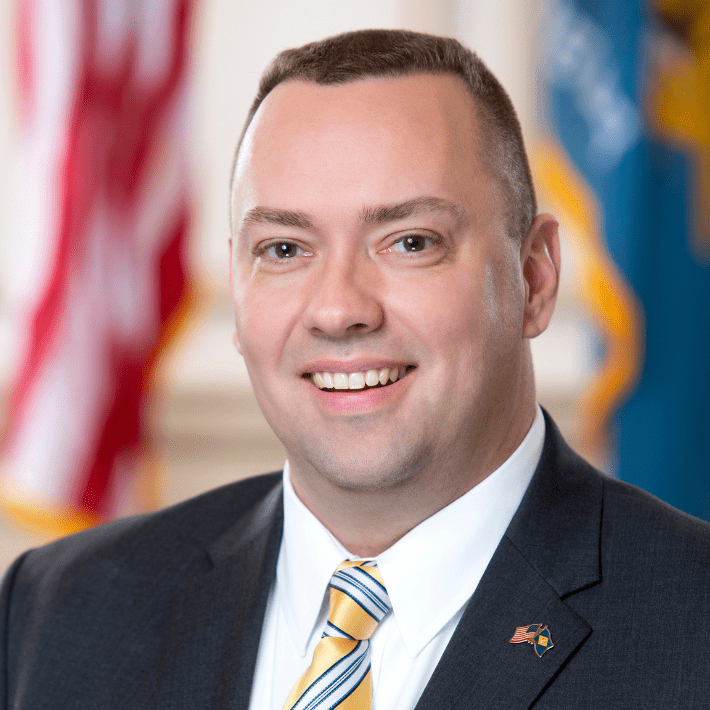
Brian Pettyjohn
RRepublican
P
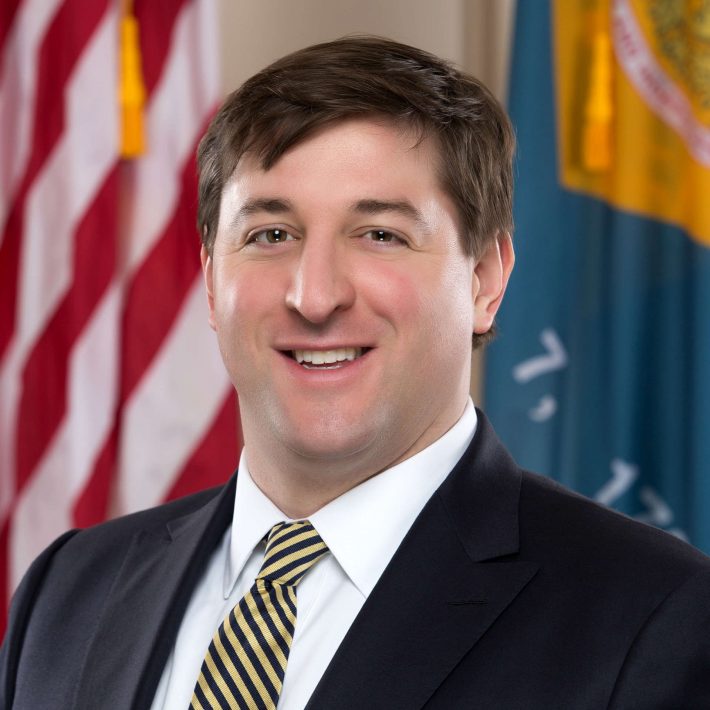
Bryan Townsend
DDemocratic
P
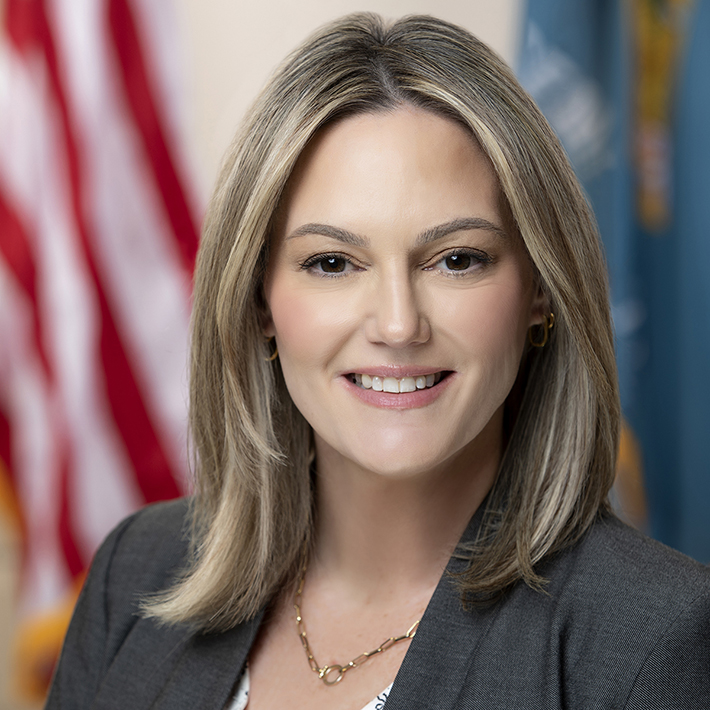
Cyndie Romer
DDemocratic
P

Dave Sokola
DDemocratic
P

Eric Morrison
DDemocratic
P

Kendra Johnson
DDemocratic
P
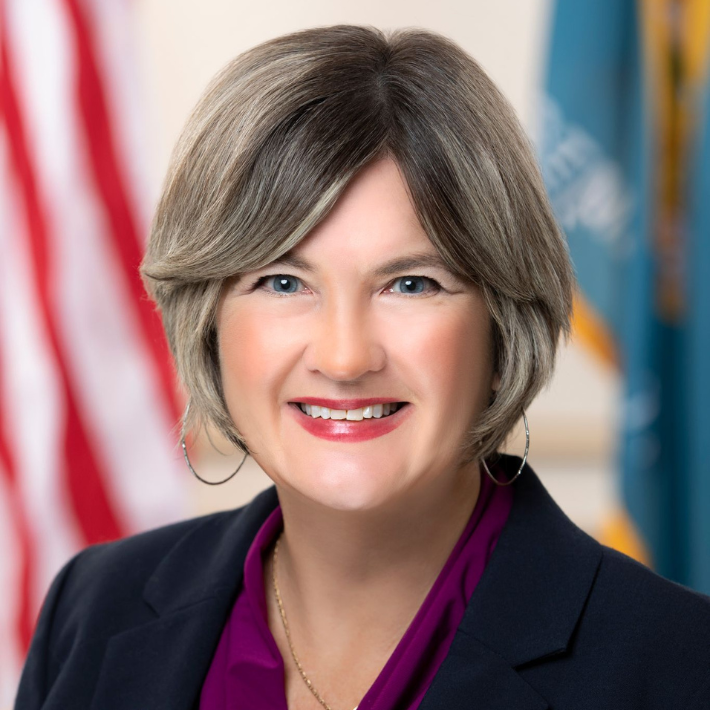
Laura Sturgeon
DDemocratic
P

Madinah Wilson-Anton
DDemocratic
P

Marie Pinkney
DDemocratic
P
Mike Smith
RRepublican
P
Paul Baumbach
DDemocratic
P
Russ Huxtable
DDemocratic
P
Sean Matthews
DDemocratic
P
Tizzy Lockman
DDemocratic
Ask Maddy
·
AI policy assistant
Ask Maddy about SB 21
Scope: DE
Hi! I can help you understand SB 21. What would you like to know?
Try one of these
i
Maddy answers using official bill text and legislative records. Always verify before sharing.
Sources cited inline