

This Act would remove the broad exemption that the University of Delaware and Delaware State University currently receive under the state Freedom of Information Act. In recognition of the sensitive nature of some records held by public universities, this Act would also add some specific exemptions for public universities. Specifically, confidential letters or statements related to admission, employment or honors would not be a public record for purposes of FOIA. Universities would not be required to disclose scholarly research or information related thereto where such information is of a proprietary nature. Finally, certain information related to fundraising activities would be protected from disclosure. Delaware’s FOIA, as currently written, already exempts personally identifiable student information protected by the federal Family Educational Rights and Privacy Act (FERPA).
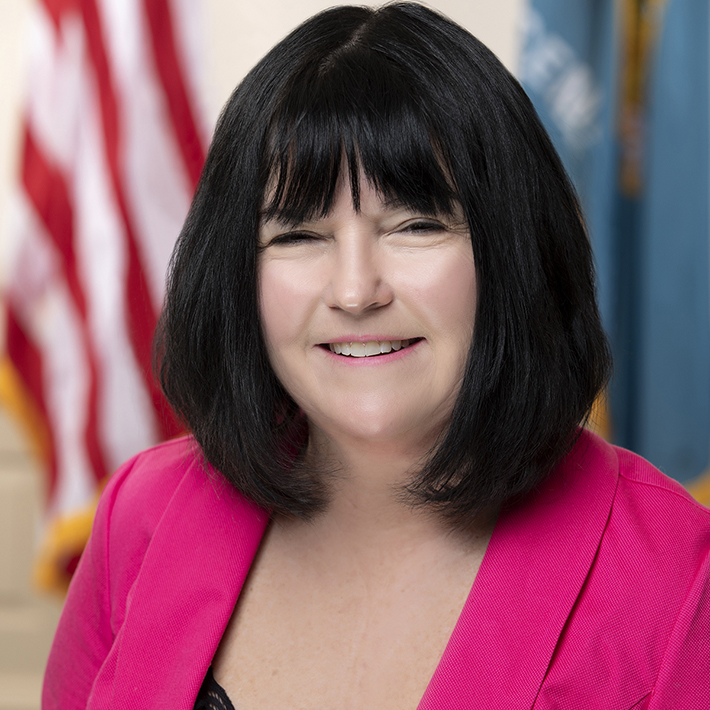
Rep. Kim Williams
Sponsored bills
This joint resolution rejects the report of the Delaware Compensation Commission in its entirety.
This bill creates the right for the parent or guardian of a child to opt out of the annual assessment, currently the Smarter Balanced Assessment System.
This bill imposes a cap on the interest rate that may be charged for “alternative financial services” at an annual rate of interest of 100%. “Alternative financial services” is a term sometimes used for payday loans, installment loans, and other credit products generally targeted towards working class people without access to more traditional banking or credit card services. Over the years, this state and others have made various efforts to regulate the industry, to assure that it is operating fairly and in a non-predatory manner. Generally, lenders in this industry have restructured their loan products to avoid such laws and regulations. See, e.g., James v. National Financial, LLC, 132 A.3d 799, 834-838 (Del. Ch. 2016). By placing a cap on interest rate in Chapter 22, the purpose of this bill is to circumscribe the ability of short-term, sub-prime lenders to take advantage of unsophisticated borrowers – regardless of the name or structure they may give the credit products. By its terms, Chapter 22 does not apply to more traditional financial products offered by banks, credit unions, credit card companies, and the like. Traditional financial products are already extensively regulated by state and federal law, and are less amenable to abuse. The bill also prohibits the use of automated withdrawals on short-term loans regulated by Chapter 22 for delinquency payments or accelerated default payments. It prohibits repeat attempts to make an automated withdrawal for at least 5 days after a declined payment, unless the borrower authorizes another attempt in writing. This will prevent borrowers from being charged multiple fees by their banks for overdrafts or declined withdrawals when licensees try repeatedly in a short time frame to process an automated withdrawal.
This bill provides State funding to kindergarten through third grade for basic special education. State funding already occurs for intensive and complex special education during these grades. Currently the basic special education funding runs from fourth through twelfth grade. This bill is an effort to promote earlier identification and assistance for basic special education needs which should then mitigate costs over the long term.Pursuant to its terms, funding for K-3 special education will be phased in gradually over 4 years.
This bill requires a conference with the parent or guardian of a student who has been absent without excuse for 5 days from school. A needs assessment will be performed to determine what supports or services will help the student and family improve school attendance. Moving the intervention forward to the fifth unexcused absence rather than the 10th may help to improve outcomes for Delaware’s students and help prevent students from disengaging from the school community and dropping out of school.
According to the American Dental Association, approximately 1/3 of Americans face challenges accessing dental care, where access challenges include difficulty getting to a dental office and overcoming financial barriers. In order to increase access to basic dental services, this bill will allow for dental hygienists to travel to certain facilities and provide dental hygiene services. Under existing law, a dental hygienist may only act under the general supervision of a dentist in the dental office, state institutions, or schools. Prior to offering these services, the facility owner/operator and the patient/legal guardian must approve of the dental services to be provided, and adequate safeguards must be provided, including the referral to a licensed dentist for consultation. This bill also updates the definition of the practice of dental hygiene services.