

Passed Jan 8, 2019
0 co-sponsors
Total votes
2,122
all sessions
Attendance
97%
63 missed
Higher than 83% of chamber peers
With party
99%
of cast votes
Higher than 76% of chamber peers
Bipartisan score
0%
crosses aisle rarely
Lower than 96% of chamber peers
Sponsored
981
bills & resolutions
Higher than 85% of chamber peers
Committees
0
assignments
981 bills and resolutions
Sponsored bills
Total
981
Primary
795
Co-sponsor
186
This page
981
matching current filters
Passed Jan 8, 2019
0 co-sponsors
AN ACT TO AMEND TITLE 30 OF THE DELAWARE CODE RELATING TO EARNED INCOME TAX CREDIT.
This bill changes the earned income tax credit from nonrefundable to refundable. This bill creates a table for the percentage of earned income credit for tax years 2018 and after. Currently, if spouses file a joint federal return but separate State returns, only the spouse with the higher taxes due can use the State earned income tax credit. This bill eliminates that limitation starting with tax year 2018 and provides that the credit shall be divided equally between such spouses.
Vetoed Oct 26, 2018
0 co-sponsors
AN ACT TO AMEND TITLE 10 OF THE DELAWARE CODE RELATING TO THE JUVENILE CIVIL CITATION PROGRAM.
This Act expands the Juvenile Civil Citation Program to provide law enforcement officers with the discretion to refer any first-time juvenile offender engaged in any misdemeanor-level behavior to the civil citation program, where the juvenile can be required to participate in counseling, treatment, community service, or any other appropriate intervention. A juvenile who successfully completes the requirements of the civil citation program will not have an arrest or prosecution indicated on their record. Under the current law, officers may make referrals to the civil citation program for only very limited types of misdemeanor offenses. The Act will also allow a second referral to the civil citation program if 1 year has passed since the first referral and the second offense is not for the same misdemeanor. Under current law, a juvenile is not eligible for a second referral until 18 months have passed since the first referral. This Act will also provide access to the Delaware Criminal Justice information System to the civil citation community provider to enable the provider to properly assess referred juveniles. This program provides an alternative to arrest and adjudication, thus avoiding the collateral consequences associated with a criminal record while still allowing the system to compel the juvenile and the juvenile’s family to seek and participate in appropriate services to address root causes of delinquent behavior. The expansion of the civil citation program under this Act is consistent with the mission of the juvenile justice system, which is the rehabilitation and treatment of juveniles, not punishment. This Act also makes technical corrections to conform existing law to the standards of the Delaware Legislative Drafting Manual.
Signed into law Oct 15, 2018
1 co-sponsor
AN ACT TO AMEND TITLE 10 AND TITLE 29 OF THE DELAWARE CODE RELATING TO CONTINUITY OF GOVERNMENT OPERATIONS.
This Act amends Delaware's existing continuity of government laws as required in conjunction with the adoption of House Bill No. 410, which completes the process to amend Article II, § 5 and Article XVII, § 1 of the Delaware Constitution to adopt an "all hazards" approach to continuity of government planning. This Act also makes technical corrections to conform existing law to the standards of the Delaware Legislative Drafting Manual.
Signed into law Oct 1, 2018
1 co-sponsor
AN ACT TO AMEND TITLE 14 OF THE DELAWARE CODE RELATING TO THE BASIC SALARY SCHEDULE FOR TEACHERS, NURSES, PRINCIPALS, SUPERINTENDENTS, AND OTHER ADMINISTRATIVE AND SUPERVISORY EMPLOYEES.
This Act provides school-based speech-language pathologists and audiologists who hold a current Certificate of Clinical Competence in speech-language pathology, (“CCC-SLP”) or audiology (“CCC-A”), issued by the American Speech-Language and Hearing Association and who hold a current state license to practice from the Delaware Board of Speech Pathologists, Audiologists and Hearing Aid Dispensers with a base salary level of Master’s Plus 30 credits. Professionals who have a CCC-SLP or CCC-A ASHA certification have met the following rigorous academic and professional standards: 1. Successful completion of requisite academic courses by an accredited program. 2. Successful completion of supervised clinical practicum experiences in the practice of speech-language pathology or audiology. 3. Successful completion/passing score on the National Praxis Exam in speech-language pathology or audiology. 4. Successful completion of a Clinical Fellowship. This Act allows speech language pathologists and audiologists who have completed the course work required by state guidelines to apply for an additional 15 credits to move to the Master’s Plus 45 level. This Act contains a grandfather clause that allows school-based speech-language pathologists and audiologists in Delaware who have a master’s degree, a current license, and have worked as a speech-language pathologist for 20 or more years but do not have Certificate of Clinical Competence to, be granted the equivalent pay grade of Master’s Plus 30 with the same additional coursework criteria for moving to Master’s Plus 45 level.
Signed into law Sep 28, 2018
0 co-sponsors
AN ACT TO AMEND TITLE 14 AND TITLE 29 OF THE DELAWARE CODE RELATING TO THE PROVISION OF FREE FEMININE HYGIENE PRODUCTS.
This Act requires that feminine hygiene products be provided free of charge to individuals in custody at facilities operated by the Department of Correction and facilities operated by the Department of Services for Children, Youth and Their Families. This Act also makes technical corrections to conform existing law to the standards of the Delaware Legislative Drafting Manual.
Signed into law Sep 13, 2018
0 co-sponsors
AN ACT TO AMEND TITLE 6, TITLE 7, TITLE 8, TITLE 10, TITLE 11, TITLE 14, TITLE 16, TITLE 24, TITLE 29, AND TITLE 30 OF THE DELAWARE CODE RELATING TO TECHNICAL CORRECTIONS.
In January 2018, the Code Revisors provided the General Assembly with a list of potential technical corrections that they identified as they revised the Delaware Code to reflect legislation that was enacted by the 149th General Assembly in 2017 or as they reviewed titles of the Code. While technical in nature, these changes are beyond the authority of the Code Revisors to make and can only be done by the General Assembly through legislation. This Act requires a three-quarters vote, erring on the side of caution if any of the sections of the Delaware Code being revised require a super-majority vote. Section 1. HS 1 for HB 180 revised the manner in which notice of a data breach must be provided. As written, notice must only be provided on a webpage if the person providing notice has only 1 webpage. This Section corrects this sentence by adding “or more” before “webpage.” Section 2. HB 190 revised the Coastal Zone Act and includes a reference to the “Delaware Hazardous Substances Control Act” but there is no Delaware law with that name. This Section corrects this reference to the Delaware Hazardous Substance Cleanup Act. Section 3. HB 175 altered the fees assessed by the Secretary of State. As written, it is unclear if the paragraph being moved in this Section applies to all of subsection (c) or to only paragraph (c)(2). Moving this paragraph and designating it as paragraph (c)(4) clarifies that it applies to all of subsection (c). Section 4. HB 93 revised the licensing statue for security businesses and security systems, eliminating the term "security business." This Section updates the reference to security businesses in § 2807 of Title 10. Section 5. SB 55 replaced the term “security officer" in § 1302 of Title 24 with "private security guard" but the term “security officer" remains in § 1457 of Title 11. This Section revises § 1457 to use the term “private security guard." Sections 6 and 7. HB 47 changed the document required to obtain an absentee ballot from an affidavit to a statement. These Sections correct references in Title 14 from affidavit to the new statement. Section 8. HS 1 for HB 143 repealed § 1210 of Title 14 and redesignated the former § 1210A to § 1210. A reference in the former § 1210A to § 1210 was not updated in HS 1 for HB 143. This Section corrects this internal reference. Section 9. SB 102 consolidated laws related to child abuse and child sexual abuse training and detection, suicide prevention, bullying, criminal youth gang detection, and teen dating violence and sexual assault into one subchapter of Chapter 41, Title 14 of the Delaware Code. In this consolidation, § 4112D of Title 14 became § 4164 of Title 14, but 2 references to this section were not updated to reflect the change. This Section corrects these internal references. Section 10. This issue was discovered by the Code Revisors during a general review of Title 16 for the 2017 replacement volume for Volume 9 of the Delaware Code. Section 3121 of Title 16 has references to § 804 of Title 13 which was repealed in 2002. This Section corrects these internal references. Section 11. SB 55 revised the requirements for licensure as a private investigator and for private security agencies. In § 1329(a)(4) there is a list of statutes for which criminal charges or convictions are grounds for sanctions. As written, the statute provides that there need to be charges or convictions of all of the criminal statutes listed instead of any of the statutes. This Section corrects that error. Section 12. SB 55 revised the requirements for licensure as a private investigator and for private security agencies. This Section corrects the reference to the Administrative Procedures Act in § 1329 of Title 24. Section 13 through Section 15. SB 39 revised the Board of Medical Licensure and Discipline to enact the recommendations of the Joint Legislative Oversight and Sunset Committee. The recommendations repealed § 1733 of Title 24 to be consistent with § 8735 of Title 29 but internal references to § 1733 of Title 24 were not updated to reflect this change. These Sections correct this citation. Section 16. SB 63 revised the qualifications for a licensed practical nurse. This Section addresses a typographical error by inserting a comma. Section 17. SB 73 revised the requirements for licensure for pawnbrokers, secondhand dealers, and scrap metal processors. This Section corrects the reference to the Administrative Procedures Act in § 2314 of Title 24. Section 18. HB 82 revised the requirements for licensure for an associate counselor of mental health. Section 3032 of Title 24 was revised to add more paragraphs under subsection (a) but the reference to certain paragraphs of § 3032(a) in § 3034 of Title 24 was not revised to reflect the additional paragraphs. This Section corrects to paragraphs of § 3032(a) that are referenced in § 3034 of Title 24. HB 82 also contained a language that had both strike through and underline. Because the language was not already in the Code, the Code Revisors could not repeal it but because there was also strike through, it could not be added. This Section adds the language because the strike through was an error. Section 19. HB 82 revised the definition of a licensed associate marriage and family therapist and as drafted, unnecessarily repeats the word “professional” in a sentence. This Section corrects this typographical error. Section 20. HB 249 created the Interactive Fantasy Contests Act. As drafted, the first sentence of § 4861(a)(2) of Title 29 is not clear. This Section clarifies that sentence. Section 21. When Chapter 13 of Title 19 was revised in 1994, § 1301 became the statement of policy for the chapter and § 1302 became the definition section, however the citation to § 1301 in Chapter 59 of Title 29 was not revised to reflect this change. This Section corrects this citation. Section 22. During a review of Title 29 for the 2017 replacement volume, the Code Revisors discovered a reference to a federal regulation that has been repealed. This Section corrects the reference to the current applicable federal regulation. Section 23. The Code Revisors discovered that the legislation that created § 1109(a)(2)c. of Title 30 was worded that this paragraph was effective for taxable years beginning after December 31, 1986, and before January 1, 1988. As written, this requires the Code Revisors to repeal the language of paragraph (a)(2)c. of § 1109 so that language no longer appears in the Delaware Code for reference. This Section restores the repealed language but explains the limited period for which this provision applied. Section 24. HB 93 revised the licensing statue for security businesses and security systems. An occupational license is also still required for these businesses under § 2301 of Title 30, however, § 2301(t) references § 1202(a) of Title 24. HB 93 revised § 1202(a) of Title 24 so that it no longer has any subsections. This Section updates the reference in § 2301 of Title 30.
Signed into law Sep 4, 2018
1 co-sponsor
AN ACT TO AMEND TITLE 19 OF THE DELAWARE CODE RELATING TO EMPLOYMENT PRACTICES.
As poll from 2017 revealed that 31% of people in the United States have been sexually harassed in the workplace. The United States Equal Employment Opportunity Commission released a comprehensive study of workplace harassment in the United States which concluded that between 25% and 85% of women reported having experienced sexual harassment in the workplace. However, the Commission estimated that 75% of all workplace harassment incidents go unreported. The purpose of this bill is to combat sexual harassment in the workplace and to ensure the safety and dignity of all employees in Delaware. This bill defines sexual harassment and makes employers responsible for the sexual harassment of an employee by a supervisor or by another employee when the employer knew or should have known about it and failed to take appropriate corrective action. Moreover, this bill prevents an employer from retaliating against an employee for filing a discrimination charge. This bill includes a requirement that the Department of Labor create an information sheet pertaining to sexual harassment that employers must distribute to employees. Employers having more than 50 or more employees in Delaware will be required to provide sexual harassment training to all employees and supervisory employees which must be conducted every 2 years. This bill also empowers the Department of Labor to investigate violations of this Act and gives the Department jurisdiction over all sexual harassment cases which includes an administrative process. This bill requires the Department of Labor to post the requirements in this bill on its website and perform outreach necessary to educate employers of the requirements. This bill takes effect on January 1, 2019.
Signed into law Aug 29, 2018
1 co-sponsor
AN ACT TO AMEND TITLE 16 OF THE DELAWARE CODE RELATING TO POSSESSION OF MARIJUANA, POSSESSION OF DRUG PARAPHERNALIA AND EXPUNGEMENT.
This Act provides mandatory expungement eligibility to individuals who were convicted of the possession, use or consumption of marijuana prior to Delaware’s decriminalization of these offenses. To be eligible for the mandatory expungement, the marijuana conviction must be the applicant’s only criminal conviction.
Signed into law Aug 29, 2018
0 co-sponsors
Ask Maddy
·
AI policy assistant
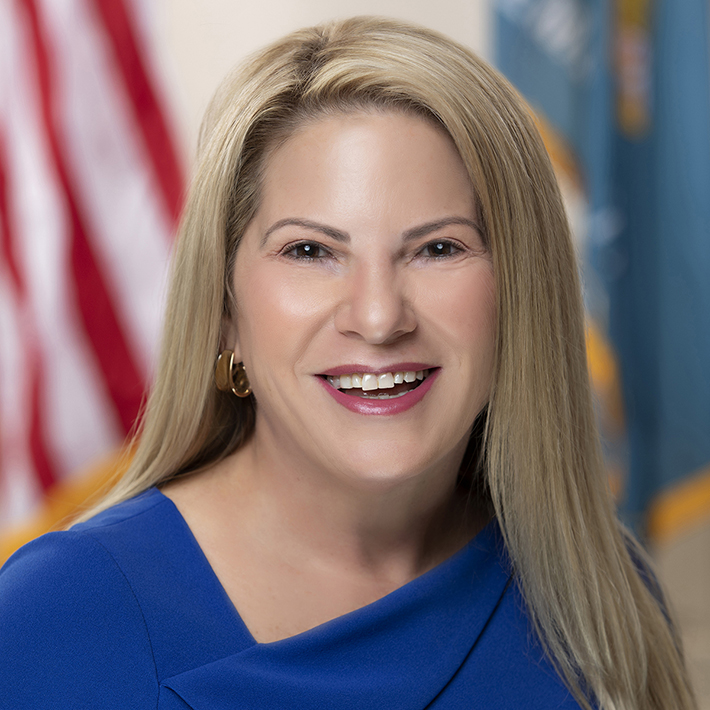
Ask Maddy about Val Longhurst
Scope: delaware
Hi! I can help you understand Val Longhurst's legislative record. What would you like to know?
Try one of these
i
Maddy answers using official bill text and legislative records. Always verify before sharing.
Sources cited inline