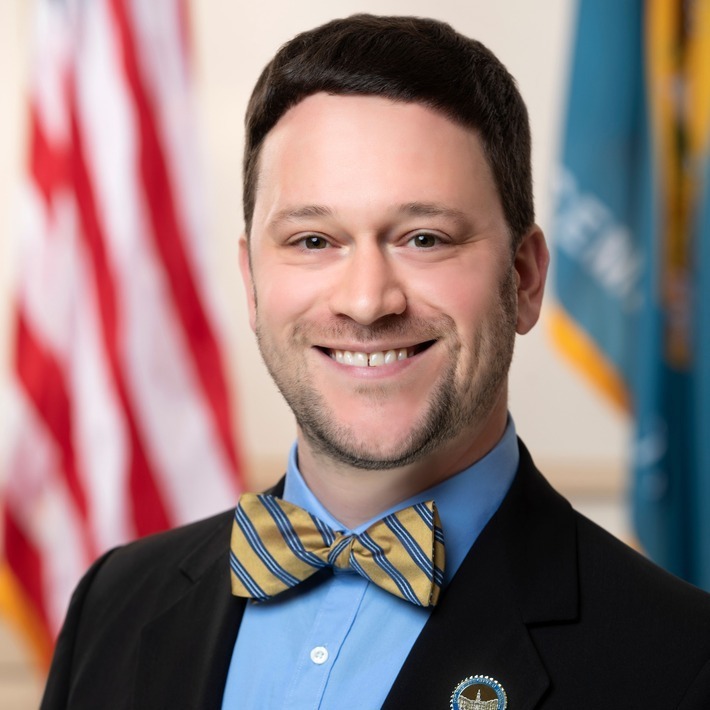
Photo of Jeff Spiegelman
R Delaware House · District 11 On the 2026 ballot

Rep. Jeff Spiegelman

Compare
Total votes
2,772
all sessions
Attendance
97%
94 missed
Near the chamber average
With party
97%
of cast votes
Lower than 81% of chamber peers
Bipartisan score
2%
crosses aisle rarely
Higher than 83% of chamber peers
Sponsored
410
bills & resolutions
Lower than 93% of chamber peers
Committees
6
assignments
410 bills and resolutions

Sponsored bills

Total
410
Primary
84
Co-sponsor
326
This page
410
matching current filters
Co-sponsor HB 290
Signed into law · Delaware House · Co-sponsor
AN ACT TO AMEND TITLE 4 OF THE DELAWARE CODE RELATING TO ALCOHOLIC LIQUORS.

This bill permanently removes the sunset provision of House Bill 1 to allow food and drink establishments who suffered great losses since March, 2020 due to the pandemic to continue to sell alcoholic beverages in transactions for take-out, curbside, or drive-through service and to use outdoor seating for serving of food and drinks so long as the licensee satisfies certain conditions. This bill also permanently provides the Commissioner the authority to temporarily suspend a license only if the Commissioner has reasonable grounds to believe that public's safety is at risk and there has been a violation of the law, and to hold hearings by electronic, telephonic, or remote means.

Signed into law Feb 16, 2022 1 co-sponsor
Co-sponsor SB 223
In committee · Delaware Senate · Co-sponsor
AN ACT TO AMEND TITLE 11 OF THE DELAWARE CODE RELATING TO RIOTOUS DESTRUCTION OF A PUBLIC MONUMENT.

While Delaware has, for the most part, escaped the extreme actions of mobs experienced elsewhere, and enjoyed the benefits of mostly peaceful exercise of First Amendment rights by people seriously expressing a perceived need for change, other jurisdictions have been faced with situations where a lack of sufficient legal tools have impeded the ability of authorities to adequately protect both public and private property as well as the lives of the innocent. This Act is one of 4 Acts designed to address those weaknesses and to ensure that should they be needed, Delawareans will be properly and appropriately protected. The Acts provide the courts, law enforcement, and prosecutors with additional tools with which to deal with destructive and dangerous conduct during times of civil disorder. Specifically, this Act creates the crime of riotous destruction of a public monument.

In committee Feb 11, 2022 1 co-sponsor
Co-sponsor SB 220
In committee · Delaware Senate · Co-sponsor
AN ACT TO AMEND TITLE 11 OF THE DELAWARE CODE RELATING TO LOOTING.

While Delaware has, for the most part, escaped the extreme actions of mobs experienced elsewhere, and enjoyed the benefits of mostly peaceful exercise of First Amendment rights by people seriously expressing a perceived need for change, other jurisdictions have been faced with situations where a lack of sufficient legal tools have impeded the ability of authorities to adequately protect both public and private property as well as the lives of the innocent. This Act is one of 4 Acts designed to address those weaknesses and to ensure that should they be needed, Delawareans will be properly and appropriately protected. The Acts provide the courts, law enforcement, and prosecutors with additional tools with which to deal with destructive and dangerous conduct during times of civil disorder. Specifically, this Act creates the crime of looting, which is classified as a class C felony.

In committee Feb 11, 2022 1 co-sponsor
Co-sponsor SB 221
In committee · Delaware Senate · Co-sponsor
AN ACT TO AMEND TITLE 11 OF THE DELAWARE CODE RELATING TO RIOTOUS BURNING.

While Delaware has, for the most part, escaped the extreme actions of mobs experienced elsewhere, and enjoyed the benefits of mostly peaceful exercise of First Amendment rights by people seriously expressing a perceived need for change, other jurisdictions have been faced with situations where a lack of sufficient legal tools have impeded the ability of authorities to adequately protect both public and private property as well as the lives of the innocent. This Act is one of 4 Acts designed to address those weaknesses and to ensure that should they be needed, Delawareans will be properly and appropriately protected. The Acts provide the courts, law enforcement, and prosecutors with additional tools with which to deal with destructive and dangerous conduct during times of civil disorder. Specifically, this Act creates the crime of riotous burning, which is a class B felony, unless another individual is injured as a result of the riotous burning, in which case it is a class A felony.

In committee Feb 11, 2022 1 co-sponsor
Co-sponsor SB 219
In committee · Delaware Senate · Co-sponsor
AN ACT TO AMEND TITLE 11 OF THE DELAWARE CODE RELATING TO BOMBS, INCENDIARY DEVICES, MOLOTOV COCKTAILS, AND EXPLOSIVE DEVICES.

While Delaware has, for the most part, escaped the extreme actions of mobs experienced elsewhere, and enjoyed the benefits of mostly peaceful exercise of First Amendment rights by people seriously expressing a perceived need for change, other jurisdictions have been faced with situations where a lack of sufficient legal tools have impeded the ability of authorities to adequately protect both public and private property as well as the lives of the innocent. This Act is one of 4 Acts designed to address those weaknesses and to ensure that should they be needed, Delawareans will be properly and appropriately protected. The Acts provide the courts, law enforcement, and prosecutors with additional tools with which to deal with destructive and dangerous conduct during times of civil disorder. Specifically, this Act enhances the existing law by making it a crime to do the following: (1) Unlawfully manufacture, transfer, or possess, during a civil disorder event, a bomb, incendiary device, Molotov cocktail, or device designed to explode or produce uncontained combustion. (2) Throw, launch, or otherwise use an ignited or otherwise activated bomb, incendiary device, Molotov cocktail, or device designed to explode or produce uncontained combustion during a civil disorder event. (3) Throw, launch, or otherwise use an ignited or otherwise activated bomb, incendiary device, Molotov cocktail, or device designed to explode or produce uncontained combustion during a civil disorder event and injure another person. This Act also makes technical corrections to conform existing law to the standards of the Delaware Legislative Drafting Manual.

In committee Feb 11, 2022 1 co-sponsor
Co-sponsor HB 289
Signed into law · Delaware House · Co-sponsor
AN ACT TO AMEND TITLE 4 OF THE DELAWARE CODE RELATING TO ALCOHOLIC LIQUORS.

This bill allows liquor stores, farm wineries, brewery-pubs, microbreweries, craft distilleries, and wine auctions to provide curbside service for the sale of alcohol, but makes clear that all sales must comply with all of the regulatory provisions of Chapter 7 of Title 4, including the prohibition against sales to intoxicated persons and persons under 21 years of age.

Signed into law Feb 7, 2022 1 co-sponsor
Co-sponsor SB 203
Signed into law · Delaware Senate · Co-sponsor
AN ACT TO AMEND TITLE 8 OF THE DELAWARE CODE RELATING TO THE GENERAL CORPORATION LAW.

Section 1. Section 1 of this Act amends Sections 145(c) and 145(g). Amended Section 145(c) corrects a typographical error but otherwise makes no substantive changes. The amendments to Section 145(g) expressly authorize a corporation to purchase and maintain insurance on behalf of its directors, officers, employees and other indemnifiable persons by or through a “captive insurance company,” which, in general, is an insurer directly or indirectly owned, controlled and funded by the corporation. The captive insurer may be licensed in Delaware or another jurisdiction. Like third-party insurance, the captive insurance may provide coverage for liabilities incurred by directors, officers, employees and others whether or not the corporation would have the power to indemnify them under Section 145. Thus, captive insurance could be used to provide coverage for, among other things, amounts paid to satisfy judgments and settlements of claims brought by or in the right of the corporation, even though the corporation would not have the power to indemnify the covered persons against such amounts. Amended Section 145(g) contemplates that captive insurance may be procured pursuant to any “fronting” or other reinsurance arrangement (such as when a corporation obtains insurance from a third-party insurer but, through a reinsurance policy, all or part of the risk of loss is transferred to a captive insurer). Section 145(g)(1) requires that a captive insurance policy must exclude from coverage, and must provide that the insurer may not make payment in respect, of any loss that arises out of, is based upon or is attributable to any personal profit or financial advantage to which the covered person was not legally entitled (e.g., an undue financial benefit from a self-dealing transaction), any deliberate criminal or deliberate fraudulent act, or any knowing violation of law. Despite these exclusions, directors may be covered under a captive insurance policy for certain liabilities that are not exculpable under Section 102(b)(7), including non-exculpated liability stemming from so-called Caremark or oversight claims where there is not otherwise a finding that the directors knowingly caused the corporation to violate the law. The coverage exclusions in Section 145(g)(1) only apply if the proscribed conduct has been established in a final, non-appealable adjudication in the underlying proceeding in respect of the claim. They do not apply if the proscribed conduct has been established in an adjudication in an ancillary proceeding by the insurer or the insured to determine coverage. Because the exclusions in Section 145(g)(1) are invoked only after an adjudication in the underlying proceeding, a captive insurance policy could cover amounts paid in settlement of proceedings that allege conduct referenced in Section 145(g)(1). Amended Section 145(g) makes clear that the conduct of one person insured under the captive policy will not be imputed to any other insured person for purposes of applying the conduct exclusions set forth in Section 145(g)(1). In addition, the exclusions in Section 145(g)(1) do not apply to the extent the corporation would otherwise be entitled to indemnify the covered person under the other provisions of Section 145. A corporation that establishes a captive insurance program may include in the insurance policy limitations or exclusions from coverage that are in addition to those prescribed by statute. Amended Section 145(g)(2) provides that any determination to make a payment under a captive insurance policy must be made either by a third-party administrator or in accordance with the procedures set forth in paragraphs (d)(1) through (4) of Section 145, to ensure that the persons claiming entitlement to payment under the captive insurance policy are not the same persons making the decision whether to pay claims under the policy. Amended Section 145(g)(3) provides that if any payment is to be made under the captive insurance policy in connection with the dismissal or compromise of any action, suit or proceeding by or in the right of the corporation as to which notice is required to be given to stockholders, the corporation must include in the notice that a payment is proposed to be made under the captive insurance policy in connection with the dismissal or compromise. Section 145(g)(3) thereby affords the reviewing court and stockholders an opportunity to consider the use of assets of the captive insurance company in connection with a compromise of such actions, suits or proceedings. However, amended Section 145(g) does not require a court to make any specific determinations with respect to payments by a captive insurer. The amendments to Section 145(g) make clear that a corporation that establishes and maintains a captive insurance company shall not, solely by virtue thereof, be subject to the provisions of Title 18 of the Delaware Code regulating insurance companies. The amendments to Section 145(g) are not intended to prohibit other forms of insurance that would have been permitted under the provisions of Section 145(g) that predated this amendment.


Signed into law Feb 7, 2022 1 co-sponsor
Co-sponsor SCR 69
Passed · Delaware Senate · Co-sponsor
URGING THE SECRETARY OF THE NAVY TO DESIGNATE PHILADELPHIA AND BOTH BANKS OF THE DELAWARE RIVER AS THE SITE OF THE MAIN CELEBRATION OF THE 250TH BIRTHDAYS OF THE UNITED STATES NAVY AND THE UNITED STATES MARINE CORPS IN OCTOBER AND NOVEMBER 2025.

This Concurrent Resolution urges the Secretary of the Navy to designate Philadelphia and both banks of the Delaware River as the site of the main celebration of the 250th birthdays of the United States Navy and United States Marine Corps in October and November 2025.

Passed Jan 27, 2022 1 co-sponsor
Showing 71 to 80 of 410 bills
Previous 1 7 8 9 41 Next