

Treating Tribes and Counties as Good Neighbors Act This bill revises the Good Neighbor Authority program to modify the treatment of revenue from timber sale contracts under good neighbor agreements with the Department of Agriculture (USDA) and the Department of the Interior. (The Good Neighbor Authority permits USDA and Interior to enter into cooperative agreements or contracts with states, counties, and Indian tribes to perform forest, rangeland, and watershed restoration services on federal land managed by the Forest Service or the Bureau of Land Management.) Specifically, the bill (1) requires Indian tribes and counties to retain revenue generated from timber sales under a good neighbor agreement; and (2) allows states, counties, and Indian tribes to use such revenue for authorized restoration projects on nonfederal lands under a good neighbor agreement. (Under current law, only a state is permitted to retain the revenues, and the revenues must be used for restoration projects on federal land.)
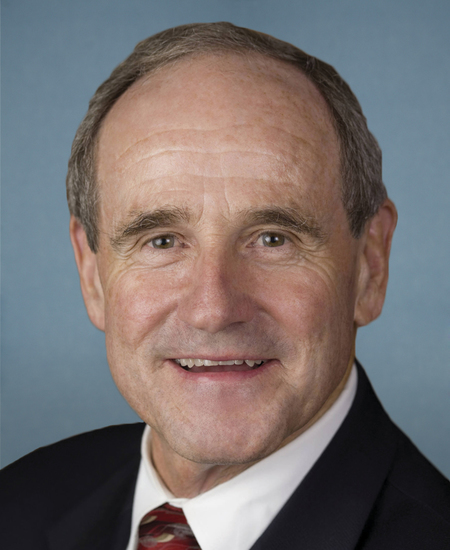
Sen. James E. Risch
Sponsored bills
UNRWA Accountability and Transparency Act This bill makes changes to U.S. foreign policy in matters concerning the United Nations Relief and Works Agency for Palestine Refugees in the Near East (UNRWA). For purposes of this policy, the bill defines Palestinian refugee as a person who (1) resided from June 1946 to May 1948 in Mandatory Palestine (a region controlled by Britain until 1948), (2) was personally displaced as a result of the 1948 Arab-Israeli conflict, and (3) has not accepted citizenship or other permanent adjustment in status in another country. The bill withholds U.S. funding for the UNRWA unless the Department of State makes certifications concerning the UNRWA's staff, partners, and funding. Specifically, the State Department must certify that neither UNRWA staff and partners nor its funding and facilities are affiliated with terrorism or engaged in the dissemination of anti-American, anti-Israel, or anti-Semitic ideologies. Additionally, the State Department must certify that the UNRWA is subject to comprehensive financial audits by an independent auditing firm and is unaffiliated with any financial institutions that the United States considers to be complicit in money laundering or terror financing. The bill also requires the State Department to implement a plan to encourage other countries to align their activities and efforts regarding the UNRWA with U.S. policy objectives, including the phase out of the UNRWA by resettling Palestinian refugees in countries other than Israel and in territories not controlled by Israel. The State Department must report to Congress on this plan.
Energy Sector Innovation Credit Act of 2021 This bill adds new tax credits for investment in qualified emerging technology energy property and for the production of electricity from emerging energy technology. The bill defines qualified emerging energy property as property that is constructed, reconstructed, erected, or acquired by the taxpayer and is (1) a facility for the production of electricity from emerging energy technology, (2) carbon capture equipment, or (3) energy storage technology. The bill also adds a new tax credit for the production of electricity from clean hydrogen. The bill defines clean hydrogen as hydrogen that is produced through a production method for which the rate of the greenhouse gas emission is greater than zero and not greater that 2,500g CO2-e per kilogram of hydrogen produced, or is equal to or less than zero.
This bill requires federal agencies to submit zero-based budgets to the Office of Management and Budget and the congressional budget committees . A zero-based budget is a systematic budget analysis in which managers (1) examine current objectives, operations, and costs; (2) consider alternative ways of carrying out programs or activities; and (3) rank different programs or activities by order of importance. The bill also requires federal agencies to submit recommendations for spending reductions of at least 2% from the previous year's levels. The Department of Defense and the National Nuclear Security Administration are exempt from this requirement.
Investing in Main Street Act of 2021 This bill authorizes certain banking entities, subject to the approval of the appropriate federal banking agency, to invest up to 15% of their capital and surplus in one or more small business investment companies (SBICs) or in any entity established to invest solely in SBICs.
Federal Firearms Licensee Protection Act of 2021 This bill modifies criminal penalties for an offense involving the theft of a firearm from a licensed importer, manufacturer, or dealer, or from their business premises. Specifically, the bill does the following: increases from 10 to 20 years the maximum prison term, and creates a 3- or 5-year mandatory minimum prison term for an offense that occurs during the commission of a burglary or robbery. An attempt to commit an offense is subject to the same penalties as a substantive offense.
This resolution declares that the Pledge of Allegiance has been a valuable part of life for the people of the United States for generations and defends its constitutionality.
This resolution designates July 24, 2021, as National Day of the American Cowboy.
Protecting Life on College Campus Act of 2021 This bill prohibits the award of federal funds to an institution of higher education (IHE) that hosts or is affiliated with a school-based service site that provides abortion drugs or abortions to its students or to employees of the IHE or the site. An IHE that hosts or is affiliated with a site must, in order to remain eligible for federal funds, annually certify that the site does not provide abortion drugs or abortions to students or employees.
Cyber Incident Notification Act of 2021 This bill requires federal agencies and certain entities to report cybersecurity intrusion incidents to the Cybersecurity and Infrastructure Security Agency (CISA) and addresses related issues. Within 24 hours of a confirmed intrusion (or potential intrusion), the targeted agency or entity must report the intrusion to CISA. CISA must promulgate rules relating to the bill, including the information that must be included in each incident report and the entities that must comply with the reporting requirements. At minimum, the covered entities must include federal contractors and owners or operators of critical infrastructure. Similarly, such rules must at minimum require federal agencies and covered entities to report all intrusions involving a nation-state, advanced persistent threat cyber actor, or transnational organized crime group. If a covered entity fails to meet the bill's requirements, CISA may assess a civil penalty of up to 0.5% of the entity's gross revenue for each day the violation lasts. If the violating entity has federal contracts, the General Services Administration may impose additional penalties, including removal from the Federal Contracting Schedule. A violation by a federal agency must be referred to that agency's office of the inspector general, which must treat the case as a matter of urgent concern. CISA, the Department of Justice, and the Office of the Director of National Intelligence must provide periodic reports to Congress concerning the current cyber threat picture facing federal agencies and covered entities.