

Biological Weapons Policy Act of 2021 This bill modifies the Department of State's authorities related to biological and virological weapons and addresses related issues. The State Department's authority to engage in certain activities (e.g., conduct research and provide grants) related to detecting and reducing certain weapons shall include activities directed at biological and virological weapons. The bill prohibits using federal funds for research that increases the pathogenicity, contagiousness, or transmissibility of viruses or bacteria if the research involves a foreign entity subject to the jurisdiction of certain countries, including China and Russia. The President must carry out certain activities related to China's compliance with the Biological Weapons Convention, including engaging with other governments about concerns about such compliance. The U.S. representative to the United Nations (UN) must advocate to bar representatives from certain countries, including China and Russia, from serving in leadership positions in any UN agency or program with a nexus to certain subjects, such as global health and biosecurity. The U.S. mission to certain countries must complete an assessment of whether each U.S. government-supported project involving life sciences dual-use research of concern aligns with U.S. national interests. The Government Accountability Office must report to Congress on (1) U.S. government authorities and processes related to cooperation with other nations in life sciences research that could be weaponized or pose dual-use concerns; and (2) coordination between federal agencies responsible for public health, biomedical research, and national security in the assessment of the security implications of cooperation with other nations on life sciences research.
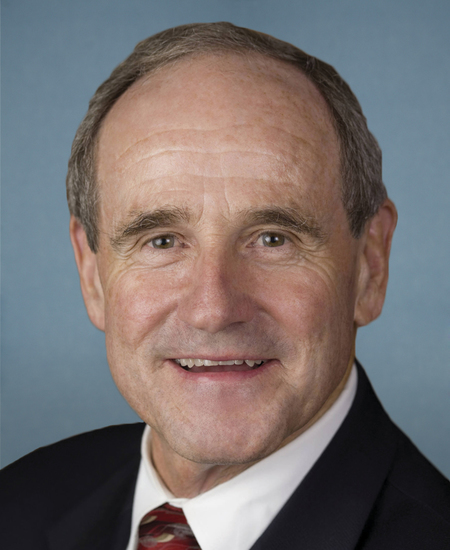
Sen. James E. Risch
Sponsored bills
Restoring the America Invents Act This bill modifies various provisions related to administrative patent validity review proceedings conducted before the Patent Trial and Appeal Board (PTAB), a body within the Patent and Trademark Office (PTO). For example, the bill expands the scope of inter partes reviews (IPRs), one type of such review proceedings, by allowing challenges to a patent's validity based on statutory or obviousness-type double patenting grounds; authorizes the PTO director to review, modify, or set aside final PTAB decisions; authorizes governmental entities to file IPRs and post-grant reviews (PGRs), a related type of patent review proceeding; requires the PTO to institute an IPR (i.e., a decision to proceed with the full IPR proceeding) if there's a reasonable likelihood that the petitioner will prevail, subject to limited exceptions; establishes in statute factors for a court to consider when deciding a request to stay a patent infringement lawsuit involving a patent subject to a pending IPR or PGR; modifies provisions related to the joinder of parties and handling of multiple proceedings involving the same patent before the PTO; and modifies provisions relating to the time limitation for filing an IPR, including by establishing that a lawsuit dismissed without prejudice does not trigger the time limitation (generally, a petitioner wishing to file an IPR must do so within one year of being served a lawsuit alleging infringement of the patent).
This resolution expresses support for the goals and ideals of National Forensic Science Week.
Tribal Labor Sovereignty Act of 2021 This bill excludes Indian tribes and tribal enterprises and institutions on tribal land from requirements for employers under the National Labor Relations Act (NLRA). (Currently under the NLRA, employers may not engage in unfair labor practices and must allow employees to form unions, engage in collective bargaining, and take collective action.)
National Treasures Act of 2021 This bill prohibits the National Archives and Records Administration from including content warnings alongside items associated with the founding fathers of the United States. Content warning is defined as any message preceding or attached to the document labeling it as dangerous, harmful, anachronistic, or any other terms implying harm associated with the documents; disparaging the documents; assuming malicious intent on the part of the authors; or discouraging potential readers from reading the documents. Founding father means any individual who signed the Declaration of Independence, served as an officer in the Revolutionary War, attended the Second Continental Congress, attended the Constitutional Convention, or was granted a charter for one of the original 13 colonies of the United States.
Unclaimed Savings Bond Act of 2021 This bill establishes requirements and procedures for the Department of the Treasury to transfer ownership of certain matured, unredeemed savings bonds and related records to states.
Afghanistan Counterterrorism, Oversight, and Accountability Act of 2021 This bill imposes sanctions involving Afghanistan and addresses related issues. The President must impose, with certain exceptions, visa- and property-blocking sanctions on any foreign individual or entity that (1) provides support to any terrorist group in Afghanistan, (2) is responsible for or complicit in serious human rights abuses in Afghanistan, or (3) plays a significant role in international narcotics trafficking centered in Afghanistan. The President may also impose such sanctions on any foreign individual or entity that provides certain support for (1) the Taliban or any Taliban member, or (2) any agency of the Taliban-controlled government of Afghanistan. Additionally, the Department of State must (1) require U.S. representatives to the United Nations to advocate and vote to maintain sanctions against the Taliban, and (2) encourage allies and partner countries to impose sanctions against the Taliban. The State Department may suspend the sanctions imposed under this bill upon certifying to Congress that the Taliban has taken certain actions, such as breaking all ties with other terrorist groups. The State Department must establish a task force to (1) implement a strategy relating to the evacuation of Afghanistan, and (2) identify individuals in Afghanistan who have sought admission into the United States as a refugee or humanitarian parolee. The bill requires various reports, including on (1) a revised strategy for engagement with South and Central Asian countries after the U.S. withdrawal from Afghanistan, (2) a counterterrorism strategy for Afghanistan, and (3) the extent of Taliban human rights abuses.
This resolution honors the life of Robert Dove, Parliamentarian Emeritus of the Senate, and offers the condolences of the Senate regarding his death.
Enhancing Geothermal Production on Federal Lands Act This bill revises the environmental review of geothermal energy projects on federal land in order to expedite such projects.
No Hearing, No Vote Act of 2021 This bill prohibits the Senate from considering a budget reconciliation bill unless at least one committee hearing has been held regarding the bill. (Reconciliation bills are considered by Congress using expedited legislative procedures that prevent a filibuster and restrict amendments in the Senate.) Specifically, the bill prohibits the Senate from considering a reconciliation bill unless (1) the bill was reported by a committee that received reconciliation instructions or by the Senate Budget Committee after receiving recommendations from committees that received instructions, and (2) each committee that reported the bill or ordered recommendations to be reported to the Senate Budget Committee held at least one hearing regarding any major provision of the bill that is within the jurisdiction of the committee.