

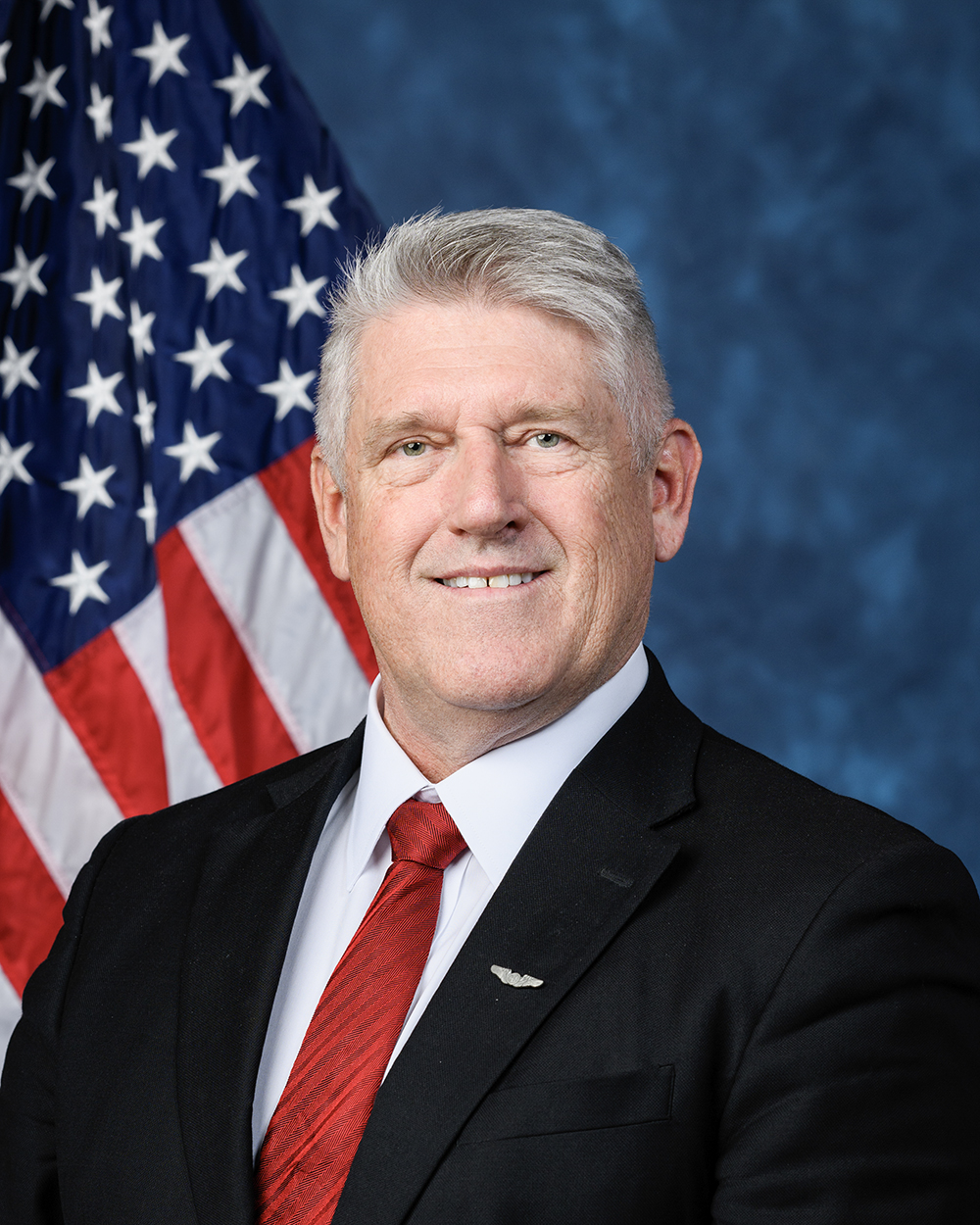
Photo of Troy Downing
R United States House · District 2 · Montana On the 2026 ballot

Rep. Troy Downing

Compare
Total votes
650
all sessions
Attendance
99%
4 missed
Higher than 83% of chamber peers
With party
96%
of cast votes
Near the chamber average
Bipartisan score
2%
crosses aisle rarely
Near the chamber average
Sponsored
199
bills & resolutions
Lower than 77% of chamber peers
Committees
7
assignments
199 bills and resolutions

Sponsored bills

Total
199
Primary
27
Co-sponsor
172
This page
199
matching current filters
Co-sponsor HRES 1073
In committee · Connecticut House · Co-sponsor
Expressing support for the designation of February 21 through February 28, 2026, as "National FFA Week", recognizing the important role of the National Future Farmers of America (FFA) Organization in developing the next generation of globally conscious leaders who will change the world, and celebrating the 50th anniversary of the chartering of the State of Alaska as a State FFA Association.

Maddy summaryHRES 1073 is a non-binding resolution designating February 21-28, 2026, as "National FFA Week" to recognize the National Future Farmers of America (FFA) Organization’s role in developing agricultural education leaders and to celebrate the 50th anniversary of Alaska’s State FFA Association. It does not create new laws or affect any specific groups or policies; instead, it formally expresses the House’s support for this commemorative week. The resolution highlights FFA’s mission to prepare students for leadership and careers in agriculture, food, and natural resources. As a symbolic gesture, it has no direct legislative or financial impact on constituents.

In committee Feb 23, 2026 1 co-sponsor
Co-sponsor HR 2130
In committee · Connecticut House · Co-sponsor
Tribal Trust Land Homeownership Act of 2025

Tribal Trust Land Homeownership Act of 2025 This bill sets forth requirements for the processing of a proposed residential leasehold mortgage, business leasehold mortgage, land mortgage, or right-of-way document by the Bureau of Indian Affairs (BIA). The BIA must notify lenders upon receipt of such documentation, perform a preliminary review of such documents not later than 10 days after receipt, and approve or disapprove of such documents within 20 or 30 days, depending on the type of application. Additionally, the bill sets forth requirements for the BIA regarding (1) response times for the completion of certified title status reports, (2) notification of delays in processing, and (3) the form of notices and delivery of certain reports. The bill also provides relevant federal agencies and Indian tribes with read-only access to the Trust Asset and Accounting Management System maintained by the BIA. The Government Accountability Office must report on digitizing documents for the purpose of streamlining and expediting the completion of mortgage packages for residential mortgages on Indian land. Finally, the bill establishes within the BIA's Division of Real Estate Services the position of Realty Ombudsman.

In committee Feb 23, 2026 1 co-sponsor
Co-sponsor HR 1028
In committee · Connecticut House · Co-sponsor
Protection of Women in Olympic and Amateur Sports Act of 2026

Protection of Women in Olympic and Amateur Sports Act This bill requires certified national governing bodies (NGBs) of amateur sports (e.g., USA Gymnastics) to prohibit a person whose sex is male from participating in an amateur athletic competition that is designated for females, women, or girls. Under the bill, male  means an individual who has, had, will have—or would have, but for a developmental or genetic anomaly or historical accident—the reproductive system that at some point produces, transports, and utilizes sperm for fertilization.

In committee Feb 17, 2026 1 co-sponsor
Co-sponsor HR 3682
Passed · Connecticut House · Co-sponsor
Financial Stability Oversight Council Improvement Act of 2025

Maddy summaryThis bill amends the process for the Financial Stability Oversight Council (FSOC) when considering actions against U.S. nonbank financial companies. It requires the FSOC to first determine that alternative solutions - such as new regulatory standards, agency actions, or a company's written plan - are not possible or insufficient to protect financial stability before voting on a formal determination. The change directly affects the FSOC and large nonbank financial companies that could face regulatory scrutiny. The key provision adds a new step to ensure the Council explores other options before taking significant action. (Procedural bill; summary limited to 3 sentences as specified.)

Passed Feb 11, 2026 1 co-sponsor
Co-sponsor HR 1566
In committee · Connecticut House · Co-sponsor
REPAIR Act

Maddy summaryThe REPAIR Act requires motor vehicle manufacturers to provide car owners and independent repair shops with full access to vehicle data and repair information, prohibiting technological or legal barriers that restrict this access. It mandates that manufacturers share vehicle-generated data, critical repair information, and tools on equal terms with dealers and authorized service providers, without requiring consumers to use specific brands of parts or tools. The law establishes an advisory committee to monitor implementation and ensure fair competition in vehicle repair, while giving the Federal Trade Commission authority to enforce these requirements as unfair or deceptive practices. This legislation directly affects car owners, independent repair facilities, aftermarket parts manufacturers, and motor vehicle manufacturers by shifting control of repair information and data from manufacturers to consumers.

In committee Feb 10, 2026 1 co-sponsor
Primary HR 6568
In committee · Connecticut House · Lead sponsor
Lower Yellowstone River Native Fish Conservation Act

Maddy summaryThis bill, the Lower Yellowstone River Native Fish Conservation Act, ensures the federal government (specifically the Bureau of Reclamation) remains solely responsible for operating, maintaining, and funding the Lower Yellowstone Fish Bypass Channel - a structure built to help endangered pallid sturgeon migrate around a dam. It directly protects the Lower Yellowstone Irrigation District and Lower Yellowstone Irrigation Project from being forced to cover costs or operations for this federally mandated conservation measure. The bill prohibits any federal agency from shifting these responsibilities to non-federal entities, authorizes $1 million annually for channel upkeep, and requires the federal government to report on its operations to Congress. This clarifies existing law to prevent future disputes over who bears the financial burden for this environmental mitigation project.

In committee Feb 4, 2026 0 co-sponsors
Co-sponsor HRES 1034
In committee · Connecticut House · Co-sponsor
Relating to questions of privilege in the House of Representatives during the One Hundred Nineteenth Congress.

Maddy summaryHRES 1034 modifies House rules for "questions of privilege" resolutions during the 119th Congress. It requires that any privilege resolution offered by the Majority Leader or Minority Leader must have at least one-fifth of all House members as cosponsors when introduced. Additionally, Members must maintain this one-fifth cosponsorship threshold for at least one legislative day after a resolution's introduction before making an oral announcement about it. This procedural change affects how Members can formally raise conduct issues involving other Members, Delegates, or Resident Commissioners.

In committee Feb 3, 2026 1 co-sponsor
Co-sponsor HR 7296
In committee · Connecticut House · Co-sponsor
SAVE America Act

Safeguard American Voter Eligibility Act or the SAVE America Act This bill requires individuals to provide documentary proof of U.S. citizenship when registering to vote, and requires photo identification to vote, in federal elections. Specifically, the bill prohibits states from accepting and processing an application to register to vote in a federal election unless the applicant presents documentary proof of U.S. citizenship. The bill specifies what documents are considered acceptable proof of U.S. citizenship, such as identification that complies with the REAL ID Act of 2005 that indicates U.S. citizenship. Further, the bill (1) prohibits states from registering an individual to vote in a federal election unless, at the time the individual applies to register to vote, the individual provides documentary proof of U.S. citizenship; and (2) requires states to establish an alternative process to demonstrate U.S. citizenship. Each state must take affirmative steps on an ongoing basis to ensure that only U.S. citizens are registered to vote, which shall include establishing a program to identify individuals who are not U.S. citizens using information supplied by certain sources. Additionally, states must remove noncitizens from their official lists of eligible voters. The bill (1) provides for a private right of action for certain violations, and (2) establishes criminal penalties for certain offenses. Individuals voting in federal elections must present an eligible photo identification document. An individual who votes by absentee ballot must submit a copy of their identification document with both the request for, and the submission of, the absentee ballot.

In committee Jan 30, 2026 1 co-sponsor
Co-sponsor HR 7286
In committee · Connecticut House · Co-sponsor
To amend the Internal Revenue Code of 1986 to revoke the tax-exempt status of organizations that provide, or provide funding for, abortion.

Maddy summaryThis bill would revoke the tax-exempt status of nonprofit organizations (like charities or health groups) that provide or fund abortions, except in specific cases. It directly affects organizations currently classified under Section 501(c)(3) of the tax code, such as some healthcare providers or advocacy groups. Key provisions define "abortion" as intentionally terminating a pregnancy (excluding cases where the mother’s life is at risk, or the pregnancy resulted from rape or incest), and deny tax exemption to groups meeting this definition. The change would take effect for tax years starting after the bill’s enactment date.

In committee Jan 30, 2026 1 co-sponsor
Co-sponsor HR 5784
Passed · Connecticut House · Co-sponsor
AI–WISE Act

Maddy summaryThe AI-WISE Act requires the Small Business Administration (SBA) to create and maintain free, publicly available online educational resources about artificial intelligence specifically for small business owners. These resources must cover practical topics like understanding AI limitations, identifying AI-generated outputs, managing risks, protecting user privacy, and determining when AI tools are suitable for business use - without favoring any specific AI product or company. The SBA must develop these materials within 180 days of the bill’s enactment, consulting with an Advisory Working Group of AI experts and small business outreach professionals. This initiative directly affects small business owners by providing accessible, neutral guidance to help them navigate AI adoption safely and effectively.

Passed Jan 26, 2026 1 co-sponsor
Showing 51 to 60 of 199 bills
Previous 1 5 6 7 20 Next