

Maddy summaryThis bill requires state prisons to allow incarcerated mothers to breastfeed their infants while in custody. It mandates that correctional facilities establish clear policies and provide necessary accommodations (such as private space and time) for nursing, directly affecting mothers in state prisons with infants under their care. The bill passed the Senate on June 2, 2025, and is now pending consideration by the House of Representatives.
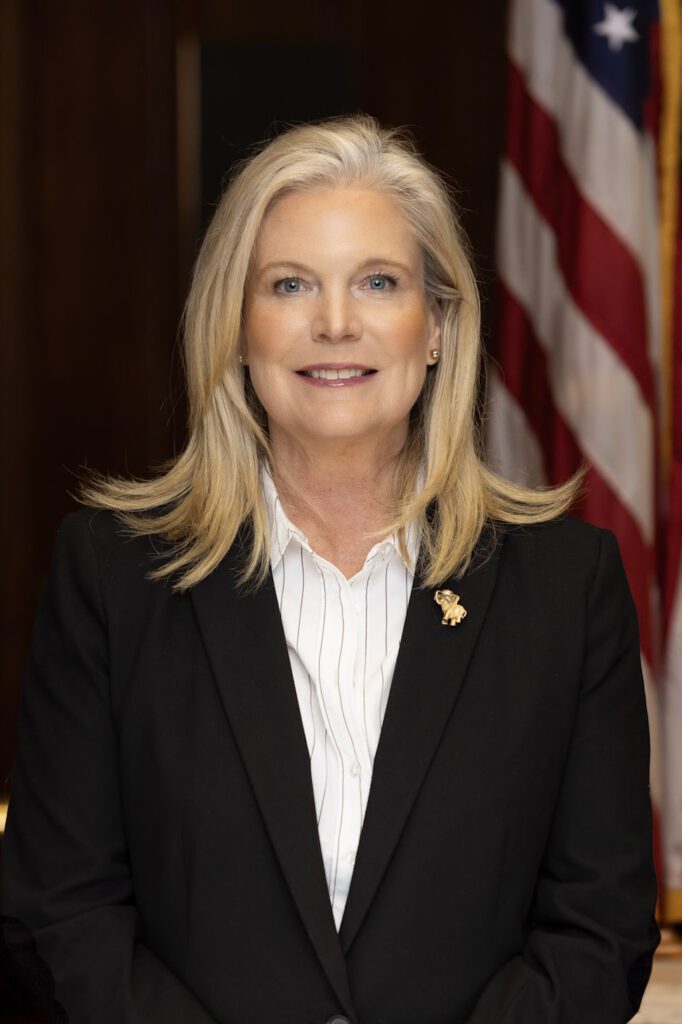
Sen. Heather Somers
Sponsored bills
Maddy summarySB 575 expands the designated bioscience enterprise corridor zone in Plainville, Maine, to include additional land within the town. This change directly affects bioscience companies and developers seeking to establish or expand operations in the area, as it modifies the boundaries of the existing incentive zone. The key provision allows for the extension of tax and regulatory benefits previously available in the corridor to newly designated parcels of land. The bill does not introduce new tax rates or fees but adjusts the geographic scope of existing incentives. The measure passed the Senate on June 2, 2025, and is pending further action in the House.
Maddy summarySB 2 regulates artificial intelligence systems used in major life decisions like hiring, loans, housing, and healthcare access. It defines "high-risk AI" as systems making "consequential decisions" (such as employment, credit, or housing) and requires developers and deployers to prevent algorithmic discrimination. The law specifically excludes video games, internal business tools, research activities, and non-discriminatory pattern analysis from regulation. It applies to companies operating within the state using such AI systems for covered decisions.
Maddy summarySB 1550 removes an exemption for children's general hospitals from Connecticut's hospital provider tax, requiring them to pay the same tax rates as other hospitals starting July 1, 2026. Currently exempt, these hospitals (defined as facilities licensed as short-term children's hospitals by the Department of Public Health) will now pay 6% on inpatient services and 10.4858% on outpatient services. The change generates an estimated $15.5 million annually in state revenue by ending their prior tax exemption. This affects only children's general hospitals, not specialty hospitals like psychiatric facilities, which remain separately defined under the law.
Maddy summaryHB 7228 revises Connecticut's absentee ballot procedures to standardize handling and record-keeping. Municipal clerks must record the receipt method (mail, secure drop box, in-person, or by family member), time, and date on each envelope, and report total absentee ballots by method. The bill sets specific deadlines for sorting and checking ballots (by the fourth, third, and second days before an election) and requires clerks to reject ballots if the voter's name isn't on the official list, with a stated reason. These changes apply directly to local election officials managing absentee ballots.
Maddy summarySB 1081 requires Connecticut’s Economic and Community Development and Transportation Commissioners to conduct an economic study of areas surrounding the Mohegan-Pequot Bridge in Montville and Preston. The study must assess whether the bridge adequately handles traffic flow, evaluate impacts from nearby projects (like the Great Wolf Lodge and Preston Riverwalk), examine how it accommodates permitted loads excluded from the Gold Star Memorial Bridge, and analyze potential effects if the Gold Star Bridge closes. The study must be completed by July 1, 2026, and report findings to the General Assembly’s transportation committees. This bill directly affects local communities near the bridge and the state’s transportation planning process. It mandates a factual analysis but does not authorize funding or construction.
Maddy summaryHB 6273 creates the Farmers' Crop Loss Reimbursement Grant Program within Connecticut's Department of Agriculture. It provides financial reimbursement to farmers who suffer crop losses due to significant acute weather events (like severe storms or floods). The program is funded through $10 million in state bonds, with the Department of Agriculture establishing eligibility rules, application processes, and reimbursement limits. Farmers must apply within 60 days of submitting requests, and the program takes effect July 1, 2025.
Maddy summaryHB 7055 creates two key tax provisions. First, it allows municipalities to establish property tax abatements for the primary residence of surviving domestic partners of police officers, firefighters, or EMTs who die while on duty (effective October 1, 2025). Second, it adds a personal income tax deduction for stipends paid to volunteer firefighters, volunteer fire police officers, and volunteer ambulance members (effective January 1, 2026). These changes directly affect surviving domestic partners of certain first responders and volunteer emergency personnel. The bill modifies existing statutes to provide specific tax relief without altering general tax rates or creating new programs.
Maddy summaryHB 7017 requires Connecticut's electric distribution companies and transmission owners to evaluate alternatives before constructing or significantly modifying major grid infrastructure. Specifically, they must propose at least one project using advanced conductors (which reduce resistance and increase capacity) and one using grid-enhancing technologies or nontraditional solutions like energy storage or software controls. The Connecticut Siting Council must prioritize cost-effective alternatives over traditional construction in its decisions. Companies must also annually report future projects and past infrastructure costs to the Public Utilities Regulatory Authority. This law directly affects electric utilities and aims to promote grid efficiency through technology-driven solutions rather than solely expanding physical infrastructure.
Maddy summaryHB 6289 amends Connecticut law to authorize licensed pesticide applicators with Federal Aviation Administration (FAA) drone licenses to use precision drones for analyzing, treating, and applying fertilizers and pesticides to crops. The bill requires the Department of Energy and Environmental Protection (DEEP) to update regulations by March 1, 2026, to include drone operations under existing aircraft applicator certification rules. It directly affects commercial and private pesticide applicators who hold both FAA drone operator licenses and pesticide applicator credentials. The law does not change current restrictions on pesticide application near residential areas or alter existing certification fees for traditional aircraft spraying.