

Maddy summaryThis bill creates a new Office of Government Oversight to detect and prevent fraud, waste, and abuse in state agencies and their contractors. The office will evaluate how government agencies manage personnel, property, and funds while also assessing the efficiency of private entities that provide government services. An executive director will lead the office and be appointed through a bipartisan committee process requiring legislative confirmation, with the role lasting five years. The director will have broad powers to conduct inspections, access records, issue subpoenas, and make recommendations to improve government operations. The office will coordinate with existing internal auditors within agencies while maintaining their current assignments to those agencies.
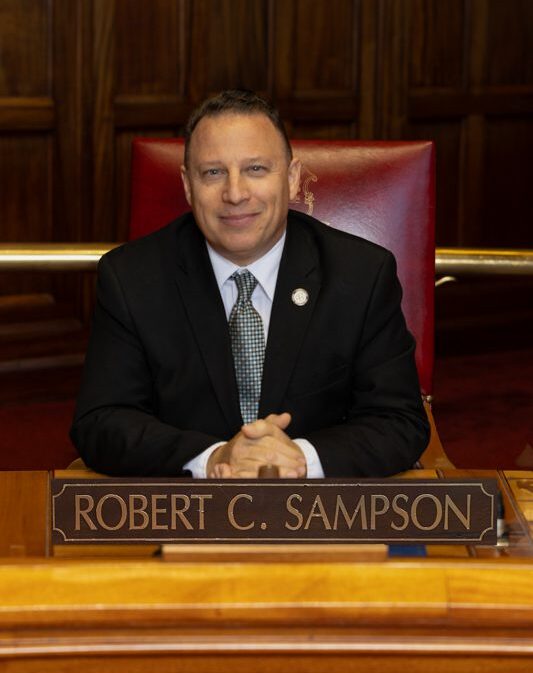
Sen. Rob Sampson
Sponsored bills
Maddy summaryThis bill updates how the Advisory Commission on Intergovernmental Relations tracks and reports on state mandates that affect local governments and school districts. Instead of submitting a comprehensive report every four years, the commission must maintain an online record of all existing mandates and categorize them by type and potential impact. Additionally, the bill requires the commission to produce a focused analysis every two years on at least three specific mandates, detailing their costs, operational effects, and possible recommendations for modification or repeal. These changes aim to improve transparency and accessibility of information regarding state requirements on local entities without altering the underlying mandates themselves.
Maddy summaryThis bill requires the Connecticut Commissioner of Social Services to upgrade electronic benefit transfer cards with security chip technology to help prevent fraud in the Supplemental Nutrition Assistance Program and other state benefit programs by July 1, 2026. The legislation also expands the definition of "public servant" to include unpaid advisors and consultants performing governmental functions, ensuring they are covered under state fraud and corruption laws. Additionally, the bill clarifies legal definitions for terms like "knowingly," "claim," and "material" in fraud-related statutes to improve consistency in how these offenses are prosecuted. A report on the implementation and effectiveness of the new security measures must be submitted to the legislature by January 1, 2027.
Maddy summaryThis bill requires election officials to conduct risk-limiting audits of state election results within 15 days after voting but before the official vote canvass. It mandates randomly selected audits for all state offices, at least one congressional seat, and 5% of state legislative seats (selected by the Secretary of State), with a maximum 5% risk limit to verify results. If an audit is inconclusive, it triggers a full manual recount of all ballots for that race. All audit processes must be public, and results can be used in election challenges, while preserving paper ballots for verification.
Maddy summarySB 388 establishes the "Mashantucket Pequot and Mohegan Fund" as a permanent state fund to manage payments received from Connecticut's Mashantucket Pequot Tribe and Mohegan Tribe. The bill requires transferring $152.38 million annually from Connecticut's General Fund to this new fund starting July 1, 2026, using revenue from tribal agreements. Funds will be distributed to Connecticut towns through the Office of Policy and Management following existing grant guidelines (Section 3-55j), with payments made in three installments each year. This directly affects Connecticut towns receiving these grants, which were previously managed under a different funding mechanism.
Maddy summaryThis bill requires voter registrars in Connecticut to notify political committees, candidate committees, and referendum committees at least 14 days before any election, primary, or referendum about whether poll books will be paper-based or electronic. The law directly affects these committees by informing them of the voting method used to check electors at polling places or early voting locations. Registrars who fail to provide this notice face a fine of at least $50. The changes take effect on January 1, 2027, and aim to increase transparency about how voter checklists will be processed during elections.
Maddy summaryThis bill requires that election recanvass procedures be open to public observation in person, without requiring observers to use electronic means. It applies to election moderators, recanvass officials, and members of the public who wish to watch the recount process. The law mandates that moderators allow public access to observe the recanvass and imposes fines on moderators who impede this right, while also clarifying that observers cannot interfere with the actual counting process. The bill also specifies that party representatives must be allowed to view each ballot as it is being recanvassed to verify markings. These changes take effect on October 1, 2026, and amend existing statutes governing election recanvass procedures.
Maddy summaryThis bill prohibits lobbyists and their political committees from making or soliciting campaign contributions to candidates running for state legislative office during legislative sessions, including regular, special, and reconvened sessions. It also bars these candidates and their political committees from accepting such contributions during the same periods. The restrictions apply specifically to contributions intended to aid or promote the nomination or election of candidates for the General Assembly, state offices, municipal offices, or probate judge positions. Additionally, the bill requires exploratory committees established by candidates to file dissolution notices and financial statements within fifteen days of certain triggering events, with specific rules for distributing any surplus funds. These measures take effect on January 1, 2027.
Maddy summaryThis bill establishes a task force to study how election workers are paid during early voting periods and on election days. The task force will include members appointed by both major political parties in the House and Senate, along with the ability for General Assembly members to serve. The group is required to submit a report with findings and recommendations by January 1, 2027, to the committee overseeing election matters. The study focuses specifically on compensation for registrars, town clerks, and other local election officials, but does not implement any immediate changes to pay rates.
Maddy summaryThis bill establishes a task force to study whether voters in unconsolidated cities and boroughs within towns can apply for absentee ballots through the Secretary of the State's online system. The task force will examine the feasibility and obstacles to implementing this change for elections, primaries, and referendums held in those specific jurisdictions. The group will include representatives from both legislative chambers, local election officials, and experts in voting technology, with a deadline to submit findings by January 1, 2027. This measure does not change current voting rules but instead creates a committee to investigate potential improvements to absentee ballot access in these areas.