

Maddy summarySB 257 limits landlords' reasons for evicting certain tenants, including those aged 62+ with a household member over 62, tenants with qualifying disabilities (or household members with such disabilities), or tenants who have lived in the unit for 12+ months. Landlords may only evict for specific reasons like nonpayment of rent, serious health/safety violations, or material lease breaches - not for the landlord (or family member) moving in, unless strict conditions are met (e.g., 90 days' notice and no available units). Rent increases for these protected tenants must be "fair and equitable" and can be challenged through local commissions or court. The law applies to buildings with five+ units or mobile home parks and takes effect October 1, 2026.
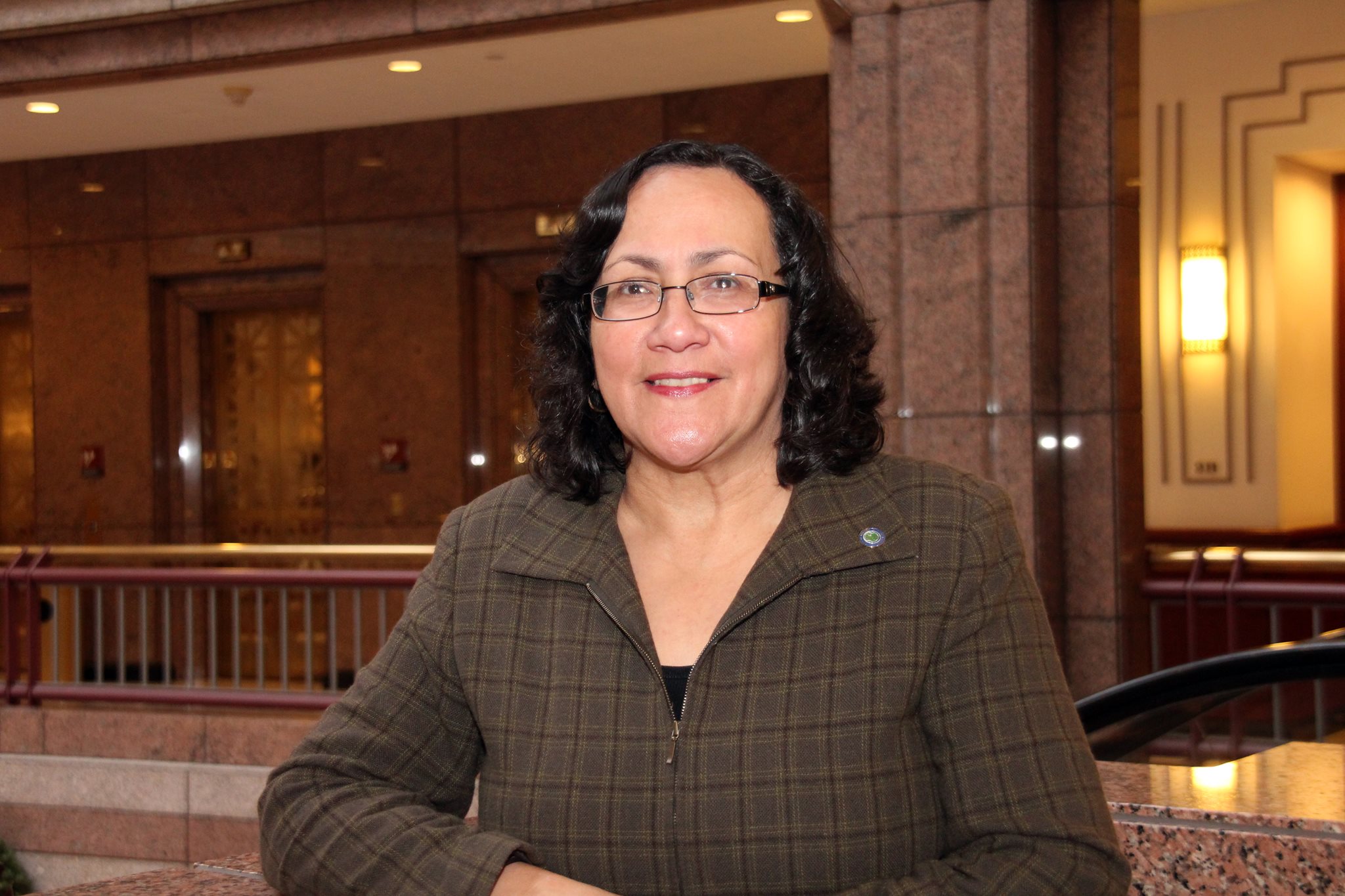
Rep. Hilda Santiago
Sponsored bills
Maddy summarySB 395 establishes a task force to study strategies for achieving 100% voter participation in the state by 2030, including examining policies requiring voting as a civic duty and assessing election administration needs. The task force, composed of legislative leaders, state officials, and gubernatorial appointees, must report findings and recommendations by February 2027, including potential funding for municipal efforts. The bill also authorizes local governments to create pilot programs - within existing resources - to boost voter engagement, such as outreach campaigns, without mandating new voting requirements. It focuses on research and local experimentation, not direct policy changes to election laws.
Maddy summaryHB 5261 allows municipalities to ban rent increases for residential rental units that have two or more outstanding violations of local health/safety ordinances or the State Building Code. The bill requires municipalities to pass a local ordinance through their legislative body to implement this restriction, which remains in effect until the building violations are fixed. It directly affects landlords of affected properties and provides tenants with protection from rent hikes during unsafe living conditions. The law takes effect October 1, 2026, and applies to all residential units defined under state law.
Maddy summarySB 250 requires Connecticut's Office of Policy and Management to study how quickly state agencies respond to public records requests made under the Freedom of Information Act (FOIA). The study must track average response times, document complaints about unreasonable delays, and include recommendations for improving timeliness. The Office must submit a report to the legislature's government oversight committee by January 15, 2027, detailing these findings. This bill does not change FOIA rules but aims to identify potential delays in public access to government records.
Maddy summaryHB 5046 modifies existing tuition waiver policies at Connecticut's community colleges and universities to specifically support public safety personnel. It waives tuition for current police officers (with 5+ years service) and firefighters (with 5+ years service), as well as for their dependents if the officer or firefighter was killed in the line of duty. The bill also expands waivers to include students enrolled in state fire school programs and police academy coordination courses. These changes apply to Connecticut State Community College and Connecticut State University System programs, effective July 1, 2026. The policy directly affects active and retired public safety workers and their families by reducing education costs.
Maddy summarySB 299 requires redemption centers in Connecticut to obtain a license from the Energy and Environmental Protection Commissioner starting July 1, 2026, with a $2,500 application fee. It restricts centers from accepting containers that were previously redeemed, damaged, not originally sold in Connecticut, or listed as unavailable by deposit initiators. Centers must track redemptions over 1,000 containers per person daily (or 4,000 for nonprofits), keep records for two years, and submit quarterly reports to the state. This bill directly affects redemption center operators, beverage dealers (who must accept eligible containers), and consumers redeeming containers.
Maddy summaryHB 5144 appropriates funds to cover the cost difference between federal reimbursement rates for reduced-price school meals and full-price meals. It directly affects public school districts participating in federal meal programs by allowing them to provide free breakfasts to all students and free lunches to students already eligible for reduced-price meals. The bill’s key mechanism is reimbursing districts for the gap between what the federal government pays and the actual cost of serving these meals. This policy change ensures schools can maintain these meal programs without charging eligible students, as specified in the bill’s purpose statement.
Maddy summaryHB 5134 establishes a refundable child tax credit of $600 per child for families with up to three children. It directly affects low-to-moderate income households, specifically those with federal adjusted gross income under $100,000 for single filers or $200,000 for married couples filing jointly. The credit is refundable, meaning eligible families may receive the full credit amount even if it exceeds their income tax liability. This policy change reduces tax burden for qualifying families with children, using the state’s personal income tax system to provide direct financial support.
Maddy summaryHB 8002 creates a tax-advantaged savings program to help Connecticut first-time homebuyers. It allows individuals or couples to open "first-time homebuyer savings accounts" at financial institutions, with funds contributed by anyone (including employers) to cover eligible costs like down payments and closing costs for a primary residence. Account holders must submit tax returns with account details to claim a state tax deduction or credit, and funds must be used exclusively for qualifying home purchases. The program applies only to one-to-four family residences purchased as primary homes in Connecticut, effective January 2026.
Maddy summaryHB 8003 temporarily adjusts the state's budget reserve fund to allocate new funds covering reductions in federal funding. It directly affects state agencies and programs that rely on federal grants, ensuring continued operations despite decreased federal support. The bill authorizes the use of reserve funds to maintain essential services without requiring new tax revenue or spending cuts. This legislation became law as Special Act 25-1 after the governor signed it on November 18, 2025.