

Maddy summaryHB 5334 amends Connecticut's wetlands and watercourse protection laws by clarifying key terms and expanding protections. It defines "riparian area" as land bordering watercourses (delineated by the ordinary high-water mark) and specifies "natural vegetative cover" as native plants (excluding lawns and invasive species). The bill explicitly excludes "water-dependent uses" (like marinas, fishing facilities, and waterfront industries) from "regulated activity," meaning these operations won't require permits for direct water access. This change aims to balance environmental protection with economic activities that rely on water resources, directly affecting property owners, developers, and businesses near waterways.
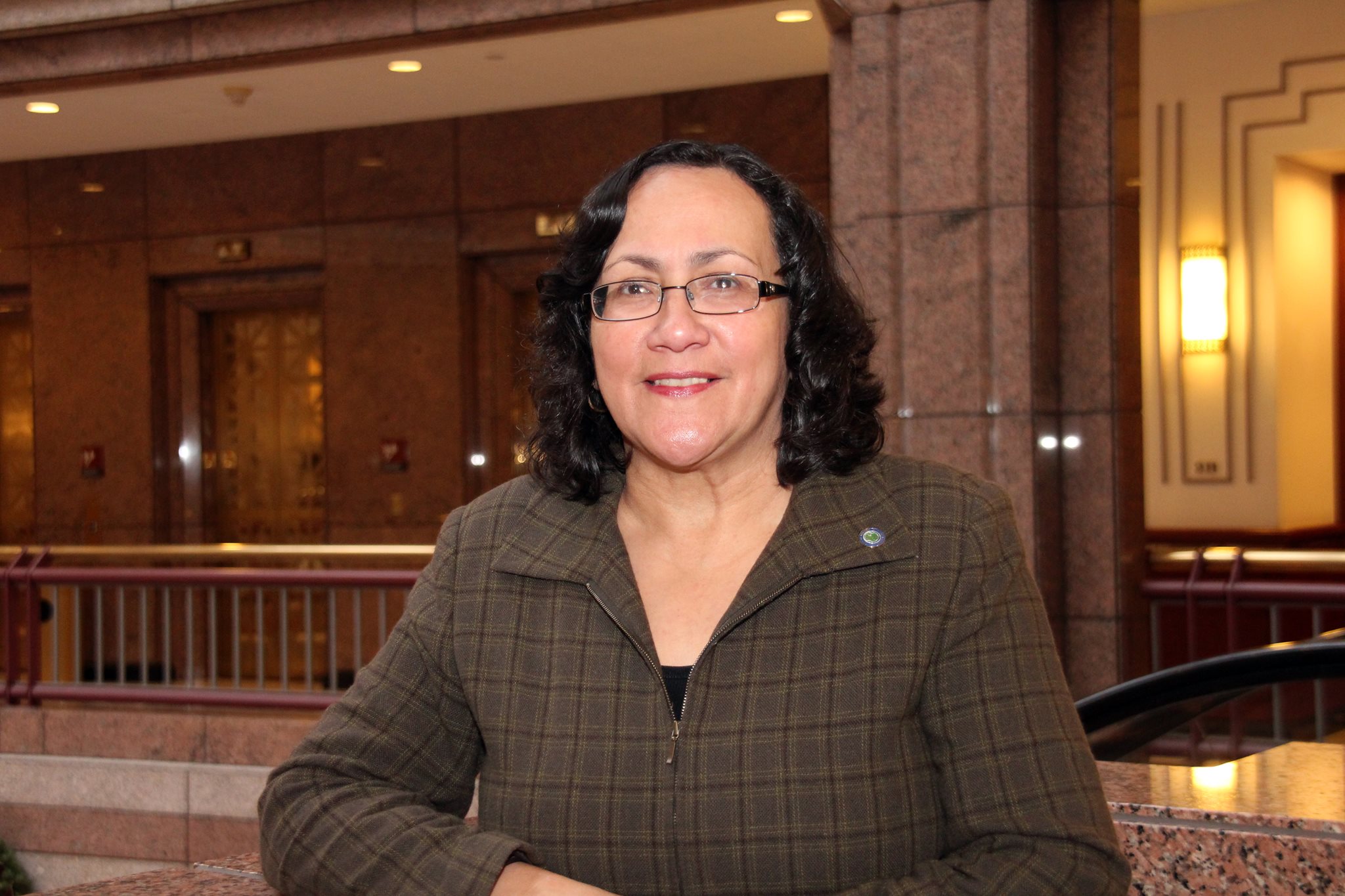
Rep. Hilda Santiago
Sponsored bills
Maddy summaryHB 5142 allows residents in nursing homes and residential care facilities to use their own technology for virtual visits with family or for third-party monitoring, provided they cover all costs (purchase, maintenance, etc.). Residents must follow privacy rules, including placing a door notice, obtaining roommate consent in shared rooms, and filing written notice with the facility. Facilities must provide free internet and power for this technology, though they may charge private-pay residents for unreimbursed infrastructure costs. The bill exempts basic phones or tablets used primarily for calls and requires written roommate consent for shared-room monitoring.
Maddy summaryHB 5143 requires homemaker-companion agencies to provide mandatory training to their employees. New employees must complete 10 hours of initial training within 90 days of hire, covering topics like CPR, safety, abuse reporting, and dementia care. Existing employees must complete 10 hours of annual continuing education from a state-approved training list, and agencies must maintain records of all training for state review. This bill directly affects homemaker-companion agencies and their staff, aiming to improve service quality and client safety through standardized training.
Maddy summaryThis bill directs state officials to establish working groups focused on eating disorder treatment and food insecurity, requiring them to compile public resources and develop best practice guidelines by July 2026. It also mandates a feasibility study for a new inpatient psychiatric facility serving children and young adults with intellectual or developmental disabilities, with results due by January 2027. Additionally, the bill increases Temporary Family Assistance benefits to at least 55% of the federal poverty level and requires annual cost-of-living adjustments tied to consumer price index increases when funding lapses.
Maddy summarySB 233 modifies exemptions for solar energy work under state law, specifically adding new provisions to exempt certain solar installation activities from licensing requirements. The bill creates an exemption (point 17) allowing solar contractors to perform work like hoisting solar panels, mounting racking systems, and installing ground supports for large solar facilities (over 25 megawatts) without full licensing. This directly affects solar contractors and developers of commercial-scale solar projects by simplifying installation processes for specific tasks. The change takes effect October 1, 2026, and does not create new consumer protections but adjusts regulatory scope for solar contractors.
Maddy summaryThis bill expands absentee voting eligibility in Connecticut to allow any eligible voter who will not appear at their polling place on election day to vote by absentee ballot, removing previous restrictions based on specific reasons like military service, illness, or religious observance. It also strengthens accountability by requiring individuals who distribute five or more absentee ballot applications to register with municipal clerks and maintain records of recipients, while prohibiting candidates and political committees from mailing unsolicited absentee ballot applications without clear eligibility warnings. Additionally, the bill mandates that absentee ballot envelopes include a sworn statement confirming the voter will not appear at their polling place, and requires the Secretary of the State to post notices online clarifying that applications are for personal or immediate family use only. These changes aim to increase voting access while implementing safeguards to prevent misuse of the absentee voting system.
Maddy summarySB 298 reallocates state funds across multiple agencies for the 2025-2026 fiscal year. It reduces $3.4 million from Temporary Family Assistance (TANF) funding for the Department of Social Services while appropriating $1.7 million to the Labor Department for unemployment program IT upgrades and $1.7 million to the Department of Education for Adult Education. The bill allocates $1.5 million to five school districts (Newington, Wethersfield, Cromwell, Rocky Hill, Middletown) for high-acuity school-based mental health programs and $750,000 for a teacher residency program operated by the Capitol Region Education Council. These changes directly affect TANF recipients, school districts, mental health providers, and teacher training initiatives.
Maddy summarySB 156 establishes a task force to study Connecticut's existing laws and procedures regarding the voluntary surrender of infants. The task force will examine provisions in state statutes (sections 17a-57 to 17a-61), policies of the Department of Children and Families, and hospital emergency room protocols, with a specific focus on whether these systems create or perpetuate disparities based on race, ethnicity, health, or economic status. The group will include diverse members such as public health experts, child welfare specialists, hospital staff, parents who surrendered infants, and legal advocates. The task force must submit its findings and recommendations to the legislature by May 1, 2027, but the bill itself does not change any current laws or policies.
Maddy summarySB 246 requires Connecticut's Energy and Environmental Protection Commissioner to study natural gas rates for commercial and agricultural customers with intermittent peak demand. The study will examine whether demand charges - fees based on peak usage - unfairly increase costs for these customers. If the commissioner finds such charges are unfair, they must recommend how to adjust them. The commissioner must submit a final report with findings and recommendations to the legislature by January 15, 2027. This bill does not change current rates but mandates an evaluation to inform potential future adjustments.
Maddy summaryThis bill requires healthcare facilities and schools to cover medical costs and pay full salary for staff injured during work-related assaults or aggressive incidents. It creates a system for reporting patient violence in digital health records (with patient appeal options) and ensures absences due to such incidents don’t count against paid leave. Directly affects healthcare workers, teachers, and school staff who face workplace violence while performing job duties.