

Maddy summaryHB 6151 would amend Connecticut's general statutes to adopt a "stand-your-ground" law, removing the legal requirement for individuals to retreat before using force in self-defense. This change directly affects people involved in self-defense claims, as it eliminates the duty to retreat before using reasonable force to protect themselves or others. The key provision modifies Section 53a-19 to allow individuals to stand their ground without first attempting to avoid confrontation. The bill aims to align Connecticut law with stand-your-ground principles, where the right to self-defense is not contingent on attempting to withdraw from a threatening situation.
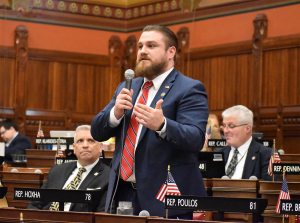
Rep. Joe Hoxha
Sponsored bills
Maddy summaryHB 6107 amends state law to require the food and nutrition policy analyst at the Commission on Women, Children, Seniors, Equity and Opportunity to actively promote coordination between food pantries and homeless shelters. This bill directly affects food pantries, homeless shelters, and low-income residents who rely on these services for food access. The key provision expands the analyst's duties to foster collaboration between these organizations, aiming to streamline resource sharing and reduce duplication. The goal is to improve the efficiency of food distribution to needy residents statewide, as stated in the bill's purpose. This is a concrete policy change focused on operational coordination, not new funding or eligibility rules.
Maddy summaryHB 6150 would amend Connecticut's general statutes (section 53a-20) to fully adopt the Castle Doctrine. This means residents would be legally protected when using force, including deadly force, to defend their homes without first attempting to retreat. The bill directly affects homeowners and occupants who face intruders in their dwellings. It codifies existing legal principles into statute, removing ambiguity about the right to self-defense within one's home.
Maddy summaryHB 6106 requires periodic drug testing for able-bodied individuals receiving public assistance benefits, including medical aid. It directly affects people enrolled in programs like Medicaid who are physically capable of working. The bill mandates that beneficiaries undergo regular testing for illicit drugs as a condition to continue receiving benefits. Failure to comply could result in loss of assistance. This policy change shifts eligibility requirements to include drug screening for this specific group.
Maddy summaryHB 6174 would allow students in Connecticut schools or colleges to sue the state for injuries or illnesses caused by mandatory vaccinations or medicinal treatments required for enrollment. The bill creates a legal claim for actual damages (compensation for harm) if the state required the treatment as a condition of school admission, and punitive damages if the state mandated it without verifying safety through publicly available medical evidence. This applies specifically to students who received vaccinations or treatments under state-mandated school requirements. The bill does not change existing vaccination rules but adds a legal recourse for affected students.
Maddy summaryHB 5831 appropriates $10 million from the General Fund to Connecticut's Department of Social Services for the Nutrition Assistance Program in fiscal year 2026, with a 15% annual increase thereafter. The bill amends existing law to allow soup kitchens, food pantries, and emergency shelters to charge a handling fee of up to five cents per pound (instead of being required to pay it) to cover costs through the Connecticut Food Bank. This funding directly supports the supplemental nutrition commodities program serving low-income residents. The key change simplifies cost recovery for food assistance providers while increasing state funding for the program.
Maddy summaryHB 5453 requires healthcare providers to notify a minor's parent or guardian before a minor can terminate a pregnancy. Minors who cannot notify parents may seek court approval for confidentiality, with the court ensuring the minor's anonymity and expediting the process to allow timely termination. The bill directly affects minors seeking pregnancy termination services in the state. It establishes a court process as the sole alternative to parental notification, aiming to balance parental involvement with minor access to care.
Maddy summaryHB 5352 would prohibit students identified as biological males from competing on public school female-only athletic teams or using female-only locker rooms and facilities in interscholastic and intramural sports. The bill directly affects transgender and gender-diverse students in public schools who are assigned male at birth but participate in girls' sports or access girls' facilities. It amends state law to require schools to restrict participation and facility access based on biological sex, specifically for athletic teams and locker rooms designated for females. The policy change applies to all public school athletic programs and facilities covered under the state's education statutes.
Maddy summaryHB 5209 prohibits the Governor or any municipality from changing or suspending laws related to firearms and ammunition during civil preparedness or public health emergencies. It specifically bars restrictions on lawful possession, purchase, sale, storage, transportation, or transfer of firearms or ammunition during such emergencies. The bill directly affects state and local officials who might otherwise issue emergency orders limiting firearm access. This policy change ensures existing firearm regulations remain in effect regardless of emergency declarations.
Maddy summarySB 503 would allow local school boards to create voucher programs providing funds directly to parents or guardians of students. These vouchers could be used to cover tuition at any public school within the state, expanding school choice options. The bill removes existing restrictions on such programs and explicitly states it does not require students or parents to enroll in public schools, nor does it affect homeschooling rights. This change would apply directly to families with children in districts that adopt the program, without creating new enrollment mandates.