

Maddy summaryHB 5406 eliminates the highway use tax by amending section 12-493a of the state's general statutes. This change removes the tax requirement from state law, directly affecting drivers and businesses currently required to pay this fee. The key mechanism is the deletion of the tax provision from the statute, ending the obligation to pay it. The bill does not create new requirements or alter other tax provisions.
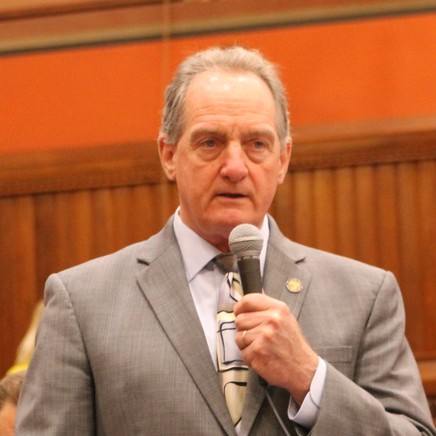
Rep. John Piscopo
Sponsored bills
Maddy summaryHB 5394 creates a new standalone Department of Energy, separating it from the current Department of Energy and Environmental Protection. It transfers all energy-related functions - such as energy policy, infrastructure oversight, and renewable energy programs - from the existing department to the new entity. This reorganization affects state government operations by shifting responsibility for energy matters to a dedicated agency. The bill does not alter energy policies or regulations, only restructuring the administrative body managing them. (Bill: HB 5394, Title: AN ACT CREATING A DEPARTMENT OF ENERGY)
Maddy summaryHB 5437 requires Connecticut's Insurance Commissioner to study whether nonprofit organizations could combine their liability insurance policies (including general liability and auto insurance) into a shared pool. This study would examine the feasibility of such a system for nonprofits, which often face high insurance costs. The bill does not create a new insurance program but only mandates a formal assessment of the idea. (Procedural bill; summary limited to 3 sentences as required.)
Maddy summaryHB 5408 eliminates income-based limits that previously restricted who could deduct Social Security benefits from their personal income tax. It directly affects residents who receive Social Security benefits and claim the state tax deduction, removing the requirement that their income fall below specific thresholds. The bill amends Section 12-701 of the tax code to allow all eligible Social Security beneficiaries to claim the deduction regardless of their income level. This change simplifies the deduction process by removing the qualifying income thresholds.
Maddy summaryHB 5432 (Introduced by Rep. Piscopo) seeks a federal waiver under Section 1115 of the Social Security Act to require able-bodied Medicaid recipients to work or volunteer to maintain their benefits. This would directly affect Medicaid recipients aged 18-54 who are able-bodied and currently enrolled in the program. The bill's key mechanism is directing the Commissioner of Social Services to apply for this waiver, which would allow the state to impose the work/volunteer requirement. The bill does not change current Medicaid rules but proposes a pathway to implement this condition through federal approval.
Maddy summaryThis bill (HB 5452) requires the Department of Public Health to create a system allowing food truck vendors to operate across multiple municipalities using a single permit, rather than obtaining separate permits for each town. It directly affects food truck vendors seeking to operate in multiple jurisdictions, reducing the administrative burden and cost of obtaining local permits. The key provision mandates the Department of Public Health to establish a process for reciprocal permits for "itinerant food vending establishments." This change aims to streamline operations for vendors while maintaining public health oversight. The bill does not alter existing permit requirements within a vendor's home municipality.
Maddy summaryHB 5442 would allow Connecticut probate courts to order a person with a substance use disorder or psychiatric disability to undergo an involuntary medical evaluation (up to 72 hours) and potentially assisted outpatient treatment under specific conditions. It directly affects individuals who refuse treatment, cannot care for themselves, and pose a danger to themselves or others, after less restrictive options have been deemed inappropriate. The bill requires courts to confirm the person’s incapacity to consent, the danger threshold, and the lack of suitable alternatives before ordering the evaluation or subsequent treatment. This amendment to probate court authority aims to provide a structured legal pathway for intervention while limiting court orders to the shortest necessary duration. (Bill: HB 5442, 2025 Session)