

Maddy summaryThis bill (HB 5743) renames a pedestrian bridge in Hartford, Bridge No. 05654, from "Lt. Col. William A. Oefinger Memorial Bridge" to "Major William R. Oefinger Memorial Bridge." It directly honors Major William R. Oefinger through this ceremonial name change. The bill makes no policy changes, only altering the bridge's official designation to recognize his service.
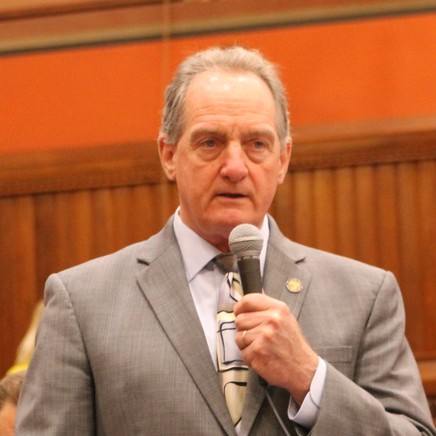
Rep. John Piscopo
Sponsored bills
Maddy summaryThis bill establishes a working group to review the current procedure for classifying nonprofit organizations based on their energy consumption. It does not change classification rules or affect specific nonprofits directly - it only creates a study group to assess the existing system. The working group will examine how energy consumption data is used to categorize nonprofits, with the goal of potentially improving the classification method. The bill is procedural and does not enact new policy.
Maddy summaryHB 5378 revises Connecticut's Next Generation Science Standards to require students to learn about "the debate and research concerning the amount and effects of human-caused carbon dioxide levels" within the climate change curriculum. This change directly affects K-12 students in Connecticut public schools by altering the content taught in science classes. The key mechanism adds a specific requirement for educators to present both scientific debate and research on human contributions to CO2 emissions. The bill does not change existing climate science standards but mandates inclusion of this debate component in classroom instruction.
Maddy summaryThis bill (HB 5405) authorizes the state to issue bonds to fund a water line construction project on Jackson Street in Thomaston. The funds will be provided as a grant-in-aid directly to the Town of Thomaston for this specific infrastructure improvement. It does not create new state laws or affect broader policy areas, but rather provides targeted financial support for a local water system upgrade. The bill's sole purpose is to facilitate this one-time water line project in Thomaston.
Maddy summaryHB 5407 removes a 1% sales and use tax currently applied to meals sold by restaurants, caterers, and grocery stores. This change directly affects these businesses and their customers by reducing the cost of prepared meals. The bill eliminates the additional tax rate through a simple amendment to existing tax law, without creating new requirements or exemptions. The policy change is limited to removing this specific tax rate on food sales.
Maddy summaryHB 5431 requires able-bodied adults receiving public assistance (including medical assistance) to work or volunteer to continue receiving benefits, unless exempt under federal law. The bill directly affects individuals currently enrolled in state public assistance programs who are able-bodied and not already exempt. Key provisions mandate participation in work or volunteer activities as a condition for benefit eligibility, with exemptions aligning to federal standards. This policy change modifies existing benefit conditions without creating new programs or altering federal rules.
Maddy summaryHB 5420 would repeal Connecticut's participation in the National Popular Vote Interstate Compact (NPVIC), withdrawing the state from an agreement among participating states to award all electoral votes to the presidential candidate who wins the national popular vote. This bill directly affects Connecticut's method for allocating its 7 electoral votes in presidential elections, ending its commitment to the compact. The key mechanism is repealing Section 9-175a of Connecticut’s general statutes, which currently implements the state’s participation in the NPVIC. If enacted, Connecticut would no longer automatically cast its electoral votes for the national popular vote winner, reverting to its traditional winner-takes-all electoral process.
Maddy summaryHB 5395 removes all references to California law, codes, or regulations from Connecticut's energy conservation, air pollution, and emission standards statutes. It specifically deletes requirements for Connecticut's Department of Energy and Environmental Protection Commissioner to model state standards after California's. The bill directly affects state agencies responsible for setting environmental regulations but does not change existing emission or energy standards. This is a procedural change to Connecticut's statutes, eliminating statutory ties to California's regulatory framework.
Maddy summaryHB 5397 requires the Connecticut General Assembly to approve any charge included in the "Combined Public Benefits Charge" on electric bills before it can be applied. This bill directly affects electric distribution companies and their end-use customers, as it would remove any existing charge not approved by the legislature and prevent future charges from being implemented without the General Assembly's affirmative vote. The key mechanism is a statutory change that eliminates automatic inclusion of these charges and mandates legislative approval for both current and future components. The bill aims to ensure that all public benefits charges on electricity bills have explicit legislative authorization.
Maddy summaryHB 5393 would restructure state government by separating the Public Utilities Regulatory Authority (PURA) from the Department of Energy and Environmental Protection (DEEP) through a statutory amendment. This procedural bill directly affects the organizational structure of Connecticut’s energy and utility oversight, moving PURA to operate as a distinct entity. The key mechanism is a simple change to state statutes to establish PURA as an independent agency, not altering regulatory policies for utilities. The bill does not change how utilities are regulated, only the department under which PURA operates.