

Maddy summaryHB 6624 aims to improve firefighter recruitment and retention in Connecticut by targeting both paid and volunteer firefighters. Key provisions include requiring an advertising campaign to attract applicants (especially women), creating a high school public safety curriculum and training tracks, providing tuition coverage at state colleges for firefighters and their children, offering mortgage assistance for uniformed firefighters, and establishing a volunteer service award program. The bill also mandates training facilities for physical ability tests, increases funding for fire training schools, and requires a study on firefighter certification levels. These changes directly affect firefighters, their families, high school students, and local fire departments across the state.
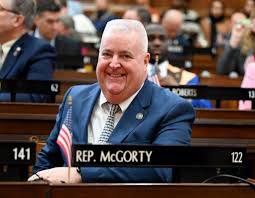
Rep. Ben McGorty
Sponsored bills
Maddy summaryHB 6669 expands eligibility for state grants to remove PFAS (chemicals used in firefighting foam) from fire apparatus. It makes independent fire companies and state entities eligible for these grants, and allows reimbursement for PFAS removal work completed before July 1, 2023. The bill amends existing law to include these groups and cover retroactive costs, ensuring broader access to funding for this cleanup. This directly affects fire departments and state agencies that have already removed PFAS from equipment.
Maddy summaryHB 6670 requires fire departments hiring new firefighters who obtained certification within the past two years to reimburse 50% of the certification costs to the previous department that paid for it. This directly affects fire departments that hire certified firefighters and the departments that previously employed and paid for those firefighters' training. The key provision mandates that hiring departments pay back half the certification cost to the prior employer, aiming to reduce financial loss when firefighters move between departments. The bill's stated purpose is to support firefighter retention and lower costs associated with losing trained staff to other fire departments.
Maddy summaryHB 6392 changes how Connecticut's Psychiatric Security Review Board evaluates the release or confinement of people found not guilty by reason of insanity (acquittees). It requires the Board to prioritize "protection of society" over the individual's well-being when making discharge or release decisions. Key changes include mandating hearings for all temporary leave requests (ending self-release under personal charge), doubling the waiting period for both temporary leave (to 12 months) and conditional release (to 12 months), and requiring "clear and convincing evidence" for less restrictive placements. These provisions directly affect acquittees and the Board's procedural standards.
Maddy summaryHB 5629 would amend state statutes to allow parents to claim a religious exemption from school vaccination requirements for their children. This change would directly affect parents seeking exemptions and school districts enforcing vaccination policies. The bill's key mechanism is adding religious exemptions to existing vaccination mandates, permitting parents to opt out based on sincerely held religious beliefs. The stated purpose is to let parents make health care decisions for their children consistent with their religious views. This is a policy change to the vaccination rules governing school enrollment.
Maddy summaryHB 5780 establishes a tax credit program to incentivize investments in local farms and agricultural operations. The bill would allow investors to claim a credit against their state income tax for qualifying capital contributions made to local agricultural businesses. This tax credit would directly affect investors by reducing their state tax liability for such investments. The program aims to encourage increased investment in the state's agricultural sector through this financial incentive.
Maddy summaryHB 5457 amends state law to redefine "peace officer" to explicitly include local fire marshals, deputy fire marshals, and fire inspectors. This change directly affects these fire service professionals by granting them the same legal authority as police officers (such as making arrests and enforcing laws) during fire investigations and inspections. The key mechanism is a specific amendment to section 53a-3 of the general statutes. The bill aims to formally recognize their law enforcement role within fire safety enforcement.
Maddy summaryHB 5444 would amend state law to include parole officers within the legal definition of "peace officers" under section 53a-3 of the general statutes. This change directly affects parole officers by classifying them under the same category as sworn law enforcement personnel like police officers. The bill achieves this through a simple statutory update without altering parole officers' existing duties or authority. It is a procedural adjustment to clarify their legal status, not a new policy or expanded power.
Maddy summaryHB 5345 requires fire departments to report fires or explosions suspected of being caused by lithium batteries to the State Fire Marshal. The Fire Marshal must then collect these reports, publish them on the agency’s website, and submit them to the relevant legislative committee. This law directly affects fire departments by mandating specific reporting and makes incident data publicly accessible online. It creates a centralized tracking system for lithium battery-related incidents without altering safety standards or regulations.
Maddy summaryThis bill amends the legal definition of "fire department" to explicitly include municipal fire marshals. It specifically states that fire marshals shall not be liable for smoke or carbon monoxide detector installations. The change directly affects fire marshals by clarifying their legal status within the fire department structure. This is a definitional adjustment with no new requirements or funding, solely addressing liability for detector installations.