

Maddy summaryHB 6883 protects the addresses of domestic violence and sexual assault victims living in shelters or transitional housing. It prohibits housing providers from disclosing these locations without the victim’s explicit consent. This law directly affects victims seeking safety and their housing providers, preventing abusers from locating them through address sharing. The key provision requires confidentiality around housing addresses to enhance victim safety. The bill became law after Governor’s signature on June 23, 2025.
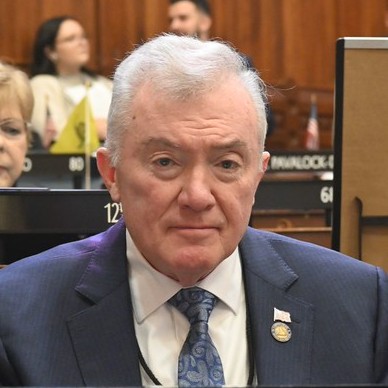
Rep. Marty Foncello
Sponsored bills
Maddy summarySB 1239 creates the Fallen Hero Fund to provide ongoing health insurance coverage for surviving spouses and dependents of first responders (like police, firefighters, and EMTs) who die while performing their duties. The bill establishes a permanent program where the fund covers the full cost of health insurance premiums for these survivors. This law, now Public Act 25-61 after being signed by the governor on June 10, 2025, directly affects the families of fallen first responders by ensuring they maintain health coverage without out-of-pocket costs.
Maddy summarySB 1465 allows the Commissioner of Consumer Protection to permit certain skilled trade licensees (like plumbers or electricians) to adjust their hiring ratios for local workers. The key provision gives the Commissioner authority to approve deviations from existing hiring requirements for these businesses. This directly affects licensed skilled trade companies operating in the state who face challenges meeting specific local hiring targets. The bill became law as Public Act 25-47 after the governor signed it on June 10, 2025. It changes how hiring ratio rules apply to these licensees without creating new statewide requirements.
Maddy summaryHB 7132 prohibits law enforcement from stopping drivers solely for non-safety-related traffic violations, such as broken taillights or minor equipment issues. It also explicitly prohibits driving while consuming cannabis and establishes penalties for excessive reckless driving, like speeding in school zones. The law directly affects drivers (particularly those using cannabis) and law enforcement officers by restricting stop practices and defining new driving restrictions. As a signed public act (25-19), it now requires police to have safety-related reasons for traffic stops and clarifies cannabis-related driving offenses.
Maddy summarySB 721 designates the third Friday in June as "National Women Veterans Recognition Day" within the state. This procedural bill formally establishes a ceremonial observance to honor women veterans' service and contributions. It does not create new benefits, funding, or legal requirements; it solely sets a date for recognition. The bill was enacted as Public Act 25-20 after receiving gubernatorial approval on June 9, 2025.
Maddy summaryHB 6442 honors Connecticut veterans and active-duty military members through symbolic recognition measures. It became Public Act 25-15 after being signed by the governor on June 3, 2025. The bill directly affects veterans and military personnel in Connecticut by establishing ceremonial or commemorative provisions, though specific mechanisms (like naming honors or events) are not detailed in the provided context. As a recognition measure, it does not create new benefits or alter existing laws.
Maddy summaryHB 6771 establishes a state task force to develop Alzheimer's and dementia care policies, directly affecting patients, caregivers, and healthcare providers. It requires health insurers to cover biomarker testing for diagnosis and creates new rules for residential care home transfers, discharges, and emergency closures. The bill also provides tuition waivers for nursing home residents taking courses at local community-technical colleges. Signed into law as Public Act 25-16 on June 3, 2025, it mandates concrete policy changes for dementia care access and facility operations.
Maddy summaryHB 7202 establishes two new training initiatives for law enforcement in Connecticut. First, it creates a "social work and law enforcement project" at Southern Connecticut State University to train police and social workers to collaborate, with goals including addressing systemic racism and improving community wellness. Second, it mandates a police training center at Central Connecticut State University focused on crime scene processing and forensic evidence. The bill also significantly increases required training for officers handling juvenile cases (to 27 hours minimum in basic training) and requires new curriculum by 2026 on interacting with people with autism, cognitive impairments, or mental health conditions, developed with input from affected communities. These changes directly affect all Connecticut police officers through updated training requirements.
Maddy summarySB 1276 creates two property tax exemptions: one for veterans permanently and totally disabled with a 100% disability rating, and another for Gold Star spouses (spouses of service members who died in combat). It directly affects qualifying veterans and Gold Star spouses who own primary residences in Connecticut. The bill removes the property tax liability for these individuals' primary homes, meaning they would not pay property taxes on their main residence. The legislation passed the Senate and is now pending in the House for further consideration.
Maddy summaryHB 7182, effective October 1, 2025, regulates ticket resellers for entertainment events (excluding movies). It requires resellers to either have the ticket in hand or provide clear written disclosure if they cannot guarantee supply at the contracted price. The bill also bans websites from using venue names, event names, or similar terms in their domain names for ticket sales, except for venue-operated sites. This directly affects ticket resellers and online ticket platforms, aiming to prevent deceptive practices by mandating transparency in transactions.