Issue · Labor & Employment

Labor & Employment

Every labor & employment bill, vote, and legislator stance in Connecticut, automatically classified by Maddy, our AI policy reader.

Total bills
97
2026 Regular Session
Top supporter
Steve Stafstrom
100% support rate
Top opponent
Craig Fishbein
0% support rate
Ranked legislators
10
5 support · 5 oppose
Key legislators

Who's moving labor & employment in Connecticut

Legislators moving labor & employment in Connecticut
Legislator Party Stance Support rate Votes
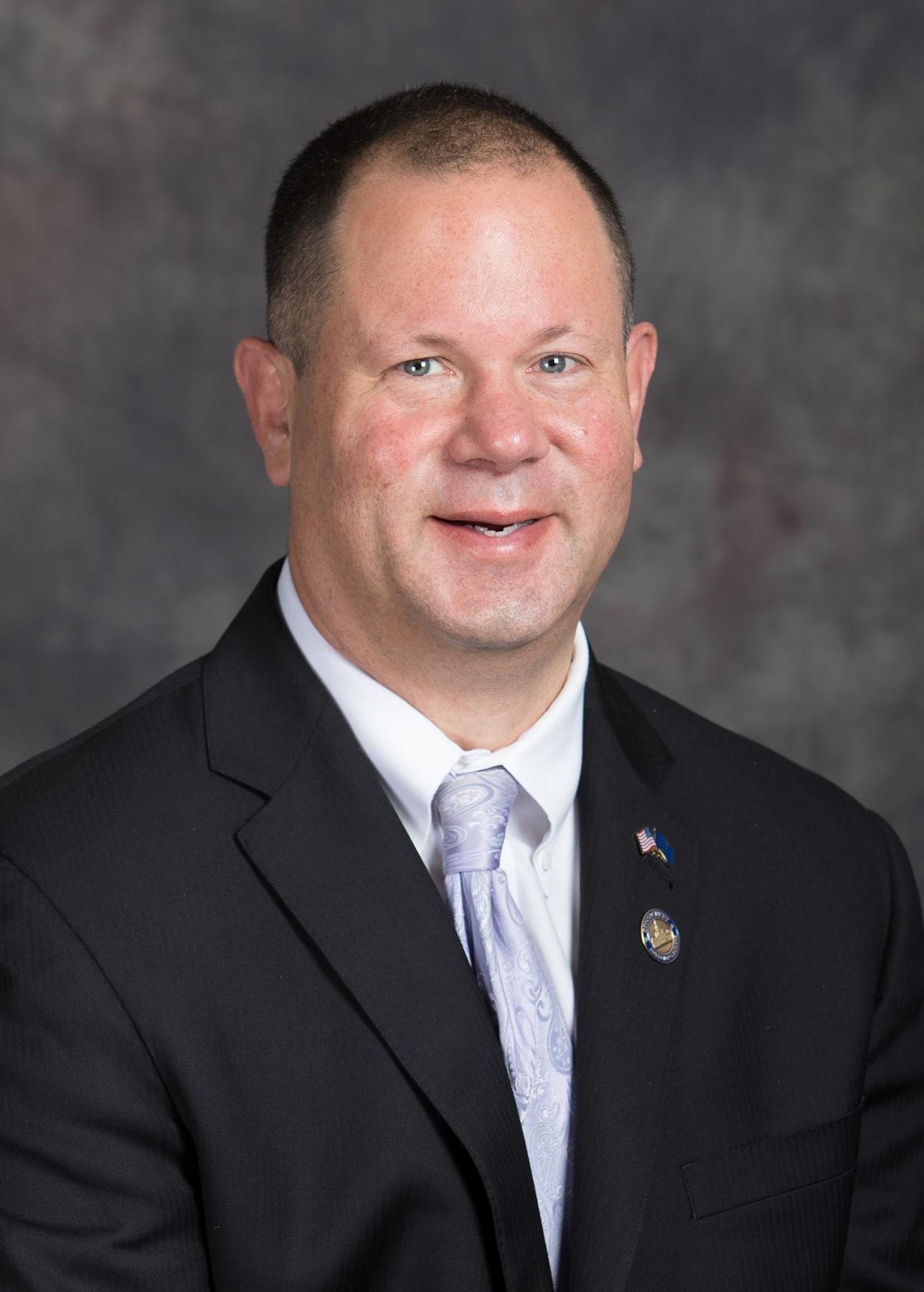
Steve Stafstrom
Steve Stafstrom House · District 129
D
Strong +
100% 18
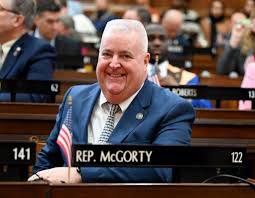
Ben McGorty
Ben McGorty House · District 122
R
Strong +
100% 21
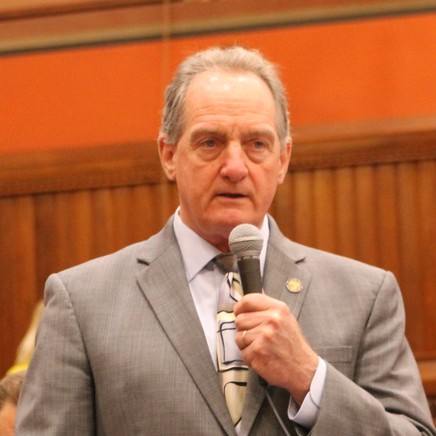
John Kissel
John Kissel Senate · District 7
R
Strong +
89% 43
Roland Lemar
Roland Lemar House · District 96
D
Strong +
88% 20
Christie Carpino
Christie Carpino House · District 32
R
Strong +
88% 21
Craig Fishbein
Craig Fishbein House · District 90
R
Strong −
0% 18
Donna Veach
Donna Veach House · District 30
R
Strong −
12% 21
Karen Reddington-Hughes
Karen Reddington-Hughes House · District 66
R
Strong −
12% 21
John Piscopo
John Piscopo House · District 76
R
Strong −
12% 21
Mark DeCaprio
Mark DeCaprio House · District 48
R
Strong −
12% 21
Showing 91–97 of 97 bills

All labor & employment bills

in committee · Connecticut · House Apr 13, 2026

HB 5405: AN ACT CONCERNING OWNERS, OPERATORS AND LESSEES OF CRANES AND HOISTING EQUIPMENT.

HB 5405 establishes new safety regulations for crane and hoisting equipment operations in Connecticut. It creates a seven-member Examining Board to oversee licensing, grants inspectors authority to issue stop-work orders for violations like unsafe operation or incompetence (effective October 1, 2026), and imposes fines up to $5,000 for violations - including $5,000 for ignoring a stop-work order. The bill directly affects crane owners, operators, and hoisting equipment operators by requiring valid licenses, mandating compliance with safety standards, and enabling enforcement actions. Key provisions include mandatory administrative hearings for contested stop-work orders and civil penalties for operating without proper certification.
in committee · Connecticut · House Feb 11, 2026

HB 5201: AN ACT INCREASING FUNDING FOR CERTAIN TRANSITION SERVICES OFFERED TO STUDENTS.

HB 5201 allocates $150,000 to the Department of Developmental Services to purchase software licenses for local school districts. The software will support Project SEARCH, a program helping students with disabilities transition to employment or further education. This funding directly affects students participating in Project SEARCH by expanding access to coordinated transition services. The bill’s key mechanism is providing schools with shared software tools to improve service delivery, as stated in its purpose. (3 sentences)
signed · Connecticut · House Jun 2, 2026

HB 5385: AN ACT ESTABLISHING A TASK FORCE TO STUDY UNDUE DELAY IN WORKERS' COMPENSATION CLAIMS BY POLICE OFFICERS AND FIREFIGHTERS.

HB 5385 requires the Workers' Compensation Commission to study why police officers and firefighters face delays in their workers' compensation claims. The study must examine specific causes, including administrative processing, medical provider scheduling issues, and insurer authorization requirements. The Commission must complete this study and submit a report to the legislature by January 1, 2027, to identify potential solutions for reducing delays. This bill does not change existing claim procedures but aims to inform future policy decisions.
in committee · Connecticut · Senate Apr 2, 2026

SB 358: AN ACT CONCERNING THE RETENTION OF SERVICE CONTRACT WORKERS.

SB 358 requires contractors and awarding authorities (like airports, hospitals, schools, or large commercial buildings) to provide advance notice to employees and unions when service contracts end or aren't renewed. It mandates that terminated contractors share employee details (name, hire date, job title) with the new contractor within three days of receiving termination notice. The law applies to "service workers" performing maintenance, security, food services, or cleaning at covered locations (including airports, schools, hospitals, and facilities over 75,000 sq. ft.), excluding managerial staff or short-hour workers. This rule takes effect October 1, 2026, aiming to protect job continuity for affected workers during contract transitions.
in committee · Connecticut · House Feb 11, 2026

HB 5192: AN ACT ESTABLISHING A PERSONAL INCOME TAX DEDUCTION FOR TIPS OR GRATUITIES.

HB 5192 would create a new personal income tax deduction for workers who declare tips or gratuities to the IRS. Specifically, it adds a deduction for the full amount of tips reported by taxpayers in their annual tax filings. This directly affects service industry workers (like servers, bartenders, and hair stylists) who receive tips as part of their income. The policy change would reduce taxable income for these workers by the amount of their declared tips, lowering their overall tax bill.
in committee · Connecticut · Senate Apr 20, 2026

SB 357: AN ACT CONCERNING UNEMPLOYMENT DEPENDENCY ALLOWANCE.

SB 357 increases unemployment dependency allowances for qualifying individuals. It provides an additional $45 per week for each nonworking spouse living in the same household and for each child or disabled dependent under 18 (or under 21 in school) who was primarily supported by the claimant at the start of their benefit year. The allowance is paid on top of regular unemployment benefits, capped at 100% of the benefit rate, and limited to five dependents per claimant. The bill takes effect on July 1, 2028, directly affecting unemployed workers with dependent family members.
Sub-Topics Unemployment
in committee · Connecticut · Senate Apr 20, 2026

SB 356: AN ACT CONCERNING ELECTRONIC FILING OF CERTIFIED PAYROLL AND DAILY LOGS FOR CERTAIN PUBLIC WORKS PROJECTS.

SB 356 requires contractors working on state or local public works projects (including off-site custom fabrication for such projects) to pay prevailing wages and provide employee welfare fund contributions or equivalent wages to workers. Violations, such as underpaying wages or failing to cover benefits, trigger $5,000 fines per offense and may lead to contract termination or debarment if violations exceed $50,000 in back wages or penalties over three years. The Labor Commissioner maintains a public list of violators, including violation details and financial penalties, and can refer repeat offenders for debarment. This law directly affects contractors and subcontractors on covered public projects, ensuring compliance with wage and benefit standards.
Sub-Topics Labor Standards
Showing 91 to 97 of 97 bills
Previous 1 8 9 10