

Securing and Enabling Commerce Using Remote and Electronic Notarization Act of 2022 or the SECURE Notarization Act of 2022 This bill allows a notary public commissioned under state law to remotely notarize electronic records and perform notarizations for remotely located individuals. The bill provides technical requirements for such notarizations, including the creation and retention of video and audio recordings and the use of communication technologies (i.e., video chat). Additionally, the bill requires U.S. courts and states to recognize notarizations—including remote notarizations of electronic records and notarizations of remotely-located individuals—that occur in or affect interstate commerce and are performed by a notary public commissioned under the laws of other states. The bill also allows a notary public to remotely notarize electronic records involving an individual located outside of the United States, subject to certain requirements.
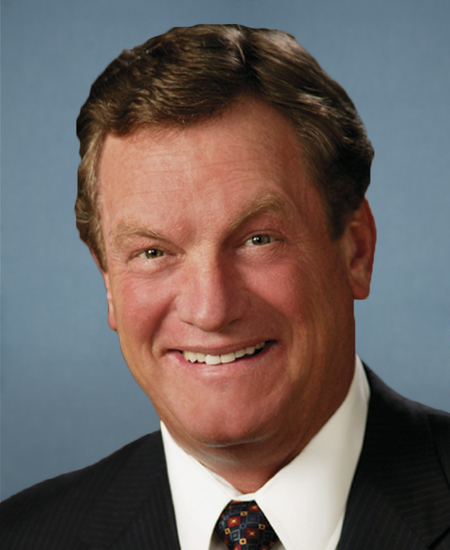
Rep. Michael K. Simpson
Sponsored bills
Access to Safe Contraception Act of 2022 This bill prohibits states from banning any form of contraception that is approved by the Food and Drug Administration. The bill does not preempt state laws that protect the right of any entity to opt out of providing contraception due to the entity's religious or moral beliefs.
Recovering America’s Wildlife Act of 2022 This bill provides funding for the conservation or restoration of wildlife and plant species of greatest conservation need, including endangered or threatened species, and establishes related requirements. TITLE I--WILDLIFE CONSERVATION AND RESTORATION (Sec. 101) This title establishes and funds a subaccount of the Wildlife Conservation and Restoration Account, which was established under the Pittman-Robertson Wildlife Restoration Act. The subaccount must be used to support efforts of states, territories, or the District of Columbia to recover and manage wildlife and plant species of greatest conservation need. The Department of the Interior must use a portion of the funding from the subaccount for grants to state fish and wildlife departments, the District of Columbia fish and wildlife department, fish and wildlife departments of territories, nonprofit organizations, or regional associations of fish and wildlife departments. The grants must be used for innovative recovery efforts for species of greatest conservation need, species listed as endangered or threatened species, or the habitats of such species. Funding for the subaccount must supplement existing funds available to the states from funds distributed under the Dingell-Johnson Sport Fish Restoration Act and the Wildlife Conservation and Restoration Account. Recipients of the funding from the subaccount must match federal funds as specified by the title. The Government Accountability Office must study and report on the progress of states, territories, the District of Columbia, and Indian tribes in protecting species of greatest conservation need, endangered species, and threatened species. TITLE II--TRIBAL WILDLIFE CONSERVATION AND RESTORATION (Sec. 201) This title establishes and funds a Tribal Wildlife Conservation and Restoration Account to support Indian tribes' efforts to recover and manage wildlife and plant species of greatest conservation need. Indian tribes are not required to provide matching funds. TITLE III--ENDANGERED SPECIES RECOVERY AND HABITAT CONSERVATION LEGACY FUND (Sec. 301) This title establishes and funds through FY2026 the Endangered Species Recovery and Habitat Conservation Legacy Fund. The U.S. Fish and Wildlife Service must use the fund to (1) implement an Endangered Species Recovery Grant Program; (2) address its interagency consultation responsibilities under the Endangered Species Act of 1973; (3) work with nonfederal entities to conserve wildlife habitat and at-risk species, threatened or endangered species, or species proposed to be listed as threatened or endangered species; or (4) address the development and permitting of voluntary conservation agreements under such act. Amounts made available under the fund must supplement other federal amounts made available to carry out such activities. The President must annually submit to Congress, together with the annual budget of the United States, a list of threatened species and endangered species for which recovery plans will be developed or implemented with amounts from the Endangered Species Recovery and Habitat Conservation Legacy Fund. TITLE IV--REPORT (Sec. 401) Interior must also report on information concerning the amount of grants and contracts that were awarded or are allocated under this bill to Historically Black Colleges and Universities, Hispanic-serving educational institutions, tribally controlled colleges and universities, minority-serving educational institutions, minority-owned business enterprises, women-owned business enterprises, and community-based organizations that are principally administered by, operated by, or serving minority communities.
Strengthening Our Health Security Act of 2022 This bill requires the Department of Health and Human Services (HHS) to meet conditions related to notification and planning before terminating certain restrictions on imports and individuals entering the United States. Current law authorizes HHS to restrict entries and imports from foreign countries to prevent the introduction of communicable diseases. HHS exercised this authority as part of its COVID-19 response, including to allow for the expulsion of undocumented migrants at the border without any asylum processing. Under this bill, HHS may not terminate the restrictions for (1) at least 60 days after it notifies Congress of the end of the COVID-19 emergency, and (2) at least 30 days after it submits to Congress a plan for addressing the possible influx of migrants or imports resulting from lifting the restrictions.
No Timber From Tyrants Act This bill prohibits the importation of wood and related articles from Russia and Belarus. It also directs the Department of the Interior and the Department of Agriculture (USDA) to replace these prohibited imports with timber production on certain lands. Specifically, the bill directs the President to prohibit the importation of all wood and related articles from Russia and Belarus. The President may terminate this prohibition upon certification to Congress that certain conditions have been met, including that Russia or Belarus (or both, as applicable) reached an agreement to withdraw forces in Ukraine. Additionally, the bill directs Interior and USDA to authorize timber harvest in an amount sufficient to equal the volume, with respect to calendar year 2021, of imports of wood and related articles from Russia and Belarus. Interior may authorize timber harvest only on public lands and USDA may authorize timber harvest only on National Forest System lands. The bill generally prohibits Interior and USDA from approving a plan that reduces the allowable sale quantity of timber.
Protecting Free Speech Act This bill terminates the Disinformation Governance Board of the Department of Homeland Security (DHS) and prohibits using DHS funding for the activities of any other entity that is substantially similar to the board.
Modernizing Access to our Public Land Act or the MAPLand Act This bill directs the Department of the Interior, the Forest Service, and the U.S. Army Corps of Engineers to jointly develop and adopt interagency standards to ensure compatibility and interoperability among federal databases for the collection and dissemination of outdoor recreation data related to federal lands and used to depict locations at which recreation uses are available to the public. Interior, the Forest Service, and the Corps of Engineers must digitize and publish geographic information system data that includes federal interests, including easements and rights-of-way, in private land; status information as to whether roads and trails are open or closed; the dates on which roads and trails are seasonally opened and closed; the types of vehicles and recreational uses that are allowed on each segment of roads and trails; and the boundaries of areas where hunting or recreational shooting is permanently restricted or closed. Interior, the Forest Service, and the Corps of Engineers may work with the U.S. Geological Survey to collect, digitize, standardize, or publish data to meet the requirements of this bill.
Prescription Information Modernization Act of 2022 This bill allows health care providers to receive prescribing information for drugs electronically rather than in paper form from manufacturers.
Postal Service Reform Act of 202 2 This bill addresses the finances and operations of the U.S. Postal Service (USPS). The bill requires the Office of Personnel Management (OPM) to establish the Postal Service Health Benefits Program within the Federal Employees Health Benefits Program under which OPM may contract with carriers to offer health benefits plans for USPS employees and retirees. The bill provides for coordinated enrollment of retirees under this program and Medicare. The bill repeals the requirement that the USPS annually prepay future retirement health benefits. Additionally, the USPS may establish a program to enter into agreements with an agency of any state government, local government, or tribal government, and with other government agencies, to provide certain nonpostal products and services that reasonably contribute to the costs of the USPS and meet other specified criteria. The USPS must develop and maintain a publicly available dashboard to track service performance and must report regularly on its operations and financial condition. The Postal Regulatory Commission must annually submit to the USPS a budget of its expenses. It must also conduct a study to identify the causes and effects of postal inefficiencies relating to flats (e.g., large envelopes). The USPS Office of Inspector General shall perform oversight of the Postal Regulatory Commission.
This resolution expresses support for National Public Health Week and recognizes the role of public health in preventing infectious disease outbreaks such as COVID-19.