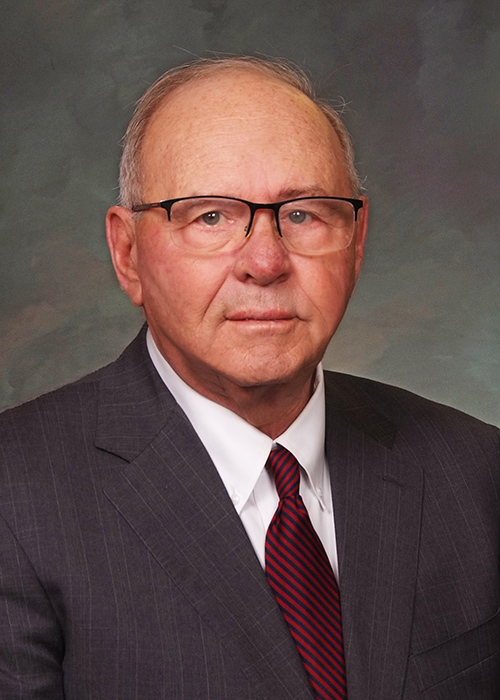
Photo of Marc Catlin
R Colorado Senate · District 5

Sen. Marc Catlin

Compare
Total votes
7,778
all sessions
Attendance
93%
512 missed
Near the chamber average
With party
89%
of cast votes
Lower than 81% of chamber peers
Bipartisan score
7%
crosses aisle rarely
Near the chamber average
Sponsored
381
bills & resolutions
Lower than 81% of chamber peers
Committees
7
assignments
381 bills and resolutions

Sponsored bills

Total
381
Primary
176
Co-sponsor
205
This page
381
matching current filters
Co-sponsor SJR 25
Passed · Colorado Senate · Co-sponsor
Colorado Mining Association's 150th Anniversary

Maddy summaryThis bill is a Senate Joint Resolution that formally recognizes the Colorado Mining Association for its 150th anniversary in 2026. It highlights the organization's historical significance and its role in supporting Colorado's mining industry, which contributes billions to the state's economy and supports tens of thousands of jobs. The resolution acknowledges the association's partnerships with state and federal agencies in promoting safety, environmental stewardship, and responsible mineral development. This measure does not change any laws or policies but serves as an official acknowledgment of the association's contributions to Colorado's history and economy.

Passed May 13, 2026 1 co-sponsor
Primary SB 45
Passed · Colorado Senate · Lead sponsor
Nuclear Workforce Development & Education Program

The bill creates the Colorado nuclear workforce development and education council (council) in the Colorado school of mines to help meet growing workforce demand in the nuclear energy sector. The bill establishes a related grant program (grant program) to provide grants to institutions of higher education for the development or expansion of nuclear engineering degree or certificate programs or course offerings. The council shall convene advisory sessions with stakeholders from the nuclear, educational, and workforce development sectors; implement the grant program; and contract with one or more third-party entities for staffing and operational assistance.     The council may seek, accept, and expend gifts, grants, and donations for council-related purposes. The state treasurer shall credit the gifts, grants, and donations to the Colorado nuclear workforce development and education cash fund (cash fund), which is created in the bill. The general assembly shall not appropriate general fund money to implement or maintain council operations or grant awards. The council shall convene and begin awarding grants only after the balance of the cash fund reaches or exceeds $500,000 (threshold) .     The bill imposes requirements to report to the Colorado commission on higher education and the general assembly about the council's funding sources, grant program implementation, and other uses of the grant program money. If the cash fund balance does not reach the threshold on or before September 1, 2027, the council is repealed and the money in the cash fund is refunded to the grantors or donors. Otherwise, the bill repeals the council, effective September 1, 2033, unless the council is extended following a sunset review.(Note: Italicized words indicate new material added to the original summary; dashes through words indicate deletions from the original summary.)(Note: This summary applies to the reengrossed version of this bill as introduced in the second house.)

Passed May 12, 2026 0 co-sponsors
Co-sponsor SR 9
Passed · Colorado Senate · Co-sponsor
Amyotrophic Lateral Sclerosis Awareness Month

Maddy summaryThis Senate Resolution designates May 2026 as ALS Awareness Month to highlight the impact of amyotrophic lateral sclerosis, a progressive and fatal neurodegenerative disease. The measure calls on Coloradans to support research, advocate for funding, and show solidarity with patients and their families who face challenges such as muscle weakness and limited life expectancy. While the resolution does not change laws or allocate funds, it formally recognizes the importance of multidisciplinary care and clinical trials in managing the disease. Copies of the resolution are sent to medical leaders, advocacy groups, and a caregiver to emphasize community support for those affected by ALS.

Passed May 7, 2026 1 co-sponsor
Co-sponsor SB 40
Signed into law · Colorado Senate · Co-sponsor
Affordable Home Ownership Program

The division of housing in the department of local affairs (division) administers an affordable home ownership program (program) that makes grants to nonprofit organizations, local governments, community development financial institutions, and community land trusts (eligible organizations) and tribal governments to support affordable home ownership, including the development of residential housing units that are described in an eligible organization's funding request (project). Current law specifies that only a household with an income less than or equal to 120% of the area median income is eligible for assistance through the program, but it is unclear whether this requirement applies to housing units constructed by an eligible organization through one of its projects. The act clarifies that only a household with an income less than or equal to either 120% of the area median income of households of that size in the jurisdiction of a local government in which the households are located, or 120% of the statewide area median income of households of that size, is eligible for housing constructed by an eligible organization through one of its projects.     In addition, the act requires the program to offer housing that costs not more than 38% of a household's monthly income unless the ownership program is providing a homeowner with assistance for home rehabilitation.     The act also requires the program to offer grants and loans to groups or associations of mobile home owners and their assignees to support affordable homeownership for households with income less than or equal to 120% of the area median income of households of that size in the territory or jurisdiction of the local government in which the households are located, and specifies that the monthly housing payment must not cost more than 35% of the monthly household income. The act allows the division to modify the maximum percentage of income that a household may allocate pursuant to the program as applied to a residential unit constructed by an eligible organization as part of an affordable housing project pursuant to a waiver process initiated by an eligible organization if a substantial need for housing the project's target population exists, the unit has been adequately marketed to eligible buyers for purchase for at least 6 months after final completion of the unit, and the unit has not been purchased by an eligible buyer within that 6-month period.     For grants from the program to support tribal government programs, the tribe is responsible for establishing limitations on household income and maximum percentage of income that a household may allocate for monthly housing costs and a tribal affordability mechanism in lieu of any state-prescribed use covenant. The tribe shall submit evidence to the division that it has satisfied these requirements but is not required to disclose confidential tribal data, including the specific limitations or mechanisms it sets.     The division also administers a land banking program (land banking program) that makes grants to local and tribal governments and loans to nonprofits to acquire and preserve land for the development of affordable housing. For grants made to local governments or loans to nonprofits, the development of affordable housing includes rental housing projects with an imputed income limit by household size not to exceed 60% of area median income. Regulated units in the project must have a gross rent limit that does not exceed 30% of the imputed income limitation applicable to the units. Current law requires that a project provide for-sale housing that may be purchased by a household with an annual income of 100% of area median income. The act changes the income limit to 120% of area median income. For land banking program grants to support tribal government programs, the tribe is required to establish income limits by household size and gross rent limits and is not required to use the limits otherwise required for eligible organizations. The tribal government is required to submit evidence that it has established income and gross rent limits but is not required to disclose confidential tribal data, including what the specific limitations are.     The division may issue a waiver with housing cost limits that are different from those requested by an eligible organization if different housing cost limits would better serve needs identified in the community, the project remains financially feasible, and there are eligible buyers that meet the division's requirements. Alternatively, the division may modify the total amount of funding to account for an increase in the sales price of the unit. In lieu of this process, the division may approve an eligible organization's process for determining when to exceed the maximum monthly household income for a unit funded by the program, which shall not require a 6-month marketing period.     The division may allow an eligible organization to rent residential units constructed as part of the project. On or before December 31, 2026, the division is required to issue guidance for when units within a project may be rented and develop a process by which rented units may return to the for-sale market. A homeowner may rent a unit funded by the ownership program as long as the unit remains their primary residence.(Note: This summary applies to this bill as enacted.)


Signed into law May 6, 2026 1 co-sponsor
Primary SR 8
Passed · Colorado Senate · Lead sponsor
Western Colorado University Anniversary

Maddy summaryThis Senate Resolution officially recognizes the 125th anniversary of Western Colorado University and honors its contributions to higher education and workforce development in Colorado. The document commends the university's students, faculty, staff, and alumni for their dedication over the past century and a quarter. It serves as a symbolic acknowledgment rather than a law that changes policy or allocates funding.

Passed May 5, 2026 0 co-sponsors
Primary HB 1215
Signed into law · Colorado House · Lead sponsor
Technical Revision Online Marketplaces Requirement

The act makes a technical revision to language from Senate Bill 25-070, enacted in 2025, to clarify an online marketplace's obligation to alert law enforcement if the online marketplace knows or should have known that a third-party seller is selling or attempting to sell stolen goods to a consumer in Colorado.(Note: This summary applies to this bill as enacted.)
Signed into law May 5, 2026 0 co-sponsors
Co-sponsor SB 122
Signed into law · Colorado Senate · Co-sponsor
Fuel Standards & Liability of Petroleum Storage Tank Fund

Under current law, the maximum amount of liability of the petroleum storage tank fund for an individual occurrence of a leak, spill, or release of a petroleum product from an underground storage tank (occurrence) is $2,000,000. The act allows an owner or operator of an underground or aboveground storage tank (owner or operator) to exceed this amount of liability with the permission of the director of the division of oil and public safety (director) and the petroleum storage tank committee (committee). If the director and the committee grant such permission, the director and committee shall establish a new maximum amount of liability per occurrence for the owner or operator.     Under current law, all class I, II, and III liquid fuel products must comply with the most current applicable standards of ASTM International. The act allows the director to adopt a rule or issue policy guidance that provides exceptions to specific requirements established in an ASTM standard.(Note: This summary applies to this bill as enacted.)

Signed into law May 5, 2026 1 co-sponsor
Primary HB 1218
Signed into law · Colorado House · Lead sponsor
Clarifying Validity of Common Law Marriage

Senate Bill 25-014, enacted in 2025, repealed a provision of law that stated certain marriage formality requirements do not invalidate an otherwise valid common law marriage. The act restores that provision to clarify the validity of common law marriage.(Note: This summary applies to this bill as enacted.)

Signed into law May 5, 2026 0 co-sponsors
Primary HB 1303
Signed into law · Colorado House · Lead sponsor
Technical Changes to Energy & Carbon Management Statutes

Maddy summaryHB 1303 corrects technical errors in Colorado's energy and carbon management laws. It replaces the incorrect reference to the "International Code Council Exam F31" (which does not apply to welders) with specific, relevant industry exams required for welder certification on oil and gas process lines, including API Standard 1104 and ASME Section IX. The bill also updates terminology from "oil and gas operations" to "energy and carbon management operations" throughout statutes to align with the commission's regulatory authority. These changes affect welders seeking certification for oil and gas work and ensure statutory references match current regulatory scope.

Signed into law May 5, 2026 0 co-sponsors
Co-sponsor SB 121
Signed into law · Colorado Senate · Co-sponsor
Overtime Threshold for Agricultural Employees

Beginning January 1, 2027, the act requires an agricultural employer to pay certain agricultural employees overtime pay for time worked in excess of 56 hours in a workweek. The act also increases penalties for an agricultural employer who commits wage theft and repeals the authority of the director of the division of labor standards and statistics to adopt rules concerning overtime pay for agricultural employees.(Note: This summary applies to this bill as enacted.)

Signed into law May 4, 2026 1 co-sponsor
Showing 41 to 50 of 381 bills
Previous 1 4 5 6 39 Next