Beginning January 1, 2027, the act requires an agricultural employer to pay certain agricultural employees overtime pay for time worked in excess of 56 hours in a workweek. The act also increases penalties for an agricultural employer who commits wage theft and repeals the authority of the director of the division of labor standards and statistics to adopt rules concerning overtime pay for agricultural employees.(Note: This summary applies to this bill as enacted.)
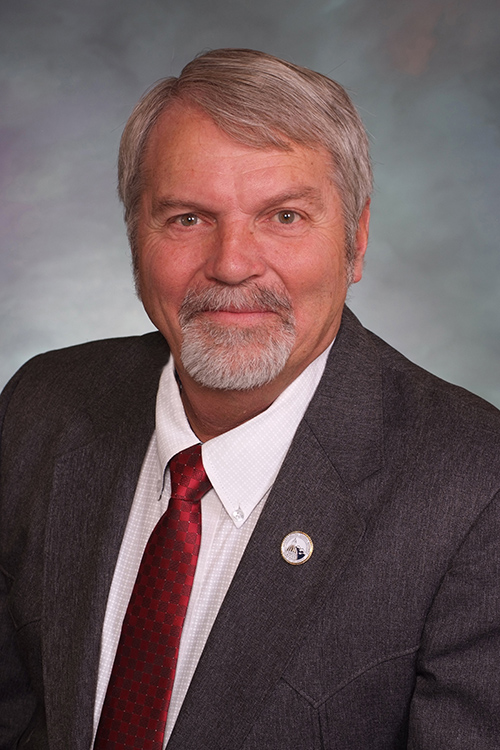
Sen. Rod Pelton
Sponsored bills
The act exempts the sale, storage, use, or consumption of tangible personal property, commodities, or services sold by a destination management company from state sales and use taxation, beginning July 1, 2027. The exemption only applies if the destination management company has already paid the state the applicable sales or use tax on the property, commodities, or services upon acquisition.(Note: This summary applies to this bill as enacted.)
The act expands the ways in which individuals may become eligible for certification as a certified public accountant (CPA) in Colorado by creating 3 new education and experience pathways that may satisfy the requirements for CPA certification. The pathways become available for applicants beginning on January 1, 2027. The 3 pathways are:Obtaining a baccalaureate degree, completing 2 years of accounting-related work experience, completing a professional ethics course, and passing the written CPA exam;Obtaining a baccalaureate degree, completing 30 additional semester hours, completing one year of accounting-related work experience, completing a professional ethics course, and passing the written CPA exam; andObtaining a post-baccalaureate degree, completing one year of accounting-related work experience, completing a professional ethics course, and passing the written CPA exam. For each pathway, an applicant's work experience must:Meet the requirements set by the Colorado state board of accountancy (board) by rule;Include any type of service or advice representing certain accounting-related skills needed to serve the public at the time of initial certification; andBe verified by an actively licensed CPA who meets board requirements. Section 2 of the act conforms statutory provisions relating to an applicant's eligibility to sit for a CPA examination with the pathways to certification created by the act. Section 2 also reinforces that, regardless of an applicant's eligibility to sit for an exam, the applicant must complete one of the specified pathways in order to obtain a CPA certificate. Section 4 establishes that an individual CPA who is licensed or certified in good standing in another state or jurisdiction of the United States and whose principle place of business is located in another state or jurisdiction of the United States (out-of-state CPA) has all the same practice privileges as Colorado certificate holders, without the need to obtain a Colorado certificate, if the individual was required at their initial licensure or certification in the other state or jurisdiction of the United States to pass the uniform CPA examination and obtain a baccalaureate degree conferred by an accredited college or university. Additionally, the act continues the practice privileges of out-of-state CPAs who held practice privileges in Colorado as of December 31, 2024. Finally, the conferral of practice privileges upon out-of-state CPAs must be conducted in conformity with rules adopted by the board; except that the board shall not require an out-of-state CPA to provide a notice, fee, or other submission as a condition of exercising such practice privileges in Colorado.(Note: This summary applies to this bill as enacted.)

In 2023, the general assembly established water and energy efficiency standards for irrigation controllers and spray sprinkler bodies that are sold or leased in the state on and after January 1, 2026. The act repeals these standards.(Note: This summary applies to this bill as enacted.)

Maddy summaryThis bill proposes that Colorado lawmakers consider adding guaranteed lifetime income options to the state public employees' retirement defined contribution plan and voluntary savings plans. The measure aims to ensure public employees have access to a reliable income stream in retirement, similar to what is already available in the state's traditional defined benefit plan. By allowing workers to choose options that provide lifetime payouts, the bill seeks to improve retirement security and financial confidence for over 226,000 active public employees. The resolution encourages the General Assembly to study how these new options could help workers retire with dignity while maintaining the portability of their savings.
The bill allows the speaker of the house of representatives, the minority leader of the house of representatives, the president of the senate, and the minority leader of the senate (legislative leadership) to each select up to 5 legislative measures to have a local government impact hearing during a regular legislative session. A local government impact hearing is a dedicated time that is at least one hour and not more than 2 hours at the beginning of a scheduled committee hearing for a legislative measure during which one or more local governments or organizations that represent local governments may present testimony to the committee regarding the potential effects of the legislative measure on local governments within the state. If a member of legislative leadership selects a legislative measure to have a local government impact hearing, the member must:Determine which committee of reference will hold the local government impact hearing if the legislative measure is assigned to more than one committee of reference; andNotify the chair of the applicable committee of reference and the staff of the legislative council that the legislative measure will have a local government impact hearing. If a member of the legislative leadership selects a legislative measure to have a local government impact hearing, the staff of the legislative council is required to include the local government impact hearing on the calendar as part of the regularly scheduled legislative hearing for the legislative measure in the applicable committee of reference. During the local government impact hearing, one or more local governments or statewide organizations that represents local governments may provide testimony regarding the impact of the legislative measure on local governments for the duration of the local government impact hearing without other limitations on the length of testimony. The bill requires the director of research of the legislative council to develop procedures for the implementation of local government impact hearings.(Note: This summary applies to this bill as introduced.)
The act requires the state board of veterinary medicine (board) to review and update the existing process by which an individual who has a license to practice veterinary medicine in another state may be licensed by endorsement to practice veterinary medicine in Colorado. The board shall adopt rules with the intent to expedite the licensure by endorsement process, including eliminating duplicative requirements and streamlining the pathway to licensure. The act clarifies that a veterinarian who administers, dispenses, distributes, or prescribes medicine to a patient in an emergency situation is not acting as a pharmacist or conducting the practice of pharmacy, and, as such, is not subject to discipline by the state board of pharmacy. The act relocates certain provisions specific to the practice of veterinary medicine from regulation by the state board of pharmacy to regulation under Colorado's veterinary practice act. Under current law, the board must approve a credentialing organization for the purpose of credentialing veterinary technicians, which credentialing organization must require the completion of an American Veterinary Medical Association accredited program for veterinary technicians. The act updates the requirement to require the completion of an accredited program for veterinary technicians offered by other associations. The act also establishes a veterinary prescription drug donation program. An owner of an animal may donate unused veterinary drugs that have been prescribed to the owner to a licensed veterinarian or an animal shelter. A licensed veterinarian may use any drugs accepted through donation if the veterinarian and drugs meet certain conditions.(Note: This summary applies to this bill as enacted.)
Under current law, a political party must ensure that any person, upon request, is able to participate in a precinct caucus or a party assembly with the use of a video conferencing platform or alternative means of participation. The failure of any political party to make a reasonable effort to comply with these accessibility requirements constitutes discrimination on the basis of disability in a place of public accommodation. The act clarifies that only a person who is otherwise eligible pursuant to statute to participate in a precinct caucus or a party assembly may request video conferencing or another alternative means of participation. The act also clarifies that a person who is subjected to a violation of a political party's duties regarding these accessibility requirements may file suit only against the central committee of the political party holding the caucus or assembly. An individual, including a member of the central committee of the political party or a volunteer for a political party, may not be held liable for a violation of these accessibility requirements. Upon a finding of a violation of these accessibility requirements, a court may require compliance with the applicable accessibility requirement and either actual monetary damages or a statutory fine of $3,500 for each violation.(Note: This summary applies to this bill as enacted.)
Under current law, a parent can voluntarily relinquish their child to a firefighter or hospital or community clinic emergency center staff member if the child is less than 72 hours old. The act allows a parent to voluntarily relinquish their child if the child is 30 days old or younger and requires the department of human services to adopt rules establishing a process for either parent of child who was relinquished to reunify with the child.(Note: This summary applies to this bill as enacted.)
Maddy summaryThis Senate Resolution officially designates April 2026 as National Donate Life Month in Colorado. The measure serves to raise public awareness about organ, eye, and tissue donation and honors the individuals who contribute to transplant programs. Additionally, the Senate will send a copy of this resolution to the Donor Alliance to support their outreach efforts.