

Currently, critical access hospitals must be licensed as general hospitals under state law. The act: Authorizes the department of public health and environment (department) to license critical access hospitals separately from general hospitals; On and after July 1, 2026, prohibits a person from operating a critical access hospital without a critical access hospital license; and Requires the state board of health to promulgate rules concerning the licensure of critical access hospitals. The act appropriates $45,722 from the general fund to the department for administration and operations management. From that appropriation, $12,285 is reappropriated to the office of the governor for use by the office of information technology to provide services to the department. APPROVED by Governor June 6, 2024 PORTIONS EFFECTIVE August 7, 2024 PORTIONS EFFECTIVE July 1, 2026(Note: This summary applies to this bill as enacted.)
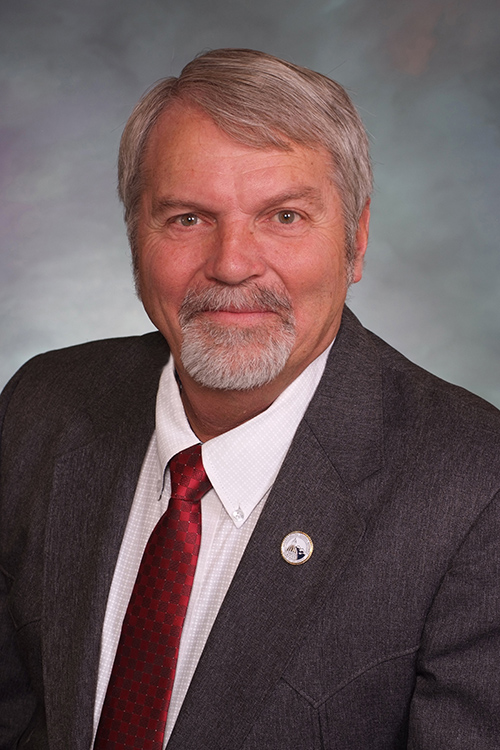
Sen. Rod Pelton
Sponsored bills
By March 31, 2026, the act requires the department of revenue (department) to create a process for a vehicle owner to request to receive and for the department to provide electronic communications and notifications, instead of written notifications, concerning vehicle transactions, including electronic notifications regarding driver's licenses and hearings related to the suspension of a driver's license, vehicle registration renewals, other hearings, and issuance of license plates. The department is not permitted, however, to provide electronic notifications for the revocation of a vehicle registration or license plate. The act also requires the department to adopt rules to create procedures for a vehicle owner to request the electronic notification. The act makes it mandatory, instead of optional, that the department establish a system to allow the electronic transmission of registration, lien, and titling information for motor vehicles, off-highway vehicles, or special mobile machinery by March 31, 2026. The act also requires that the system support the ability to generate a title and registration for new leased vehicles and support the ability to generate a title for a lessee who purchases the lessee's leased vehicle without affecting the lessee's existing registration. On or before January 1, 2027, the system must support the ability to generate a new registration for a vehicle to a new lessee without modifying the title. For the 2024-25 state fiscal year, $645,368 is appropriated from the Colorado DRIVES vehicle services account in the highway users tax fund to the department to implement the act. APPROVED by Governor June 3, 2024 EFFECTIVE June 3, 2024(Note: This summary applies to this bill as enacted.)
The act requires an applicant for an overweight motor vehicle permit to provide third-party documentation establishing the gross weight of the load if the permit application is for a vehicle and load combination that weighs at least 200,000 pounds and less than 500,000 pounds. The carrier is required to carry the documentation in the vehicle during the permitted move and produce the documentation for any state agency or law enforcement personnel. In addition to any other penalty, a driver who violates this provision is subject to a penalty of one dollar per pound in excess of the gross weight authorized by the permit. The act authorizes the department of transportation to issue a single-use overweight or oversize state permit or local permit on an expedited basis to help in an emergency. If the permit is a local permit, the applicant and the executive director of the department of transportation, or the executive director's designee, are required to make a reasonable attempt to contact and obtain the approval of the local authorities. If the department of transportation is unable to contact or obtain the approval of the local authority within a reasonable amount of time, the department of transportation may issue the local permit. If the permitted vehicle needs a law enforcement escort, the department of transportation must obtain the approval of the state patrol. The local permit fees must be collected and remitted to the local authorities. APPROVED by Governor May 31, 2024 EFFECTIVE August 7, 2024(Note: This summary applies to this bill as enacted.)
The act establishes a refundable state income tax credit for active qualified stewardship practices on a farm or ranch for income tax years beginning on or after January 1, 2026, but before January 1, 2031. A qualified taxpayer may earn a state income tax credit equal to: At least $5 and no more than $75 per acre of land covered by one qualified stewardship practice, up to a maximum credit of $150,000 in one income tax year. At least $10 and no more than $100 per acre of land covered by 2 qualified stewardship practices, up to a maximum credit of $200,000 in one income tax year. At least $15 and no more than $150 per acre of land covered by at least 3 qualified stewardship practices, up to a maximum of $300,000 per income tax year. The department of agriculture may issue rules to implement the tax credit, including specifying requirements for implementing and demonstrating qualified stewardship practices. Before issuing any rules, the commissioner of the department of agriculture shall initiate a public stakeholder process to advise the commissioner about the requirements for implementing and demonstrating qualified stewardship practices. To claim the credit, a qualified taxpayer must apply to the department of agriculture for a tax credit certificate. The department of agriculture will evaluate the application and issue the certificate if the taxpayer qualifies for the tax credit. If a tax credit certificate is issued, the qualified taxpayer must attach it to the taxpayer's income tax return and submit it to the department of revenue. The aggregate amount of tax credits issued in one calendar year cannot exceed $3 million. After certificates have been issued for credits that exceed an aggregate of $3 million for all qualified taxpayers during a calendar year, any claims that exceed the amount allowed are placed on a wait list and a certificate is issued for use of the credit in the next income tax year. No more than $2 million in claims shall be placed on the wait list in any given calendar year. Only one tax credit certificate may be issued per qualified taxpayer in an income tax year, and the qualified taxpayer claiming the credit may only receive the tax credit for up to 3 income tax years. No credit may be earned if the qualified taxpayer has received another tax credit, a tax deduction, or a grant related to agricultural land health from any source during the income tax year for which the tax credit is sought. The act appropriates $17,117 to the department of agriculture from the general fund for the 2024-25 state fiscal year for use by the agricultural services division (division) to implement the act. APPROVED by Governor May 24, 2024 EFFECTIVE August 7, 2024(Note: This summary applies to this bill as enacted.)
Legislative Oversight Committee Concerning the Treatment of Persons with Behavioral Health Disorders in the Criminal and Juvenile Justice Systems. Under current law, the department of human services (department) offers statewide access to crisis system services (services) for children and youth. The bill expands the services provided through the creation of the crisis resolution team program (program) in the department. The behavioral health administration (BHA) shall administer the program to provide community-based services to de-escalate and stabilize children or youth experiencing high-acuity behavioral health crises. The BHA shall contract with crisis resolution team providers (providers) to provide community-based de-escalation and stabilization services to children or youth. A child or youth is eligible for services provided by the program if the child or youth: Is 21 years of age or younger; Has experienced high-acuity behavioral health crises as identified by the behavioral health crisis response system or emergency departments; and Is safe to remain in the home or the community while receiving intensive, short-term stabilization interventions. Providers shall offer the following services to children or youth and their caregivers: Counseling or therapy; Case management to help meet treatment plans; Peer support or family skills coaching to foster connectedness, goal setting, and new routines to achieve positive, lasting change; Medication management; and Care coordination to provide tailored support and connection. Providers shall offer services to a child or youth a minimum of 3 days per week with a variety of services offered daily depending on the child's or youth's clinical needs. Services must be offered to the child or youth for a minimum of 4 weeks up to a maximum of 6 weeks depending on the child's or youth's clinical needs. The BHA shall: Maintain existing relationships with community partners; Conduct outreach and educate community partners regarding providers' services; Provide technical assistance to providers regarding specialized training and the use of screening and assessment tools; and Conduct an annual evaluation of the program. On or before September 1, 2025, the BHA shall submit to the general assembly a feasibility study to determine whether the program can be further expanded statewide. (Note: This summary applies to this bill as introduced.)
The act amends certain requirements and procedures related to licenses and passes from the Colorado parks and wildlife commission (commission). The act lowers the age threshold for senior annual fishing licenses to 64 years of age and amends the definition of "low-income senior" for the purposes of discounted parks and wildlife licenses. The act also lowers the disability level threshold for veterans with disabilities from 60% to 50% disability for the purpose of granting licenses to disabled veterans. The act lowers the cost of the youth small game hunting license and the youth big game hunting license by 25 cents to account for the inclusion of the backcountry search and rescue fund surcharge that is added administratively by the commission when the licenses are purchased. The act clarifies that adjustments to the prices of certain hunting licenses are based on the cost of the licenses as established in 2018 and adjusted for inflation based on the consumer price index. The act authorizes the commission to establish, by rule, a harvest permit surcharge for the taking of small game when doing so is necessary for the proper management of wildlife resources. The act specifies that revenues generated from the sale of keep Colorado wild passes may be used for capital construction projects. The act establishes procedures for hearings conducted by the commission when a river outfitter license holder or applicant is alleged to have committed a violation and when the applicant or license holder may have their application or license denied, suspended, or revoked. The act authorizes a hearing officer to conduct hearings on behalf of the commission in relation to the denial, suspension, or revocation of a river outfitter license. APPROVED by Governor May 1, 2024 EFFECTIVE August 7, 2024(Note: This summary applies to this bill as enacted.)
The bill clarifies that local governments, rather than the air quality control commission or the department of public health and environment, control the regulation of burning in burn barrels. Burning in burn barrels is permitted as regulated by or unless prohibited by the local government. (Note: This summary applies to this bill as introduced.)
Current law limits the duration of employment a public employees' retirement association (PERA) service retiree can work for a PERA employer without a reduction in PERA retirement benefits. Under certain circumstances, a rural school district may hire a service retiree who is a teacher, a school bus driver, a school food services cook, a school nurse, or a qualified paraprofessional without the service retiree receiving a deduction in benefits for any length of employment in the calender year. The act adds superintendents and principals to the list of service retirees hired by a rural school district who may be employed without a reduction in benefits and clarifies that the exemption for a rural school district also includes a small rural school district which has a funded pupil count for the prior budget year of less than 1,000 pupils. The act also requires PERA, on or before December 1, 2025, and on or before December 1 of each 5th year thereafter, to submit a report to the finance and education committees of the house of representatives and the senate or any successor committees regarding certain employment after service retirement allowances. The report must include: The number of service retirees under certain allowances who have been employed after service retirement as of the date of the report; The extent to which certain employment after service retirement allowances have helped employers in the school division address shortages; The costs, if any, to PERA as a result of certain employment after service retirement allowances; and Any other information deemed relevant by PERA. APPROVED by Governor April 11, 2024 EFFECTIVE August 7, 2024(Note: This summary applies to this bill as enacted.)
The bill clarifies that the naturopathic doctor formulary (formulary) may include prescription classes of medicines and adds certain medicines to the formulary, including all legend drugs and, for a naturopathic doctor with a federal drug enforcement administration registration, all drugs listed on schedules III through V under the "Uniform Controlled Substances Act of 2013", except for benzodiazepines, opioids, and opioid derivatives . Before obtaining, dispensing, administering, injecting, ordering, or prescribing any of the medicines or devices on the formulary, a naturopathic doctor who is currently registered with the department of regulatory agencies must show proof of completion of 10 hours of pharmacological continuing education pertinent to or reflective of the naturopathic formulary. The bill prohibits a naturopathic doctor from prescribing any medicine or device to an individual under 18 years of age, or ketamine to an individual of any age, unless recommended by the naturopathic doctor advisory committee and approved by the director. Beginning September 1, 2024, the bill requires an individual applying for registration as a naturopathic doctor to pass a pharmacology examination administered by the North American Board of Naturopathic Examiners or a nationally recognized, director-approved successor entity. For the renewal of a naturopathic doctor registration on or after June 1, 2025, the bill requires a naturopathic doctor to complete 12 hours per year of education in pharmacology. (Note: Italicized words indicate new material added to the original summary; dashes through words indicate deletions from the original summary.) (Note: This summary applies to the reengrossed version of this bill as introduced in the second house.)
The new twenty-third judicial district exists beginning January 7, 2025. The act makes changes so that the crime victim compensation board and the victims and witnesses assistance and law enforcement board may provide compensation and services once the new judicial district exists. APPROVED by Governor April 4, 2024 EFFECTIVE April 4, 2024(Note: This summary applies to this bill as enacted.)