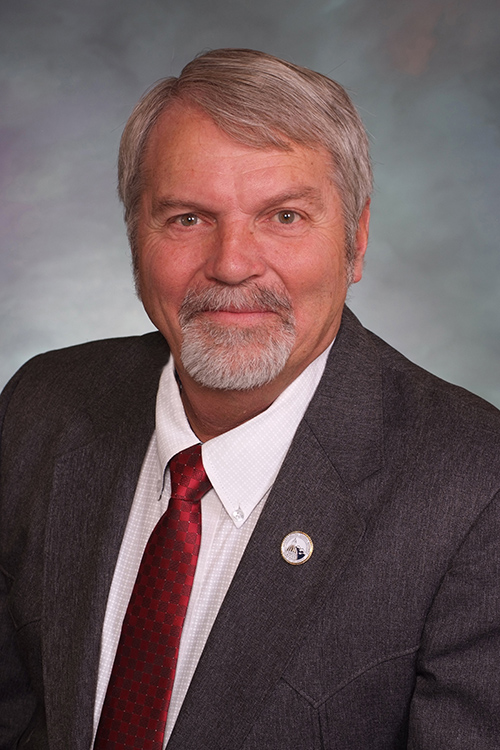
Photo of Rod Pelton
R Colorado Senate · District 35 On the 2026 ballot

Sen. Rod Pelton

Compare
Total votes
7,013
all sessions
Attendance
97%
240 missed
Near the chamber average
With party
93%
of cast votes
Near the chamber average
Bipartisan score
5%
crosses aisle rarely
Higher than 83% of chamber peers
Sponsored
342
bills & resolutions
Near the chamber average
Committees
4
assignments
342 bills and resolutions

Sponsored bills

Total
342
Primary
158
Co-sponsor
184
This page
342
matching current filters
Co-sponsor SJR 25-013
Passed · Colorado Senate · Co-sponsor
Nowruz Day

Maddy summarySJR 25-013 is a symbolic resolution recognizing Thursday, March 20, 2025, as Nowruz Day in Colorado. It honors the ancient Persian New Year celebration observed by Iranian, Kurdish, Afghan, and Central Asian communities, acknowledging its cultural significance and the contributions of Colorado's Iranian-American residents. The resolution has no legal effect but formally extends recognition to the traditions of Nowruz, including its themes of renewal and community. It directly affects Colorado's Iranian-American community by affirming their cultural heritage through state acknowledgment.

Passed Mar 24, 2025 1 co-sponsor
Co-sponsor SJR 25-009
Passed · Colorado Senate · Co-sponsor
Protection of Colorado's Public Lands

Maddy summaryThis resolution (SJR 25-009) expresses Colorado's support for federal management of national public lands, including parks, forests, and monuments. It formally opposes efforts to sell, transfer, or dispose of these lands and urges Colorado's governor, attorney general, and congressional delegation to take action against such proposals. The resolution is non-binding but directs state officials to advocate for continued public stewardship by federal agencies like the National Park Service and Bureau of Land Management. It was passed by the Colorado Senate and referred to the House for consideration.

Passed Mar 20, 2025 1 co-sponsor
Co-sponsor SB 25-038
Signed into law · Colorado Senate · Co-sponsor
Wildlife Damage Protection of Personal Information

Under Colorado law, a person may file a claim with the division of parks and wildlife (division) for compensation for damages to property caused by wildlife, and the division must review and investigate that claim. The act requires that the personal information of a person, information related to site assessments received by the division through the claim procedures, and personal information associated with proactive nonlethal measures is kept confidential and not disclosed pursuant to the "Colorado Open Records Act". The act excludes from this prohibition: Information about nonlethal predator-livestock conflict minimization measures that does not reveal the identity of the person or the person's business; Nonidentifying information of county-level data highlighting the number or dollar amount of claims made to the division, the number of claims that were settled and the monetary amounts of those settlements, the number of claims that are pending at the time of a request for disclosure, and the number of claims that were denied and the reasons for denial; and Personal information that becomes public by the actions of the subject of the personal information or the subject's agent. The act prohibits bringing or maintaining a private action challenging the division's determination that a person or the person's agent has taken actions or made statements that led to the person's personal information becoming publicly known. (Note: This summary applies to this bill as enacted.)

Signed into law Mar 20, 2025 1 co-sponsor
Co-sponsor HB 25-1053
Signed into law · Colorado House · Co-sponsor
Landowner Immunity for Emergency Access to Property

The act provides immunity from civil liability for damage or injury to persons or property, other than that which arises from gross negligence or willful and wanton misconduct, to a landowner who, in good faith and without compensation, allows access to the landowner's property for entry and exit in connection with an emergency. An emergency is a fire, a rescue call, a hazardous materials incident, a natural or human-caused disaster, or an incident reasonably determined to be an emergency by a first responder. (Note: This summary applies to this bill as enacted.)

Signed into law Mar 20, 2025 1 co-sponsor
Primary SJR 25-012
Passed · Colorado Senate · Lead sponsor
March 17 Colorado Future Farmers of America Day

Maddy summaryThis is a ceremonial resolution designating March 17, 2025, as "Colorado FFA Day." It recognizes the Future Farmers of America (FFA) organization's role in supporting agricultural education and youth development in Colorado. The resolution directly affects Colorado FFA members, educators, and supporters by formally honoring their contributions through this annual recognition. It does not create new laws or policy changes, as it is a symbolic gesture celebrating the organization's work.

Passed Mar 18, 2025 0 co-sponsors
Co-sponsor SB 25-010
Signed into law · Colorado Senate · Co-sponsor
Electronic Communications in Health Care

Subject to specific requirements, the act allows a notice to or from a party or other document required by law in an insurance transaction that is related to a provision of a health insurance contract or that is to serve as evidence of health insurance coverage to be delivered, stored, and presented by electronic means if the electronic means meet the requirements of the "Uniform Electronic Transactions Act". The delivery of a notice or document by electronic means is considered the equivalent to and has the same effect as any other delivery method required by law. The act requires health insurance carriers to deliver paper communications to any individuals that may elect to receive paper communications upon request. An insurance producer is not subject to civil liability for any harm or injury that occurs because of a party's election to receive any notice or document by electronic means or by a carrier's failure to deliver or a party's failure to receive a notice or document by electronic means. A carrier may mail, deliver, or, if the carrier obtains separate, specific consent, post on the carrier's website a health coverage plan and an endorsement that does not contain personal identifying information. If the carrier elects to post a health coverage plan and an endorsement on the carrier's website in lieu of mailing or delivering the health coverage plan and endorsement, the carrier shall comply with certain conditions. The commissioner of insurance may adopt rules to implement the act. (Note: This summary applies to this bill as enacted.)

Signed into law Mar 14, 2025 1 co-sponsor
Co-sponsor HJR 25-1021
Passed · Colorado House · Co-sponsor
February 28 Rare Disease Day

Maddy summaryThis joint resolution declares February 28, 2025, as Rare Disease Day in Colorado to raise awareness about rare diseases. It directly affects Colorado residents living with rare diseases - over 500,000 people - and their families, recognizing the challenges they face, including high medical costs and limited treatments. The resolution makes no new policy changes but symbolically honors those impacted by urging the state to "show our stripes" in solidarity. It references national statistics (e.g., 1 in 10 Americans affected) and the "zebra" awareness symbol for rare conditions, without creating any legal obligations or funding.

Passed Mar 13, 2025 1 co-sponsor
Primary HB 25-1054
Signed into law · Colorado House · Lead sponsor
Repeal Legislative Audit Committee Reviews of Emissions Program

The act repeals a requirement that the legislative audit committee cause to be conducted performance audits of the automobile inspection and readjustment program every 5 years. (Note: This summary applies to this bill as enacted.)

Signed into law Mar 7, 2025 0 co-sponsors
Co-sponsor SB 25-156
In committee · Colorado Senate · Co-sponsor
Reducing Costs of State Regulation

Sections 1 and 2 of the bill prohibit a state agency from imposing a personal qualification requirement in order to engage in a profession or occupation unless the agency can show that the requirement is demonstrably necessary and narrowly tailored to address a specific, legitimate public health, safety, or welfare objective. On or before July 1, 2026, every agency must review occupational regulations and determine whether the regulation should be repealed or amended. Any person may file a petition with an agency requesting that an occupational regulation be repealed or amended. Regardless of whether a petition is filed with an agency, any person may file a civil suit requesting that the court enjoin the adoption or enforcement of an occupational regulation. When an agency files a notice of proposed rule-making with the secretary of state, if the proposed rule-making includes a proposed occupational regulation, the agency must also submit a statement to the secretary of state describing how the proposed occupational regulation complies with the bill's requirements. Section 3 repeals the industrial and manufacturing operations clean air grant program, the cannabis resource optimization cash fund, the community access to electric bicycles grant program, and the electrifying school buses grant program, which were enacted in 2022 by Senate Bill 22-193. Section 4 repeals the energy code board and its associated model codes, an energy code training grant program, the building electrification for public buildings grant program, the high-efficiency electric heating and appliances grant program, and the clean air building investments fund, which were enacted in 2022 by House Bill 22-1362. Section 5 repeals the air quality enterprise, which was enacted in 2020 by Senate Bill 20-204. Section 6 repeals the environmental response surcharge, the perfluoroalkyl and polyfluoroalkyl substances cash fund, the perfluoroalkyl and polyfluoroalkyl substances grant program, the perfluoroalkyl and polyfluoroalkyl substances take-back program, and certain civil penalties for violations of certain air quality control regulations, which were enacted in 2020 by Senate Bill 20-218. Section 7 repeals certain requirements, including requirements regarding fenceline monitoring and community-based monitoring of air toxics, for covered facilities, which requirements were enacted in 2021 by House Bill 21-1189. Sections 8 through 20 make necessary conforming amendments. (Note: This summary applies to this bill as introduced.)


In committee Mar 4, 2025 1 co-sponsor
Primary HB 25-1256
In committee · Colorado House · Lead sponsor
Life-Sustaining Treatment Minors Parent Rights

The bill mandates that a health-care provider (provider) shall not implement a do-not-resuscitate order (DNR) for a minor without written consent from the minor's parent or legal guardian. However, if a provider makes a reasonably diligent and documented effort to contact a parent or legal guardian for 72 hours without success, the provider may enter a DNR for the minor. A parent or legal guardian may revoke their consent in writing, and such a revocation must take precedence over the prior consent and be recorded in the minor's medical records. The bill states that a provider shall not hinder or delay the life-sustaining or resuscitative treatment, determined by the right of the parent or legal guardian of the minor, to be given to the minor unless there is destruction of the minor's circulatory system, respiratory system, and entire brain. A court does not have authority to require withdrawal of life-sustaining or resuscitative treatment for a minor unless there is destruction of the minor's circulatory system, respiratory system, and entire brain. The bill creates a presumption that the continuation of the life of a minor is in the minor's best interest. Under the bill, a provider shall not interfere with a parent or legal guardian of a minor seeking to obtain another medical opinion or the transfer of the minor to another health facility (facility). If the parent or legal guardian requests that the minor be transferred, the provider shall: Provide the new facility immediate access to the minor and the minor's medical records; and Not hinder or delay the necessary measures or procedures needed to facilitate the transfer. The facility receiving the minor on transfer must: Continue providing the life-sustaining measures and procedures being administered; and Make every reasonable effort to help facilitate the transfer. Lastly, the bill directs a provider, if requested, to disclose any policies the provider has relating to services involving resuscitation or life-sustaining measures. (Note: This summary applies to this bill as introduced.)
In committee Mar 4, 2025 0 co-sponsors
Showing 211 to 220 of 342 bills
Previous 1 … 21 22 23 … 35 Next