

The act clarifies when a teacher may conclude that an early elementary school student has a significant reading deficiency requiring remediation through a specialized approach to instruction (READ plan) based on a body of evidence that includes information in addition to the student's scores on a reading assessment. Current law requires certain parental communications in connection with a student's READ plan. The act requires the addition of specific information regarding characteristics of dyslexia, if applicable, to the parental communications. Beginning no later than the 2027-28 school year, a local education provider must either develop its own screening process for identifying early elementary school students with characteristics of dyslexia or implement a universal dyslexia screener that conforms to certain new requirements. A local education provider that implements a screener may include the screener in an interim reading assessment or administer the screener separately from the interim assessment. Either way, the screener must accurately and reliably identify students at risk of reading difficulties. If an interim reading assessment includes a screener, the assessment must meet standards for validity and reliability, encourage data-driven instructional decision making, and promote efficient administration and effective follow-up. (Note: This summary applies to this bill as enacted.)
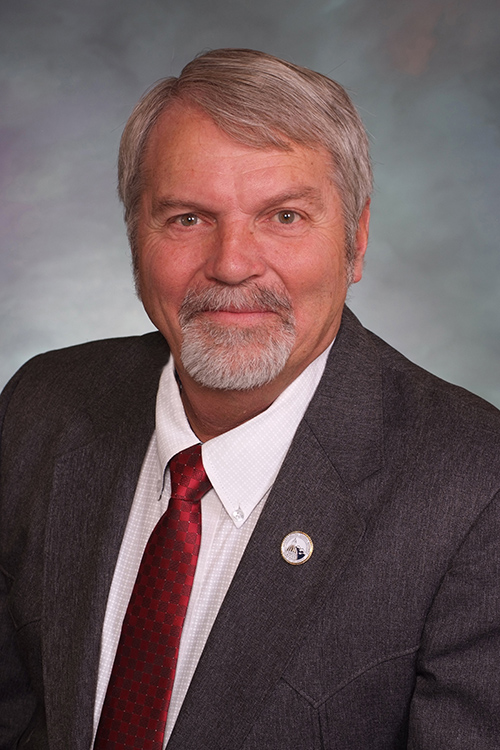
Sen. Rod Pelton
Sponsored bills
The act creates a voluntary procedure by which an individual may elect to contribute a portion of their state income tax refund as a donation to the animal protection fund (fund). For the income tax years immediately following the year in which the executive director of the department of revenue (department) files written certification with the revisor of statutes that a line on the income tax return form has become available and that the animal protection fund voluntary contribution (contribution) is next in the queue established pursuant to statute, the executive director of the department shall ensure that the Colorado state individual income tax return form contains a line by which each individual taxpayer may designate the amount of the contribution, if any, that the individual wishes to make to the fund. Money in the fund is continuously appropriated to the department of agriculture. Unlike many other types of permitted voluntary contributions, the contribution is not subject to sunset review and is not subject to repeal if the contribution generates no more than $50,000 during the period between January 1 and September 1 of a tax year. The act requires the department to determine annually the total amount donated through the contribution and report that amount to the state treasurer and to the general assembly. The state treasurer shall credit that amount to the fund. All interest derived from the deposit and investment of money in the fund is credited to the fund. The general assembly shall appropriate annually from the fund to the department its costs of administering money designated as contributions to the fund. For the 2025-26 state fiscal year, the act appropriates $11,606 from the fund to the department for the implementation of the act. (Note: This summary applies to this bill as enacted.)
Beginning January 1, 2026, the act allows the department of health care policy and financing (department) to reimburse community health workers for services rendered to medicaid members after receiving any necessary federal authorization. Reimbursement for community health worker services is subject to available appropriations. The act postpones until January 31, 2027, the requirement for the department to report to the general assembly on community health worker utilization and costs in the medicaid program. The act reduces the appropriations to the department from the general fund for the 2025-26 fiscal year by $1,364,558 and the healthcare affordability and sustainability cash fund for the 2025-26 fiscal year by $342,750. (Note: This summary applies to this bill as enacted.)
The act continues the department of agriculture's (department) oversight of the "Commodity Handler and Farm Products Act" for 7 years, until 2032. The act also increases the limit for qualifying as a "small-volume dealer" from $20,000 of farm products or commodities purchased per year to $45,000. The act permits the commissioner of agriculture (commissioner) to periodically adjust the small volume dealer limit. The act explicitly excludes marijuana from the definition of "commodity" under the "Commodity Handler and Farm Products Act". Under current law, civil penalties collected by the department are deposited into the inspection and consumer services cash fund (fund). The act requires those civil penalties to be transferred to the general fund rather than the department's fund. Under current law, a dealer or commodity handler must file a bond or irrevocable letter of credit (bond or credit) with the commissioner. The bond or credit is intended to cover any claims of injury submitted by a producer or owner against the dealer or commodity handler. The act prohibits a producer or owner from submitting a claim and collecting reimbursement from the bond or credit if the producer or owner is also the owner of at least 5% of the voting shares of the dealer or commodity handler or the dealer's or commodity handler's parent company. (Note: This summary applies to this bill as enacted.)
The act appropriates the following amounts for the 2025-26 state fiscal year from the Colorado water conservation board (CWCB) construction fund to the CWCB or the division of water resources in the department of natural resources for the following projects: Continuation of the satellite monitoring system, $380,000 (section 1 of the act); Continuation of the floodplain map modernization program, $500,000 (section 2); Continuation of the weather modification permitting program, $500,000 (section 3); Continuation of the Colorado Mesonet project, $200,000 (section 5); Continuation of the water forecasting partnership project, $2,000,000 (section 6); Continuation of the Arkansas river decision support program, $300,000 (section 7); Continuation of technical assistance for the federal irrigation improvement cost-sharing program, $500,000 (section 8); Decision support systems model enhancements to support the Colorado water plan, $1,000,000 (section 9); Support for the basin implementation plan analysis and updates, $4,500,000 (section 10); Continuation of the Colorado watershed restoration and wildfire ready watershed programs, $5,000,000 (section 11); Support for a statewide turf analysis, $1,400,000 (section 12); Support for the Yampa river and Walton creek confluence restoration project, $2,000,000 (section 14); and Support for the south fork focus zone irrigated acreage retirement, $6,000,000 (section 15). Section 4 directs the state treasurer to transfer up to $2,000,000 from the CWCB construction fund to the CWCB litigation fund on July 1, 2025. Section 13 directs the state treasurer to transfer $500,000 from the CWCB construction fund to the plant health, pest control, and environmental protection cash fund on July 1, 2025, and makes an appropriation of that amount to the department of agriculture for use by the conservation services division for the Colorado soil health program. Section 16 authorizes the CWCB to make a loan in an amount of $12,978,500 from the severance tax perpetual base fund to the North Poudre Irrigation Company to support the park creek expansion project. Section 17 appropriates $29,200,000 from the water plan implementation cash fund to the CWCB to award grants that will help implement the state water plan. Sections 18, 19, 20, and 21 eliminate the office of water conservation under the CWCB and the water efficiency grant program, transfer remaining money from the water efficiency grant program cash fund to the severance tax perpetual base fund, and make conforming amendments accordingly. Current law authorizes the governor to appoint a director of compact negotiations. Section 22 states that the governor or the executive director of the department of natural resources shall appoint the director of compact negotiations within 30 days after a vacancy of the position. (Note: This summary applies to this bill as enacted.)
The act creates the future of severance taxes and water funding task force (task force). The department of natural resources is required to contract with a third party to conduct a study on severance taxes and water funding and develop recommendations for ways to continue funding water needs and energy impact grants in the face of decreasing severance tax revenue (study). The study must focus on identifying ways to alleviate the need to transfer revenues derived from severance taxes to the general fund and to replace severance tax revenue that was previously transferred to the general fund. The purpose of the task force is to work with the third party to conduct the study and develop recommendations. No later than January 15, 2026, the third party must submit a draft report, detailing the results of the study and any recommendations, to the department of natural resources and the task force for review. The task force is required to provide input on the draft report. No later than July 15, 2026, the third party must submit a final report, which incorporates the input of the task force, to the water resources and agriculture review committee (committee). The task force must present the final report to the committee during the 2026 legislative interim. The act changes the manner in which a credit allowed against severance tax in taxable years commencing January 1, 2026, but prior to January 1, 2028, is calculated. For the 2025-26 state fiscal year, $198,592 is appropriated from the severance tax operational fund to the department of natural resources to implement the act. (Note: This summary applies to this bill as enacted.)
The bill creates the Colorado nuclear workforce development and education program (program) in the department of higher education (department) council (council) in the Colorado school of mines to help meet growing workforce demand in the nuclear energy sector. The bill establishes a related grant program (grant program) to provide grants to institutions of higher education for the development or expansion of nuclear engineering degree or certificate programs or course offerings. The Colorado nuclear workforce development and education council shall advise and assist the department regarding the grant program's implementation and evaluation convene advisory sessions with stakeholders from the nuclear, educational, and workforce development sectors; implement the grant program; and contract with one or more third-party entities for staffing and operational assistance . The department may seek, accept, and expend gifts, grants, and donations for program-related council-related purposes. The state treasurer shall credit the gifts, grants, and donations to the Colorado nuclear workforce development and education cash fund (cash fund) , which is created in the bill . The general assembly shall not appropriate general fund dollars to implement or maintain program council operations or grant awards. The department council shall convene and begin awarding grants only after the balance of the cash fund reaches or exceeds $500,000. The bill imposes requirements to report to the general assembly about the program's council's funding sources, grant program implementation , and use other uses of funds. The bill repeals the program council , effective September 1, 2032, unless the program council is extended pursuant to a sunset review. Conditional upon the receipt of sufficient gifts, grants, and donations, for the 2025-26 state fiscal year, the bill appropriates $500,000 from the cash fund to the department of higher education for use by the trustees of the Colorado school of mines. (Note: Italicized words indicate new material added to the original summary; dashes through words indicate deletions from the original summary.) (Note: This summary applies to the reengrossed version of this bill as introduced in the second house.)
No later than January 1, 2026, the act requires the department of human services to submit an application to the United States department of agriculture food and nutrition service to implement a restaurant meals program that allows eligible supplemental nutrition assistance program recipients to purchase hot or prepared foods at participating restaurants. (Note: This summary applies to this bill as enacted.)
For construction of multifamily, attached housing of 2 or more units, the act creates the multifamily construction incentive program (program). A builder may chose to participate in the program by: Providing a warranty that covers any defect and damage at no cost to the homeowner for specified periods; Having a third-party inspection performed on the property; and Recording a notice of election to participate in the program in the real property records before the property is offered for sale. For construction defect claims brought for the construction of housing for which the builder is a participant in the program, the act: Requires a claimant to file a certificate of review with the complaint, if the complaint is against an architect or engineer; Limits actions to claims that have resulted in: Actual damage to real or personal property; actual loss of the use of real or personal property; actual bodily injury or wrongful death; an unreasonable reduction in the capability of, or an actual failure of, a building component to perform an intended function or purpose; or an unreasonable risk of bodily injury or death to, or a threat to the life, health, or safety of, the occupants of the residential property; and Requires that a construction professional must send or deliver to the claimant an offer to settle the claim or a written response that identifies the standards that apply to the claim and explains why the defect does not require repair. For all construction defect claims, the act: Establishes a claimant's duty to mitigate an alleged construction defect and specifies how a claimant may satisfy this duty and the consequences to a claimant that fails to satisfy this duty; Requires a construction professional who is the defendant in a construction defect action to submit specified information to the claimant; Prohibits an insurer from cancelling, denying, or reducing coverage based on any claim for benefits covered by an existing liability insurance policy issued to a construction professional based on the construction professional's offer to repair or settle a construction defect claim; Tolls the statute of limitations or repose during a claimant's mitigation of an alleged construction defect; Increases the percentage of owners that an executive board of a unit owners' association (executive board) must obtain approval from before initiating a construction defect claim on behalf of the owners from a majority to 65%; and Requires an executive board that is successful in a construction defect claim or settlement to first use the net monetary damages or net proceeds received as a result of the claim to repair the construction defect. The act requires a local government to establish a fast-track approval process for an application for for-sale multifamily condominium projects in order to qualify for assistance from the state affordable housing fund. (Note: This summary applies to this bill as enacted.)
Maddy summarySJR 25-023 is a procedural resolution that establishes a joint committee of five members from the Senate and House of Representatives. This committee is tasked with formally notifying the Governor that the legislative session is about to conclude and to ask if he has any final communications for the General Assembly.