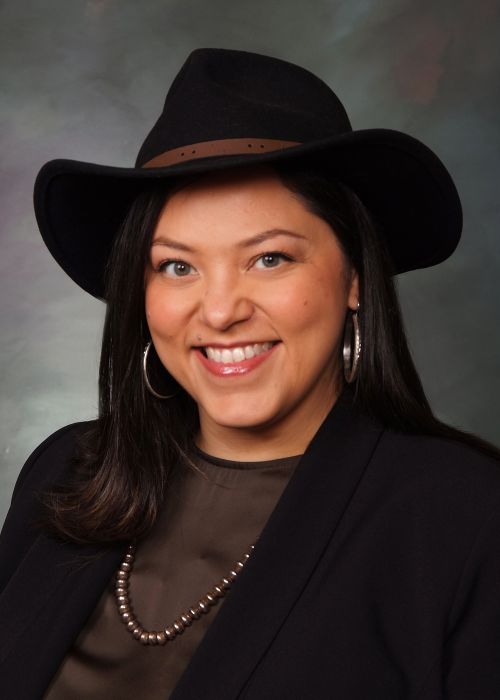
Photo of Julie Gonzales
D Colorado Senate · District 34

Sen. Julie Gonzales

Compare
Total votes
6,713
all sessions
Attendance
98%
136 missed
Lower than 92% of chamber peers
With party
98%
of cast votes
Higher than 77% of chamber peers
Bipartisan score
1%
crosses aisle rarely
Lower than 81% of chamber peers
Sponsored
710
bills & resolutions
Higher than 75% of chamber peers
Committees
3
assignments
710 bills and resolutions

Sponsored bills

Total
710
Primary
297
Co-sponsor
413
This page
710
matching current filters
Primary SB 19-200
Signed into law · Colorado Senate · Lead sponsor
Alcohol Beverage Consumption National Western Center

Alcohol regulation - licensed premises - National Western Center. The act authorizes the city and county of Denver to promulgate an ordinance authorizing a person to remove an alcohol beverage from the licensed premises of a vendor within the National Western Center so long as the person does not leave the National Western Center.(Note: This summary applies to this bill as enacted.) Read More

Signed into law May 28, 2019 0 co-sponsors
Primary SB 19-245
Signed into law · Colorado Senate · Lead sponsor
Time Requirements For Food Stamp Appeals

Food stamp program - rule-making - appeal deadline. The act grants the department of human services rule-making authority to require any party to file a notice of intent to file exceptions with the state department within five days after service of the initial decision upon the party, or otherwise forgo the ability to file exceptions.(Note: This summary applies to this bill as enacted.) Read More

Signed into law May 28, 2019 0 co-sponsors
Primary SB 19-030
Signed into law · Colorado Senate · Lead sponsor
Remedying Improper Guilty Pleas

Failure to advise consequences of guilty pleas or dismissal of charges - unconstitutionality - procedure - appropriation. The act finds that some criminal defendants who, when they entered a guilty plea in connection with a deferred judgment or had charges related to drugs dismissed under a since repealed provision of law, were not advised that there may be adverse immigration consequences that attach to the plea even if the plea is later withdrawn and the case is dismissed. These defendants did not knowingly, intelligently, and voluntarily enter the plea of guilty as required by law or understand the consequences of the dismissal. The act authorizes these persons to petition the court for an order vacating the guilty plea and establishes procedures for such petitions. The act appropriates $543,461 to the judicial department for trial court programs and $55,139 to the department of law for use by the appellate unit. (Note: This summary applies to this bill as enacted.) Read More

Signed into law May 28, 2019 0 co-sponsors
Primary HB 19-1124
Signed into law · Colorado House · Lead sponsor
Protect Colorado Residents From Federal Government Overreach

Federal immigration enforcement - no arrest based on civil detainer - no personal information to immigration authorities from probation - advisement before immigration interview. The act allows a law enforcement officer or employee to cooperate or assist federal immigration enforcement authorities in the execution of a warrant issued by a federal judge or magistrate or honoring any writ issued by any state or federal judge concerning the transfer of a prisoner to or from federal custody. The act prohibits a law enforcement officer from arresting or detaining an individual solely on the basis of a civil immigration detainer. The act prohibits a probation officer or probation department employee from providing an individual's personal information to federal immigration authorities. If a law enforcement officer is coordinating a telephone or video interview between federal immigration authorities and an individual in jail or another custodial facility, the individual must be advised that: The interview is being sought by federal immigration authorities; The individual has the right to decline the interview and remain silent; The individual has the right to speak to an attorney before submitting to the interview; and Anything the individual says may be used against him or her in subsequent proceedings, including in a federal immigration court.(Note: This summary applies to this bill as enacted.) Read More

Signed into law May 28, 2019 0 co-sponsors
Primary SB 19-143
Signed into law · Colorado Senate · Lead sponsor
Parole Changes

Prison population management - file review - technical violations revoke parole - parolee intensive treatment program - full board approval circumstance - reentry services if not released on parole - table parole review - appropriation. Under current law, there are prison population measures that can be used when the vacancy rate drops below 2%. The act changes the rate to 3% and adds a new measure. The new measure allows the department to submit a list of inmates who meet a specified eligibility criteria, have a favorable parole plan, and have been assessed to be less than high risk to the parole board for a file review. For technical parole violations related to possession of a deadly weapon, refusing or failing to comply with the requirements of sex offender treatment, absconding or willful failure to appear, unlawful contact with a victim, or willful tampering or removal of an electronic monitoring device, the act allows the parole board to revoke parole and place the inmate back in prison for up to the remainder of the inmate's parole. The act allows the parole board to place a parolee who needs treatment and is amenable to treatment in a parolee intensive treatment program operated by the department in a level I security facility or equivalent facility. If an inmate meets criteria and has an approved parole plan, has been assessed low or very low risk, and parole guidelines recommend release, the parole board may deny parole only by a majority vote of the full board. The act provides an inmate released from prison without supervision the right to access reentry services for up to one year from the date of discharge. The act requires the parole board to table a parole release decision if it finds the inmate's parole plan is inadequate and to require a new parole plan within 30 days. The act appropriates $25,200 from the general fund to the department of corrections for information technology services. (Note: This summary applies to this bill as enacted.) Read More


Signed into law May 28, 2019 0 co-sponsors
Primary HB 19-1315
Signed into law · Colorado House · Lead sponsor
Admissibility Of Statements By A Juvenile

Juvenile advisement of rights - accompanying adult's adverse interest - admissibility. Under current law, statements by a juvenile concerning delinquent acts committed by the juvenile are admissible against the juvenile so long as the juvenile is accompanied by one or more specified adults during the advisement of constitutional rights and during the interrogation. A court decision found this to be legally sufficient even if the adult was shown to have an interest adverse to the juvenile. Under the act, if an issue concerning the adult's adverse interest is raised, the prosecution must prove by a preponderance of the evidence that the person conducting the interrogation reasonably believed that the adult did not have an interest adverse to the juvenile and helped safeguard the juvenile's constitutional rights to remain silent or obtain counsel during the interrogation.(Note: This summary applies to this bill as enacted.) Read More
Signed into law May 28, 2019 0 co-sponsors
Primary HB 19-1031
Signed into law · Colorado House · Lead sponsor
Child Patient More Than One Primary Caregiver

Medical marijuana - primary caregivers - juvenile patient - appropriation. Under current law, a medical marijuana patient is limited to having one primary caregiver at a time. The act makes an exception for a patient who is under 18 years of age and allows each parent or guardian to serve as a primary caregiver. The act also clarifies that if the patient is under the jurisdiction of the juvenile court, the judge presiding over the case may determine who is the juvenile's primary caregiver. The act appropriates $95,831 to the department of public health and environment for the medical marijuana registry from the medical marijuana program cash fund. (Note: This summary applies to this bill as enacted.) Read More

Signed into law May 23, 2019 0 co-sponsors
Primary HB 19-1289
Signed into law · Colorado House · Lead sponsor
Consumer Protection Act

Consumer protection - violations based on recklessness - increased penalties for certain violations - calculation of damage awards. The act: Adds "recklessly" as a culpable mental state for certain violations of the "Colorado Consumer Protection Act"; Increases the potential penalty for a violation brought by the attorney general or a district attorney from $2,000 to $20,000 per violation and from $10,000 to $50,000 per violation if committed against an elderly person; and Specifies the calculation of potential damage awards in a private civil action.(Note: This summary applies to this bill as enacted.) Read More

Signed into law May 23, 2019 0 co-sponsors
Primary SB 19-227
Signed into law · Colorado Senate · Lead sponsor
Harm Reduction Substance Use Disorders

Substance use disorders - school districts, nonpublic schools, and specified public persons may obtain and administer opiate antagonists - definition of drug paraphernalia - hospitals as clean syringe exchange sites - opiate antagonist bulk purchase fund - household medication take-back program - identity verification for individuals initiating into treatment - appropriation. The act: Allows school districts and nonpublic schools to develop policies by which schools are authorized to obtain a supply of opiate antagonists and school employees are trained to administer opiate antagonists to individuals at risk of experiencing a drug overdose; Allows a prescriber to prescribe or dispense and a pharmacist to dispense an opiate antagonist to law enforcement agencies, schools, or specified public persons; Removes from the definition of "drug paraphernalia" equipment, products, and materials used in testing or analyzing a controlled substance; Specifies that a licensed or certified hospital may be used as a clean syringe exchange site; Creates the opiate antagonist bulk purchase fund to facilitate bulk purchasing of opiate antagonists at a discounted price; Expands the household medication take-back program in the department of public health and environment (department) for the purpose of allowing the safe collection and disposal of needles, syringes, and other devices used to inject medication; Authorizes a public person or entity that makes an automated external defibrilator available to the public to also make an opiate antagonist available to the public; and Requires the department of health care policy and financing to establish a policy on how a substance use disorder treatment program must verify the identity of individuals initiating into detoxification, withdrawal, or maintenance treatment for a substance use disorder. $659,472 is appropriated to the department to implement the act. Specified provisions of the act are contingent upon House Bill 19-1172 becoming law. (Note: This summary applies to this bill as enacted.) Read More

Signed into law May 23, 2019 0 co-sponsors
Primary HB 19-1245
Signed into law · Colorado House · Lead sponsor
Affordable Housing Funding From Vendor Fee Changes

Vendor fee rate increase - use of increased funds for affordable housing grants and loans. Beginning January 1, 2020, the act increases the vendor fee, which is an amount that a retailer is permitted to retain for its expenses incurred in collecting and remitting the state sales tax, from 3% to 4%, subject to a $1,000 monthly cap. This limit applies regardless of the number of the retailer's locations, and a vendor with multiple locations is required to register all locations under one account with the department of revenue. The state treasurer is annually required to credit an amount equal to the increase in sales taxes attributable to the vendor fee changes, minus a specified amount, to the housing development grant fund, which the division of housing in the department of local affairs (division) uses to make grants and loans to improve, preserve, or expand the supply of affordable housing in the state. The division is required to annually award at least 1/3 of this money for affordable housing projects for households whose annual income is less than or equal to 30% of the area median income. The increase in sales taxes attributable to the vendor fee changes that result from the act are excluded from the definition of "state sales tax increment revenue" for purposes of the "Colorado Regional Tourism Act" so that the increase is payable to the state and not an applicable financing entity. (Note: This summary applies to this bill as enacted.) Read More

Signed into law May 17, 2019 0 co-sponsors
Showing 691 to 700 of 710 bills