

For purposes of the 'Victim Rights Act', the act prohibits a defendant or alleged offender in the underlying case from being the 'lawful representative' of a victim or the victim's designee if the victim is a child or an at-risk adult. The act creates new rights for a victim under the 'Victim Rights Act', including the right to:Be notified by the district attorney if the district attorney receives a notice that a crime laboratory employee engaged in a wrongful action that includes a crime against the victim and a notice that an evidentiary hearing on post-conviction petition for relief is held;Request to be referred to by an abbreviation, pseudonym, initials, or another preferred name during hearings; andBe heard at a restitution assessment hearing.(Note: This summary applies to this bill as enacted.)
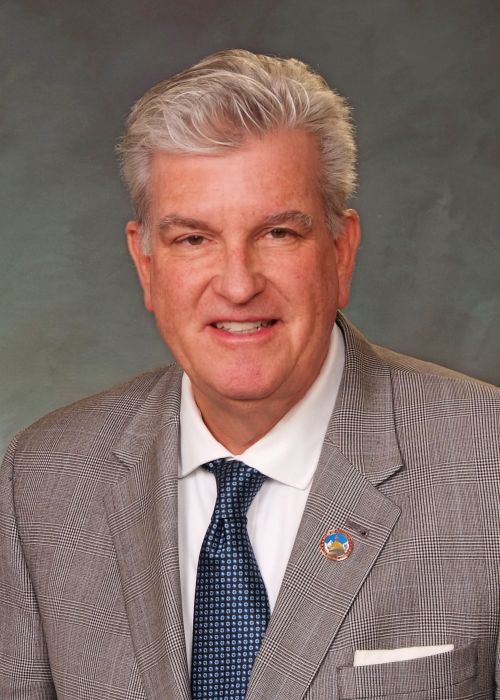
Sen. John Carson
Sponsored bills
To improve the clarity and certainty of the statutes, the bill amends, repeals, and reconstructs various statutory provisions of law that are obsolete, imperfect, or inoperative. The specific reasons for each amendment or repeal are set forth in the appendix to the bill. The amendments made by the bill are not intended to change the meaning or intent of the statutes.(Note: This summary applies to this bill as enacted.)
The act implements changes to the practices of the state work force development council (council), including by:Streamlining requirements for the council's talent pipeline report based on industry changes over the last several years;Creating greater flexibility to allow the council to develop certain criteria for the creation of career pathways based on data and feedback collected by the council;Updating the duties of the council to better reflect the council's current education, training, and workforce preparation practices; andAmending the directives for and duties of the position of the postsecondary and workforce readiness statewide coordinator, who works under the direction of the council, to better align with the updated working structure of that position as related to several other entities. The act decreases the 2026-27 state fiscal year general fund appropriation to the department of labor and employment for use by the division of employment and training, as reflected in the annual general appropriations act, by $46,605, unless the amount of general fund money appropriated for use for the council is less than the adjustment or no general fund money is appropriated for use for the council.(Note: This summary applies to this bill as enacted.)
Section 2 of the act repeals a requirement that health-care profession regulators adopt rules that require each licensed health-care provider, as a condition of renewing, reactivating, or reinstating a license, to complete up to 4 credit hours of training per licensing cycle in order to demonstrate competency regarding topics related to prescribing drugs and treatment. Section 3 authorizes the Colorado dental board to adopt rules that require every dentist, dental therapist, and dental hygienist, as a condition of renewing, reactivating, or reinstating a license, to complete up to 4 credit hours of training per licensing cycle regarding topics related to prescribing drugs and treatment. Section 4 requires a licensed veterinarian to complete at least 1 hour of training per renewal period regarding topics related to prescribing drugs and treatment. Section 5 changes the frequency at which specific health-care facilities are required to apply for a license issued by the department of public health and environment from annually to every 2 years. Under current law, a health-care facility is required to screen each uninsured patient for eligibility for public health insurance programs and discounted care (screening) utilizing a single uniform application developed by the department of health care policy and financing (state department). Sections 6 through 11 change this requirement by:Changing the method used to conduct the screening from a uniform application to use of a third-party resource, such as a major credit bureau, or use of a uniform screening questionnaire (questionnaire) developed by the state department;Allowing a health-care facility the option of screening a patient for eligibility for the health-care facility's financial assistance program;Requiring a health-care facility to provide specified notifications upon completion of the screening;Creating an application for discounted care (application) for use by a health-care facility upon completion of the screening through which additional information is requested from a patient to determine whether the patient qualifies or is likely to qualify for public health-care coverage or discounted care;Requiring a health-care facility to provide specified notice and appeal rights to a patient upon completion and review of the application; andRequiring the state department to adopt rules regarding the questionnaire and application. Section 11 also narrows state department review requirements of health-care facilities' and licensed health-care professionals' billing for patients who are indigent. The act prohibits the state department from making changes to regulatory documents or imposing new requirements unless the changes or new requirements are adopted by rule by specified dates and are subject to stakeholder engagement. Section 12 requires the state department to establish by rule the content and format of the information each hospital must provide to the state department for a hospital transparency report at least 30 days prior to the hospital's fiscal year. The act changes the deadline for a hospital to submit to the state department an annual audited financial statement from 120 days to 150 days after the end of the hospital's fiscal year. Current law requires that each hospital has a minimum of 15 days to review the hospital transparency report; the act specifies that the review period is 15 business days and requires that a statewide hospital association must also have a minimum of 15 business days to review the report.(Note: This summary applies to this bill as enacted.)
The act defines 'first responder' to include:A peace officer;A firefighter;A volunteer firefighter;An emergency medical service provider; orA mental health professional who responds in a professional capacity to a justifiable medical emergency. Existing law requires the emergency medical and trauma services advisory council (council) to review and approve new rules and modifications to rules prior to the adoption of such rules or modifications by the state board of health. The act requires the council to make recommendations for, instead of approve, rules and modifications to rules concerning emergency medical and trauma services prior to the adoption of such rules or modifications by the state board of health. Beginning January 1, 2027, the act requires the department of health care policy and financing (state department) to reimburse the following entities under the 'Colorado Medical Assistance Act':An ambulance service for ground transportation by an ambulance or other vehicle to a hospital or other destination as deemed appropriate by the ambulance service's medical director;An ambulance service for treatment on the scene of a medical emergency, which treatment does not result in ground transportation; andA qualified provider, an ambulance service, or an agency for evaluation by telemedicine of a person being treated by an ambulance service or an agency for the purpose of preventing the need to transport the person to a hospital.(Note: This summary applies to this bill as enacted.)
Risk assessments assess a parolee's criminogenic needs and risk of recidivism and are used to guide parole supervision planning, identify appropriate interventions, and establish parole supervision levels or categories. The act requires the department of corrections (department) to establish a risk assessment quality review team to develop policies and implement practices that determine whether risk assessments are completed accurately and consistently and to ensure a sustained process of review and training. For its 'SMART Act' hearing beginning in 2027, and each year thereafter, the department is required to include information concerning reviewed risk assessments, including findings and measures implemented to mitigate recent high error rates in risk assessments. The act clarifies that risk assessment outputs are criminal justice records for purposes of public inspection. The act prohibits an agreement that prohibits the disclosure of information in a risk assessment output that is subject to disclosure under the law.(Note: This summary applies to this bill as enacted.)
The act extends the availability of the conservation easement tax credit from income tax year 2031 through income tax year 2036. The act also prohibits the division of conservation from issuing any additional credit certificates or amending previously issued credit certificates as a result of the additional authority granted by the act for a donation made prior to the effective date of the act.(Note: This summary applies to this bill as enacted.)
The act allows off-campus courses to be included in concurrent enrollment programs when the off-campus courses meet the requirements for concurrent enrollment programs and the requirements of an accrediting agency recognized by the United States department of education. The act provides that additional concurrent enrollment courses shall not be approved after July 1, 2028 unless the general assembly indicates in a footnote in the general appropriations act that the department of education (department) has sufficient funding for course and audit oversight requirements to allow approval of additional concurrent enrollment courses. For the 2026-27 state fiscal year, the act appropriates $66,056 from the general fund to the department and reduces the general fund appropriation for the college opportunity fund program by $80,178 with a corresponding decrease in reappropriated funds for the regents of the university of Colorado.(Note: This summary applies to this bill as enacted.)
For state fiscal year 2026-27, the act appropriates $5,000,000 from the species conservation trust fund (trust fund) in the state treasury for various wildlife conservation programs directed at conserving candidate species or species that are likely to become candidate species, as determined by the United States fish and wildlife service. The executive director of the Colorado department of natural resources, after consulting with the Colorado water conservation board, the parks and wildlife commission, and the director of the division of parks and wildlife, has submitted to the general assembly a list of programs and associated costs that are eligible to receive funding from the trust fund as follows:$2,380,000 for the upper Colorado river endangered fish recovery program and San Juan river basin recovery implementation program;$60,000 for Rio Grande native fish protection and habitat improvements;$60,000 for selenium management, research, monitoring, evaluation, and control;$1,250,000 for native terrestrial wildlife conservation; and$1,250,000 for native aquatic wildlife conservation. Trust fund money made available for native terrestrial wildlife conservation is not available for purposes of importing new wolves for reintroduction into the state for state fiscal year 2026-27.(Note: This summary applies to this bill as enacted.)
The act requires a volunteer lobbyist to register and file a registration statement attesting they are not being compensated. The act exempts volunteer lobbyists from registration fees. The act provides that the judicial department may designate one individual for the judicial department and one individual for each independent agency in the judicial department who may lobby on behalf of the judicial department or an independent agency in the judicial department (judicial lobbyist). A person designated by a principal executive department to be responsible for lobbying a state official or employee on behalf of the department (legislative liaison), a judicial lobbyist, or an individual who lobbies on behalf of the offices of the governor or lieutenant governor as a member of the governor's cabinet or as a personal staff employee in the offices of the governor or the lieutenant governor (governor's lobbyist) must register with the secretary of state annually. In addition to annually registering with the secretary of state, a legislative liaison, judicial lobbyist, or a governor's lobbyist must file a monthly disclosure statement with the secretary of state (disclosure statement). The act provides that a legislative liaison, judicial lobbyist, or a governor's lobbyist must indicate on the disclosure statement the bill number of any legislation for which they have lobbied or will lobby a covered official and their position regarding the legislation. The legislative liaison, judicial lobbyist, or a governor's lobbyist must update their position on the disclosure statement within 72 hours of a change in position. The act prohibits a statewide elected official or member of the general assembly from being a legislative liaison or governor's lobbyist for a period of 2 years following vacation of office. $91,000 is appropriated from the department of state cash fund to the department of state.(Note: This summary applies to this bill as enacted.)