

A community integrated health-care service (service) is an out-of-hospital medical service that may be provided by an emergency medical service provider who obtains a community paramedic endorsement. A community integrated health-care service agency (agency) is an entity or sole proprietorship that manages and offers services. The act implements the recommendations in the 2024 sunset report by the department of regulatory agencies by: Continuing the regulation of agencies by 9 years to 2034; Clarifying that a suspension of, a revocation of, or a refusal to renew an agency's license due to a disqualifying felony or misdemeanor conviction of an owner, manager, or administrator of the agency includes circumstances in which the owner, manager, or administrator entered a plea of guilty or nolo contendere to the felony or misdemeanor; Updating language to be gender neutral; Changing references from "consumers" to "patients or clients"; Referencing the definition of service in the statutes governing the regulation of agencies; and Defining "service" to include mobile integrated health care and, as determined by rule by the state board of health, care and services provided by practitioners other than community paramedics.(Note: This summary applies to this bill as enacted.)
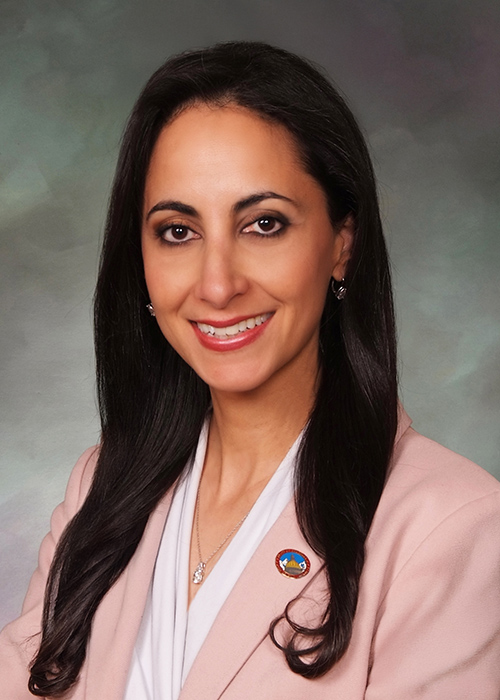
Sen. Iman Jodeh
Sponsored bills
The act clarifies that, under current law, the department of public health and environment may use up to 10% of appropriated money to administer and manage project grants concerning public water systems and wastewater treatment works in small communities. (Note: This summary applies to this bill as enacted.)
The act excludes from the statewide managed care program (program) services for medicaid members in a qualified residential treatment program or a psychiatric residential treatment facility and in the care and custody of a county department of human or social services until July 1, 2026. The act excludes from the program residential child health-care program services in counties that have a written agreement regarding services. No later than December 1, 2025, the act requires the department of health care policy and financing (HCPF), in collaboration with the department of human services, the behavioral health administration, and relevant stakeholders, to develop policies to transition qualified residential treatment programs and psychiatric residential treatment facilities to the statewide managed care system for medicaid members who are in the care and custody of a county department of human or social services (policies). The act requires HCPF to implement the policies no later than July 1, 2026. (Note: This summary applies to this bill as enacted.)
The act creates 2 income tax subtractions for income tax years commencing on or after January 1, 2027, but before January 1, 2038. The first subtraction is for an amount equal to state capital gains that are realized by a taxpayer, who is the owner of a qualified business, during the taxable year for the conversion by an increment of at least 20% ownership to a qualified employee-owned business. The taxpayers that are eligible for this subtraction are the same taxpayers that would be eligible for the tax credit for conversion costs for employee business ownership. The total amount of capital gains that a taxpayer may subtract is set by and may be annually adjusted by the Colorado office of economic development (office), and is required to be posted on the office's website. The second subtraction is allowed to worker-owned cooperatives in an amount equal to the worker-owned cooperative's federal taxable income for the tax year not to exceed $1 million. The act also makes changes to the tax credit for conversion or expansion costs for employee business ownership (credit), which has been available through income tax year 2026. The act extends the credit through income tax years commencing in 2031. The act also specifies that the aggregate amount of credits that can be claimed for each income tax year commencing on or after January 1, 2026, but before January 1, 2032, is $3 million. The act also increases the percentage of conversion or expansion costs that are eligible to be claimed for the credit from 50% to 75% beginning in tax year 2026 while maintaining the existing dollar caps for the different methods of conversion. Additionally, the act revises several definitions to expand eligibility for the credit and allows for qualified support entities, which are businesses or nonprofit organizations that provide services to businesses that qualify under the credit so that those businesses can convert or expand to employee ownership, to be eligible to receive the credit for up to 75% of the costs incurred for providing such support, not to exceed $167,000, including for staff salaries and benefits, marketing and outreach, and consulting and technical assistance. Support costs exclude any costs that are considered conversion or expansion costs that can be claimed in the credit for employee business ownership. (Note: This summary applies to this bill as enacted.)
The act requires the department of personnel (department), in partnership with the office of new Americans, to conduct or contract to conduct a statewide language access assessment of the readiness of principal departments to meet the language access standards outlined in the language access universal policy (assessment). The assessment covers all principal departments except the department of state, the department of the treasury, and the department of law (principal departments). The assessment must identify: The needs of principal departments to meet the language access standards outlined in the language access universal policy, including requests for guidance, training, and technical assistance; Relevant language access materials from principal departments, including language access plans, position descriptions related to language access, procedures related to language access, and technical assistance or training materials; Information on current language services contracts, expenditures, and funding sources related to language access; The public-facing responsibilities of principal departments, including designating which principal departments and their subcontractors do and do not have frequent contact with linguistically diverse individuals; and Other covered entities that may be subject to the standards outlined in the language access universal policy. The department may enter into an agreement with a third-party entity to conduct all or part of the assessment. The third-party entity must have demonstrated expertise in working with state governments on language access initiatives, such as developing language access policies or plans. At the conclusion of the assessment and not later than December 31, 2026, the department, the office of new Americans, or the third-party entity is required to create a report that summarizes the findings of the assessment and makes recommendations concerning: Improving efficiency, increasing quality of service, reducing cost, avoiding duplicative work, building on existing best practices, and minimizing administrative burden with respect to the provision of linguistically accessible government services and programs to linguistically diverse individuals; Addressing gaps and improving meaningful service through changes to language access services, practices, and procedures; Evaluating potential technological options for increasing language access, such as artificial intelligence; and Determining what infrastructure is needed to ensure full and sustainable implementation of the standards outlined in the language access universal policy. The department must also maintain a community of practice to focus on implementing the language access universal policy with ongoing observation of best practices in the principal departments. The department must include a summary of the report and assessment in its January 2027 presentation to legislative oversight committees required by the "State Measurement for Accountable, Responsive, and Transparent (SMART) Government Act". For the 2025-26 state fiscal year, $100,000 is appropriated from the general fund to the department for use by the Colorado equity office for personal services. Any money not expended by July 1, 2026, is further appropriated to the Colorado equity office through December 31, 2026. (Note: This summary applies to this bill as enacted.)
The act authorizes a county, special district, or school district to negotiate property tax relief with a taxpayer that establishes or expands a "qualified communication services facility", which is a facility or other real or personal property used in the provision of fixed broadband or mobile broadband internet access service, if the facility will serve an unserved or underserved area of the county, special district, or school district. The act sets limits and standards for the tax relief. The act also amends the legislative declaration for the statute establishing a sales tax refund for rural broadband service providers by: Stating that requirements to pay sales and use tax on federal-funded and state-funded broadband deployment reduce the efficacy and impact of the federal and state deployment grant money; Noting that wireless telecommunications technologies rely on forms of broadband infrastructure like fiber and landline networks and are, therefore, interconnected to broadband; and Including a tax preference performance statement for the sales tax refund indicating that a purpose of the sales tax refund is to incentivize private sector investment in broadband infrastructure.(Note: This summary applies to this bill as enacted.)
Current law limits to 10 years the time a school district can lease district property not needed for its purposes. The act allows a school district to lease district property for any term of years for purposes of a solar field, energy storage system, or affordable housing. If a board of education of a school district leases or rents property for the purposes of an affordable housing project, the board of education shall develop a policy that defines affordable housing for the project. (Note: This summary applies to this bill as enacted.)
With regard to the family and medical leave insurance program (program), the act extends the duration of paid family and medical leave, up to an additional 12 weeks, for a parent who has a child receiving inpatient care in a neonatal intensive care unit. The act also changes the premiums financing the program benefits by extending the current premium amount, 0.9% of wages per employee, through 2025 and setting the premium amount for the 2026 calendar year at 0.88% of wages per employee. For each subsequent calendar year, the director of the division of family and medical leave insurance (director) is required set the premium on or before September 1 of the preceding year, in a manner such that: At the end of the year, the balance of the family and medical leave insurance fund (fund) is not less than 6 months' worth of projected expenditures from the fund required for performance of the functions and duties of the director; The volatility of the premium rate is minimized; and The premium amount does not exceed 1.2% of wages per employee.(Note: This summary applies to this bill as enacted.)
Current law gives a trial court judge 91 days from the day a conviction enters in a criminal case to order restitution, which is the monetary loss a victim suffers due to a defendant's criminal conduct, in a criminal case. The act grants the prosecuting attorney 63 days to submit restitution information to the trial court judge following a conviction if the information is not available on the day a conviction enters, and then grants the trial court judge an additional 63 days following the submission of restitution information to order restitution after it receives the information from the prosecuting attorney. The act applies to defendants sentenced on or after the act's effective date. (Note: This summary applies to this bill as enacted.)
For state fiscal year 2025-26, the act appropriates $5,000,000 from the species conservation trust fund in the state treasury for various wildlife conservation programs directed at conserving candidate native species that have been listed as threatened or endangered under state or federal law or are species that are likely to become candidate species, as determined by the United States fish and wildlife service, as follows: $2,480,000 for the upper Colorado river endangered fish recovery program; $20,000 for selenium management, research, monitoring, evaluation, and control; $1,250,000 for native terrestrial wildlife conservation; and $1,250,000 for native aquatic wildlife conservation.(Note: This summary applies to this bill as enacted.)